Why Right Office Cleaning in Sydney Pays for Itself
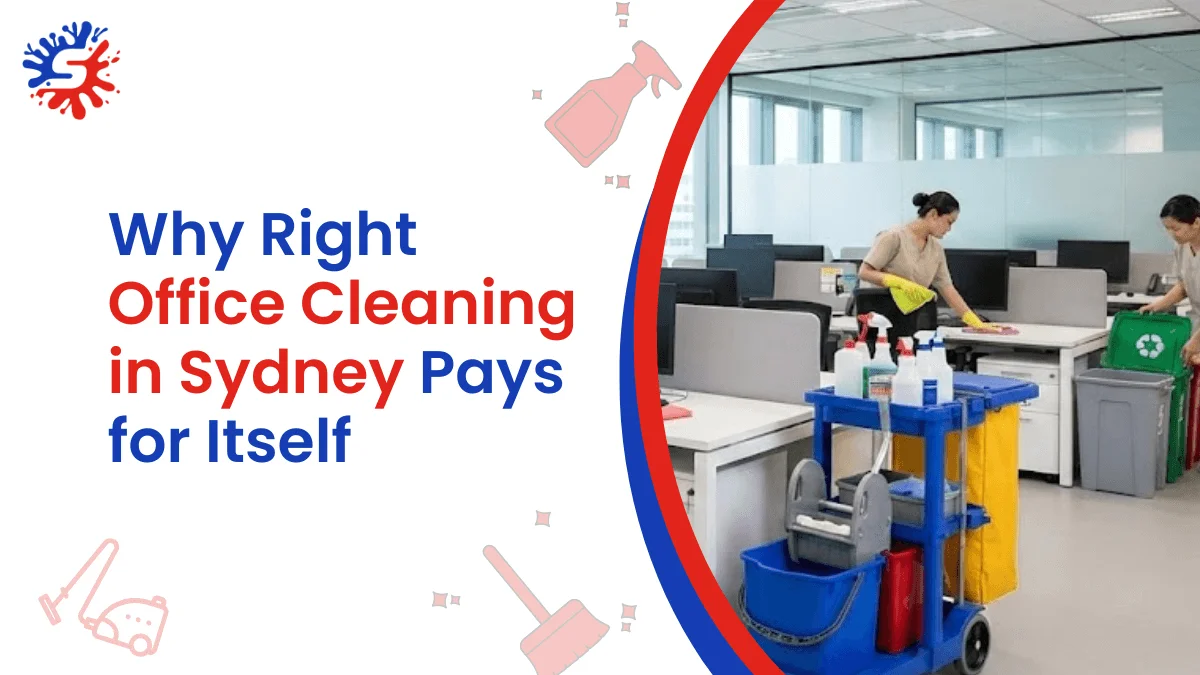
Sydney businesses underestimate the impact of workplace cleanliness on performance and outcomes. Professional office cleaning directly influences staff health, focus, and productivity over time. Hygiene has tangible effects on well-being and operational efficiency.
An average office desk contains 400 times more germs than a toilet seat. Clean and well-maintained offices help reduce the spread of germs, improve indoor air quality, and support employee morale, all of which contribute to smoother day-to-day functioning.
Where Sydney Businesses Lose (or Save) Money on Office Cleaning
Businesses focus on getting the lowest office cleaning quote they can find. That first cheap price might look appealing, but the real financial cost often goes well beyond the basic fee. Poor planning around cleaning standards and costs can lead to extra work for your team, unhappy staff, and even lost productivity.
Why the Cheapest Office Cleaning Quote Often Costs More Long-Term
Going with the lowest-priced cleaning service can create hidden costs that don’t show up on day one. When cleaning is inconsistent or rushed, you get complaints, more re-cleans, and frequent quality issues that take up your management time and distract your staff from real work.
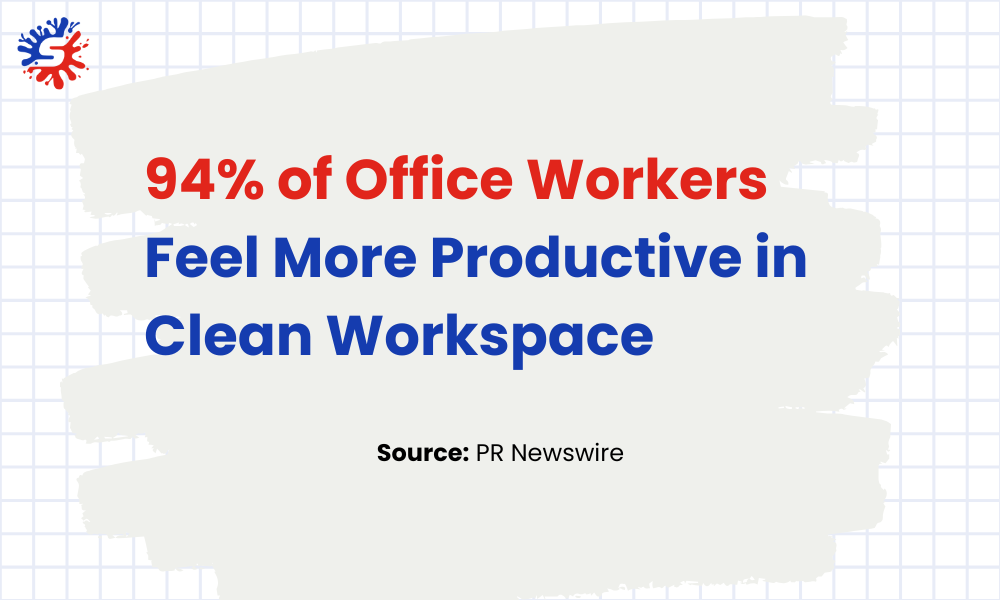
Research shows that a clean work environment directly impacts productivity and staff output. According to a survey, 94% of workers reported feeling more productive in a clean workspace. High-impact cleaning influences how effectively your team works.
The Real Cost Drivers Behind Office Cleaning Sydney
Here are the main things that actually influence how much your office cleaning costs:
-
Floor space to cover (larger offices take more time)
-
Number of staff and desks to manage
-
The quantity of bathrooms and kitchens that need hygiene focus
-
Meeting rooms and shared zones that get heavy use
-
Access times (after hours or early morning work may incur penalty rates)
-
Types of surfaces, like carpet versus hard floors
Over-Servicing vs Under-Servicing Both Drain Budgets
While it may seem contradictory, overcleaning in low-use areas wastes money, as does neglecting high-traffic zones. Over-servicing common areas with light foot traffic (like storage rooms) increases your spend without any hygiene benefit.
Under-servicing high-impact spaces like kitchens and bathrooms leads to complaints, repeated repairs, and staff absenteeism, which in turn reduces productivity. Balancing cleaning frequency with actual need is key to delivering value, not just ticking a box.
High-Impact Areas that Deserve More Cleaning Spend
Some parts of the office have much greater influence on cleanliness outcomes and business efficiency. These include:
-
Bathrooms and toilets
-
Kitchens and lunchrooms
-
High touchpoints like door handles and lifts
-
Shared workspaces and breakout areas
-
Reception and client-facing spaces
Smart Frequency Design: Spend Where it Delivers Returns
Matching cleaning tasks with frequency based on hygiene risk ensures you are not paying for unnecessary visits while keeping critical areas safe and presentable.
|
Task Frequency |
Hygiene Risk |
Cost Efficiency |
|
Daily cleaning of kitchens and bathrooms |
High |
Very efficient |
|
Weekly dusting and general tidy |
Medium |
Good value |
|
Monthly deep cleans (carpets, floors) |
Lower risk area |
Most cost-effective |
|
One-off specialist cleans (e.g., after renovation) |
Targeted |
Efficient when needed |
Preventative Cleaning vs Expensive Reactive Work
Regular maintenance saves money over time. Untreated dirt and grime damage carpets and floors, leading to costly restoration or replacement down the track.
Frequent cleaning also limits the spread of germs that can cause illness and missed work. By investing in regular upkeep, businesses avoid reactive costs that compound quickly when issues are left until they become urgent.
The Most Cost-Effective Office Cleaning Setup for Sydney Offices
Choosing the right cleaning setup is not about who cleans the cheapest, but who delivers consistent results without draining internal resources. Sydney offices that align cleaning responsibility with expertise tend to reduce hidden costs and operational friction.
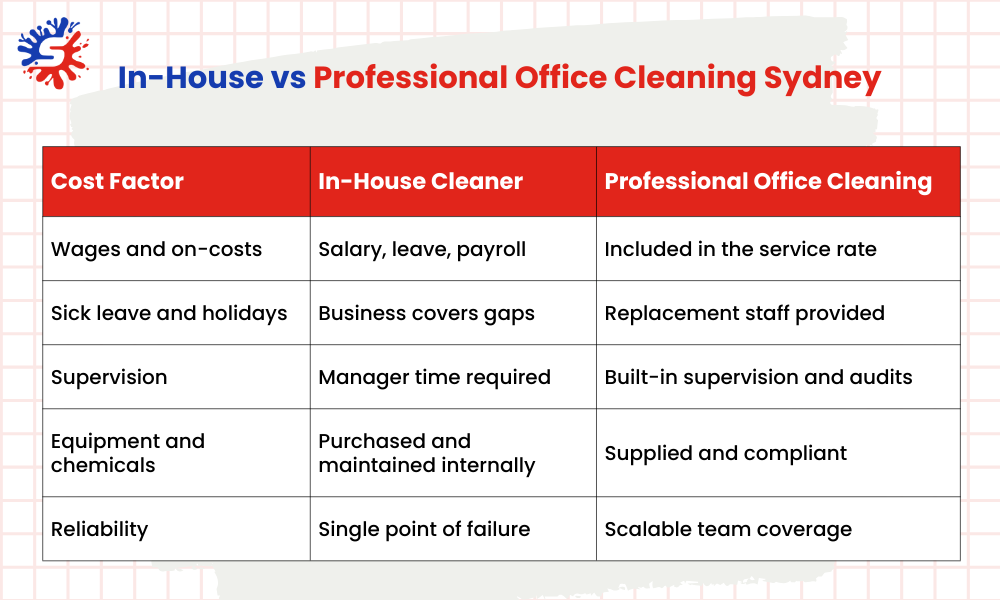
In-House Cleaner vs Professional Office Cleaning Sydney
While an in-house cleaner offers a familiar face for immediate tasks, they also bring the hidden weight.
What’s Typically Included in Professional Office Cleaning
While every building has its own quirks, professional crews generally follow a standardized protocol to ensure every square inch is covered.
|
Area |
Standard Inclusions |
|
Desks and workstations |
Surface wipe-down, spot cleaning |
|
Bins |
Emptying and liner replacement |
|
Floors |
Vacuuming and mopping |
|
Kitchens |
Benches, sinks, appliance exteriors |
|
Bathrooms |
Toilets, basins, mirrors, restocking |
|
Touchpoints |
Handles, switches, shared devices |
Optional Add-Ons That Actually Improve ROI
Some add-ons genuinely protect assets and reduce long-term spend:
-
Carpet maintenance to extend floor life
-
Periodic hard floor care to avoid resurfacing
-
Deep kitchen cleans to control hygiene risks
-
Targeted disinfecting services during illness spikes
How the Right Office Cleaning Partner Delivers Ongoing ROI
Picking the right cleaning partner in Sydney is more than a procurement choice. It changes how much you spend over time and how reliably you keep your workplace clean and safe.
Red Flags That Signal Future Cost Blowouts
When evaluating proposals and contracts, watch out for signs that a vendor might cost you more later:
-
Scopes that are vague or missing task details
-
Frequent rotation of untrained staff with no supervision
-
Lack of performance reporting or quality checks
-
No proof of insurance or compliance certificates
-
No process for handling complaints or escalations
Questions Cost-Conscious Sydney Businesses Ask Before Booking
Before you sign with an office cleaning provider, these questions help you focus on cost and quality outcomes:
-
How do you measure and report cleaning performance?
-
What is your process for resolving quality issues?
-
Can you tailor cleaning frequency to our actual office usage?
-
What flexibility do we have if requirements change?
-
Are all cleaners trained and supervised consistently?
-
Do you carry public liability and workers’ compensation insurance?
What a Transparent Office Cleaning Quote Should Include
Industry research shows that office cleanliness directly affects productivity.
|
Quote Component |
Why it Matters |
|
Detailed Scope of Work |
Clear tasks and frequencies prevent confusion |
|
Frequency Logic |
Matches cleaning effort to risk and usage |
|
Pricing Breakdown |
Shows what you are paying for and why |
|
Exclusions |
Avoids paying for tasks not needed |
|
Review Terms |
Ensures scope can evolve with your business |
Quote-Readiness Checklist: Get Accurate Pricing Fast
To get the most accurate proposals from cleaning partners, provide this information when you request quotes:
-
Total office size in square metres
-
Number of staff and desks
-
Count of bathrooms and kitchens
-
Typical access times and after-hours needs
-
Types of floors and high-touch areas
-
Expectations for reporting and quality checks
How Professional Cleaning Improves ROI
When your Sydney workplace commits to the right office cleaning strategy, the financial and operational benefits go well beyond a weekly sweep. The primary goal should be to invest in solutions that support your team’s health and efficiency, not just the lowest price.
If you want to explore an office cleaning plan that matches your budget and operational needs, we can help. Get a free strategy session with our specialists to see how a smarter cleaning strategy can improve ROI, keep your team healthier, and support your business goals in Sydney.