A 30-Second Audit for Commercial Cleaning Services in Sydney
Workplace cleanliness declines slowly through missed details, reduced oversight, and assumptions that everything is fine. Many managers only notice problems after staff complaints or client feedback.
That perception affects staff morale, client confidence, and even retention. Yet cleaning performance often goes unchecked until standards have clearly dropped.
Why Most Commercial Cleaning Standards Slip (Without Anyone Noticing)
Commercial cleaning can easily fall off the radar in busy workplaces. Teams are focused on operations and productivity, so small declines in cleaning performance slip in without anyone noticing.
Here’s why that happens and what to look out for so standards don’t quietly slide down.
The “Looks Fine at a Glance” Trap in Busy Workplaces
Many workplaces judge cleanliness by what’s visible at first glance. Dusty corners, smudged glass, or unnoticed spills often don’t register during the daily rush. The problem is that what looks fine isn’t always clean in terms of hygiene and safety.
Workers in a clean workspace feel more productive and produce higher-quality work when the environment is clean and organised. This shows that staff notice the impact of cleanliness, even when management may not track it formally.
High-Traffic Areas that Deteriorate First (And Fastest)
Some spots in workplaces wear down far quicker than others. These areas are usually overlooked in casual checks:
-
Entry and reception floors with heavy footfall
-
Shared touchpoints like elevator buttons and handrails
-
Kitchen and breakroom counters used multiple times per day
-
Bathroom fixtures and door handles
-
Conference room tables and armrests
The Real Cost of Inconsistent Cleaning for Staff, Clients, and Compliance
When cleaning standards slip, the effects go beyond a dusty window or dull floor. Poor cleaning can increase employee sick days, lower morale, and create a negative impression for clients.
The frequency and quality of cleaning also affect compliance with health and safety expectations in workplaces. If hygiene falls behind standards, companies may risk higher absenteeism, lower productivity, and even regulatory scrutiny.
How Often Office and Facility Managers Should Review Cleaning Performance
To prevent standards from sliding, managers should routinely check cleaning quality with a simple schedule:
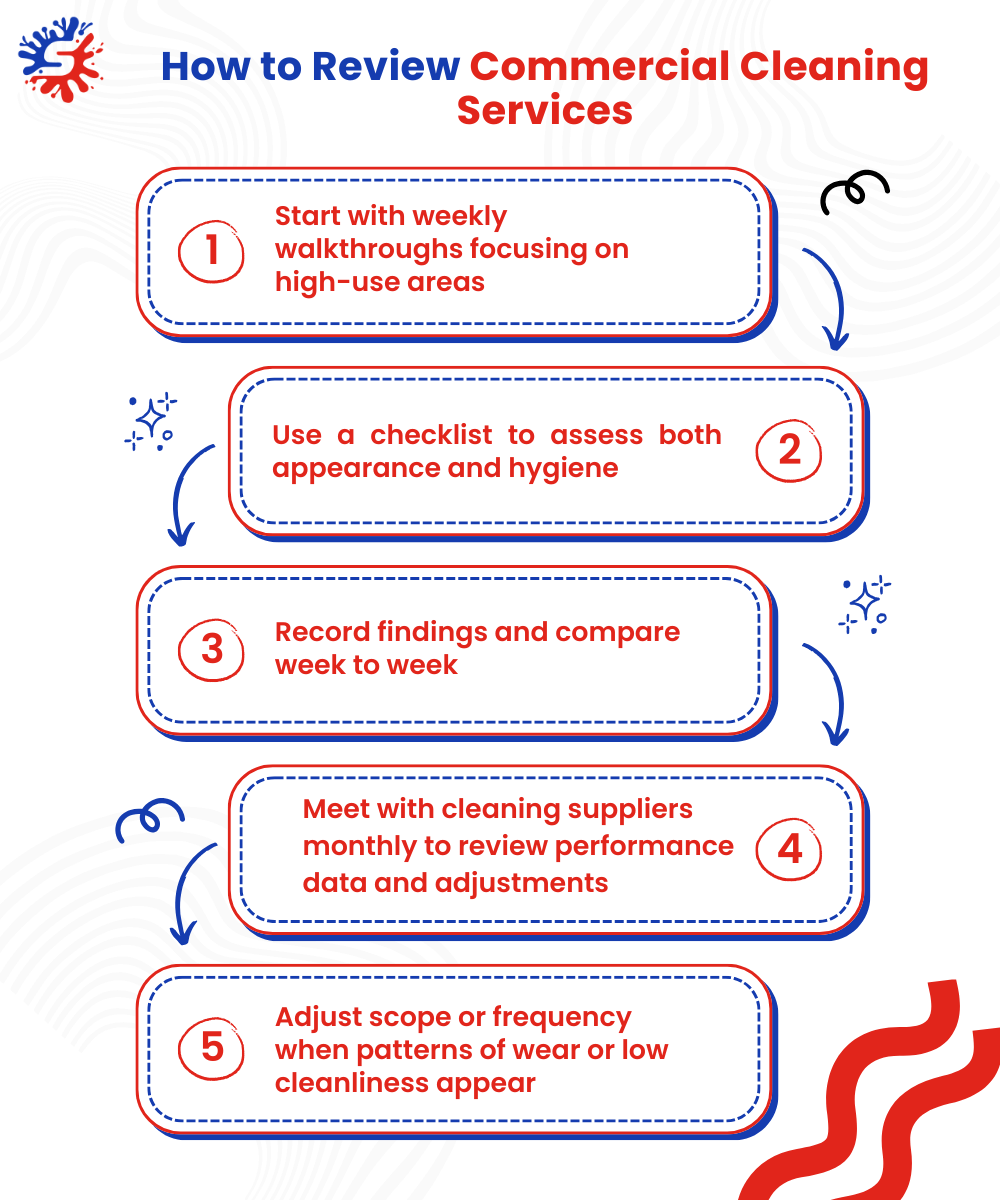
The 30-Second Workplace Cleanliness Scorecard
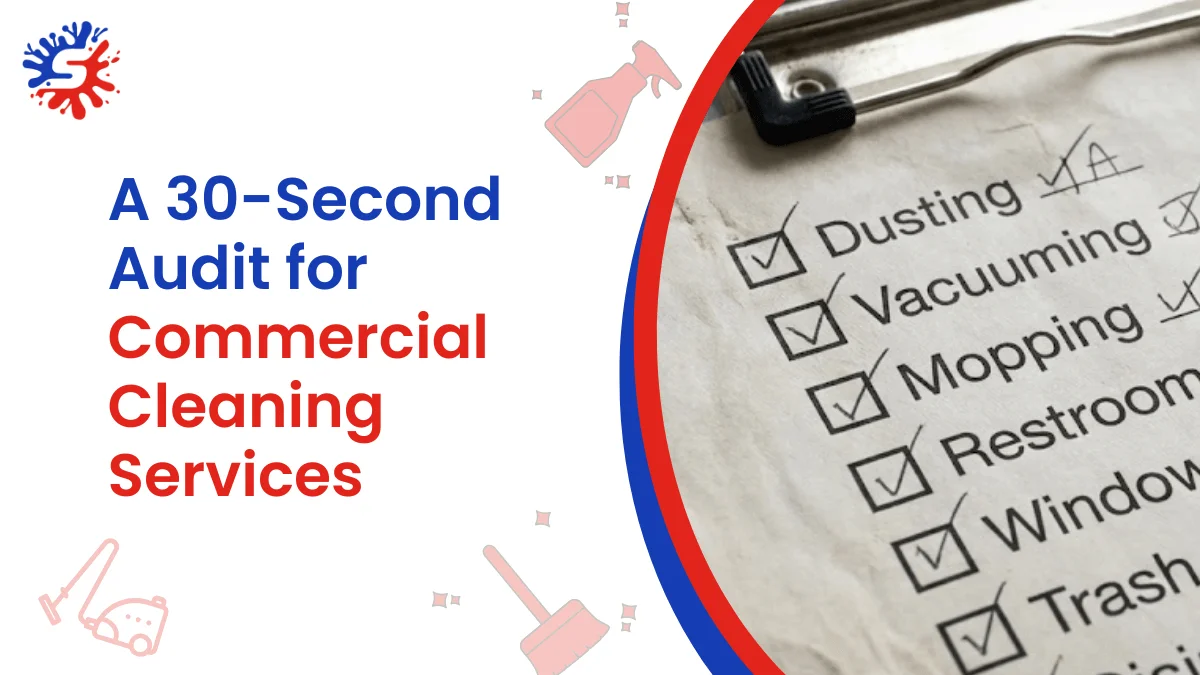
Before diving into detailed checklists, here’s a simple way to quickly score your workplace’s cleanliness. These checks help you spot issues quickly so you can act promptly and maintain consistent hygiene.
First Impressions Check: Entry, Reception, and Meeting Rooms
Start here because the first area people see sets the tone for the whole workplace. Clean and tidy entry spaces make staff and visitors feel comfortable and confident in your business environment.
Use these quick checks when walking through reception and meeting rooms.
-
Floors swept or vacuumed, no rubbish or debris visible
-
Entrance glass and doors wiped, no fingerprints or smears
-
Reception desk surfaces dusted and orderly
-
Chairs and furniture free of marks or stains
-
Bins emptied, liners replaced
-
Visitor touchpoints (sign-in tablets, pens) cleaned
Hygiene Hotspots: Kitchens, Bathrooms, and Shared Touchpoints
Shared spaces are places where germs multiply fastest if neglected. These critical zones need regular attention because they receive the most staff contact throughout the day.
-
Kitchen counters wiped and disinfected after use
-
Sinks, taps and appliances sanitised
-
Bathroom toilets, sinks and handrails cleaned and restocked
-
Door handles, lift buttons, light switches disinfected
-
Communal tables and chairs wiped
-
Hand sanitiser stations refilled
Floor Condition Snapshot: Carpets, Hard Floors, and Mats
Floors reflect how well the cleaning routine is managed. High-traffic areas accumulate dirt and can make even tidy rooms look unkempt if neglected.
Checklist
-
Walk-off mats cleaned or shaken out
-
Carpets vacuumed and free of obvious dirt
-
Hard floors swept, then mop or scrub
-
No gum, stains, or spills on floor surfaces
-
Edges and corners are tidy
-
No visible build-up along skirting boards
Detail Level Test: Skirting Boards, Glass, Corners, and Fixtures
These small areas are often overlooked but greatly affect perceptions of cleanliness. A high-quality cleaning routine reaches every visible surface, not just the obvious ones.
Checklist
-
Skirting boards dust-free
-
Glass partitions and windows streak-free
-
Corners cleared of cobwebs or debris
-
Light fixtures dusted
-
Air vents and grilles wiped
-
Cabinet tops and shelves cleaned
Communication & Visibility: Do You Know What’s Being Done Each Visit?
It’s important not just to clean but to know what was cleaned. Visibility and reporting help keep cleaning consistent and accountable.
Checklist
-
Cleaning team logs tasks completed each visit
-
Clear schedule shows daily, weekly and monthly tasks
-
Staff know what should be done, and when
-
Issues identified and logged for corrective action
-
Client or manager sign-off available after each clean
-
No ambiguous instructions left for cleaners
Fast Scoring System
Once you complete the checklists above, score each area quickly:
-
Green (80% plus): Standards are strong and consistent; just maintain schedules
-
Yellow (50 to 79%): Some areas need improvement or more frequent attention
-
Red (below 50%): Cleaning routines are not meeting expectations and need review
What Your Results Say About Your Current Cleaning Arrangement
Once you’ve completed the 30-second scorecard, the next step is interpreting what it actually means. Your results can highlight whether your current commercial cleaning setup is working well, needs adjusting, or requires a full review.
Here’s how to break it down clearly.
Green: Maintaining Standards Without Overpaying
If most of your areas scored green, your cleaning scope and frequency are likely aligned with your workplace's operations. That’s a good position to be in.
The focus here is on maintaining standards without unnecessarily increasing costs. Review your cleaning checklist quarterly to confirm tasks still match traffic levels and business changes. For example, if staffing numbers have increased, kitchen and bathroom usage may also rise.
Mixed Results: Signs Your Scope or Frequency Is Out of Sync
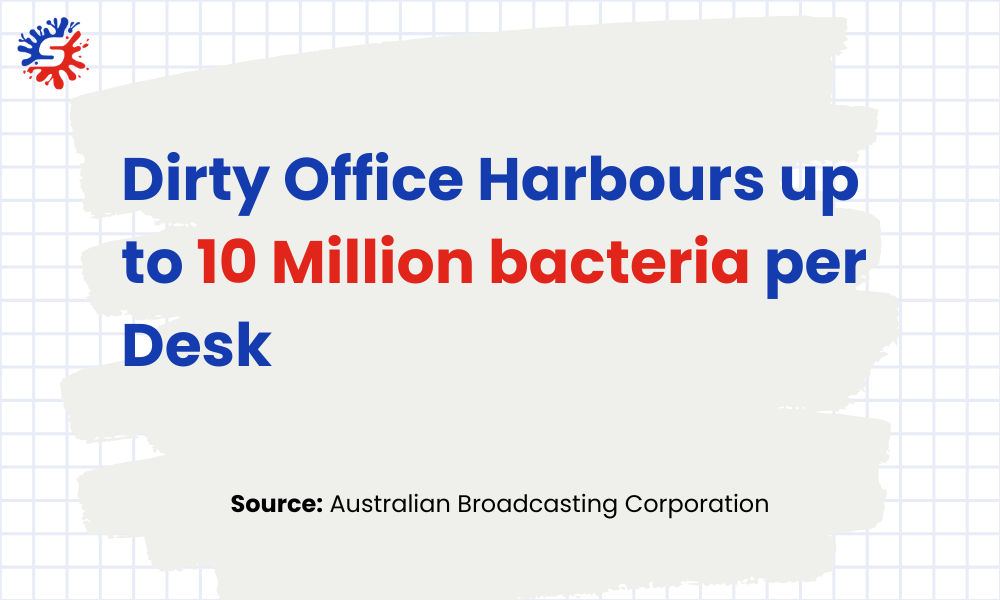
If you scored a mix of green and yellow, your arrangement likely needs adjustment rather than replacement. Dirty office desks can harbour up to 10 million bacteria per desk, 400 times as many as on toilet seats.
Common signs include:
-
Kitchens and bathrooms scoring lower than office areas
-
Floors looking worn before the end of the week
-
High-touch surfaces inconsistently sanitised
-
Cleaners rushing during peak periods
-
Complaints increasing during busy seasons
Red: When It’s Worth Reviewing Your Commercial Cleaning Service
If most sections scored red, there may be deeper performance or management issues. Inconsistent cleaning can impact staff health, brand perception, and compliance requirements.
Poor workplace hygiene is linked to increased absenteeism.
If cleaning standards are contributing to hygiene concerns, it is necessary to review your commercial cleaning service. This involves revisiting scope, supervision, training standards or changing providers altogether.
Scope Mapping
Understanding what your contract includes helps avoid assumptions and frustration later.
|
Typically Included (Standard Commercial Clean) |
Common Add-Ons or Scheduled Services |
|
Vacuuming and mopping floors |
Carpet steam cleaning |
|
Emptying bins and replacing liners |
Hard floor machine scrubbing |
|
Cleaning bathrooms and restocking |
Window cleaning (internal/external) |
|
Wiping desks and surfaces |
High-level dusting |
|
Basic kitchen cleaning |
Pressure washing |
|
Spot cleaning glass |
Deep sanitisation services |
The Hidden Gaps That Cause Frustration Later
Cleaning issues often build slowly due to unclear expectations. Watch for:
-
No documented cleaning checklist
-
No clear frequency schedule
-
Limited supervision or site inspections
-
No reporting or task sign-off system
-
Scope written broadly without detail
-
No review meetings built into the agreement
How to Fix Gaps and Strengthen Your Cleaning Standards
If your scorecard showed yellow or red areas, the good news is most cleaning gaps are fixable. The key is identifying whether the issue sits with scope, performance, communication or compliance.
Scope Issue vs Performance Issue
Before changing providers, confirm whether the problem lies in what’s included or in how it’s delivered.
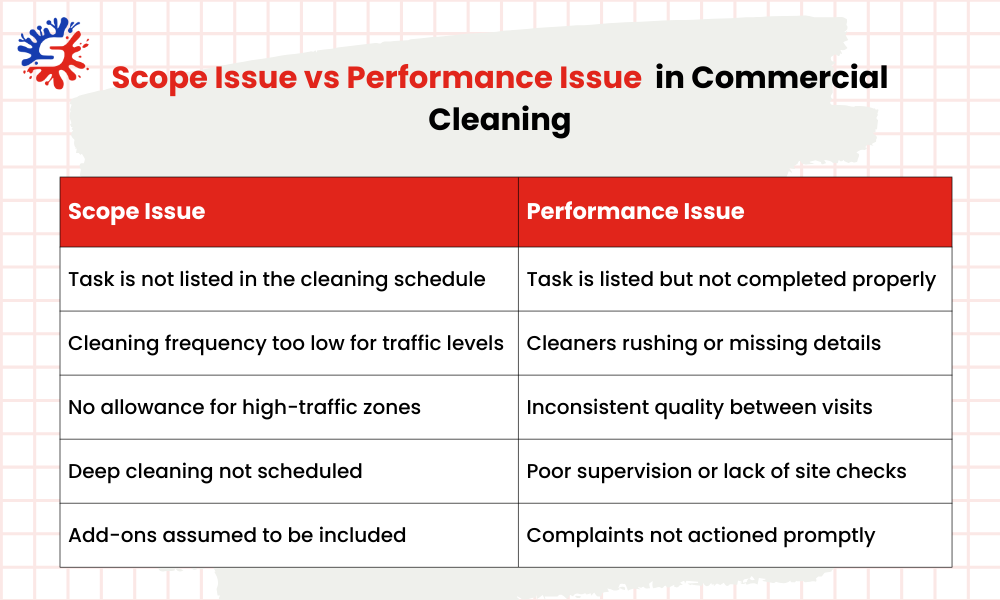
DIY Oversight vs Professional Cleaning Management
Some businesses try to manage cleaning internally to save costs. Others prefer structured service management with reporting and compliance oversight.
|
DIY Oversight |
Professional Cleaning Management |
|
Ad hoc quality checks |
Scheduled site inspections |
|
Informal feedback to cleaners |
Documented reporting system |
|
Limited compliance tracking |
WHS-aligned procedures |
|
Reactive problem solving |
Proactive performance reviews |
|
Minimal documentation |
Clear cleaning checklist and scope mapping |
Compliance Considerations for Australian Workplaces (WHS, Insurance, Public Liability)
Cleaning connects directly to workplace health and safety obligations. Under Safe Work Australia guidance, employers have a duty to provide a safe working environment. Poor hygiene, wet floors, or chemical misuse can create hazards that expose businesses to liability.
You should confirm:
-
Cleaners are trained in WHS procedures
-
SDS documents are accessible for chemicals used onsite
-
Public liability insurance is current
-
Risk assessments are conducted for high-risk tasks
Red Flags When Reviewing a Cleaning Provider
When assessing your current or new provider, watch for:
-
No written scope or cleaning checklist
-
No proof of insurance or public liability cover
-
No documented site inspections
-
Frequent staff turnover without supervision
-
Lack of communication or slow response to issues
-
No flexibility for after-hours cleaning
What to Gather Before Requesting a Commercial Cleaning Service Quote
Being prepared ensures you receive an accurate and transparent quote.
Checklist
-
Floor plan or approximate square metre size
-
Number of staff onsite daily
-
Operating hours and after-hours access details
-
Current cleaning frequency
-
Problem areas identified in your scorecard
-
Required compliance documentation
-
Any specialist needs such as carpet cleaning or high-level dusting
By using the scorecard and review steps outlined above, you can quickly determine whether your current commercial cleaning service aligns with your site’s needs. Small adjustments such as increasing high traffic area frequency or clarifying inclusions can often resolve issues before they impact staff wellbeing or compliance.
If you would like a tailored review of your current setup, request a free site assessment with Spark Clean Australia’s team. A short conversation can clarify your options and help you strengthen standards with confidence.