
How Do I Clean a Carpet? Simple Steps
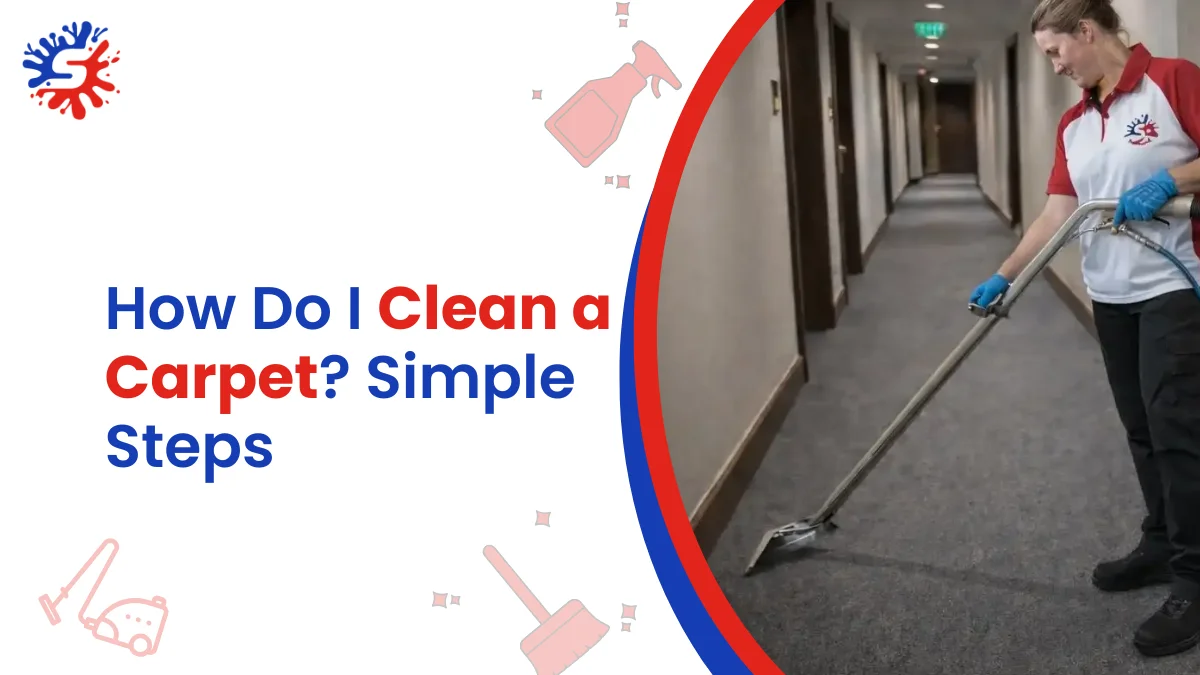
Carpets are common in homes, offices, and commercial buildings because they add comfort, insulation, and noise reduction. However, they also collect dust, allergens, bacteria, and other contaminants from daily activities.
Carpets can accumulate allergens at a much higher rate than hard flooring surfaces. In fact, studies indicate that carpets can collect mites up to 14 times more than bare floors. This buildup can affect indoor air quality and may contribute to allergy or respiratory symptoms if carpets are not cleaned regularly.
Why Proper Carpet Cleaning Matters for Homes and Businesses
Without regular cleaning, carpets can trap contaminants that affect indoor air quality, hygiene, and the lifespan of the flooring. Proper carpet maintenance helps keep spaces healthier while protecting the investment you made in your carpet.
The Hidden Dirt, Allergens, and Bacteria Trapped in Carpets
Carpets act like large filters that capture dust, pollen, pet dander, food particles, and microbes from daily activity. While this can temporarily keep these particles out of the air, they slowly accumulate deep within the fibres.
Over time, these trapped contaminants can become a health concern. Walking across the carpet or vacuuming can disturb the particles and release them back into the indoor air. This is one reason why people with allergies or asthma may experience symptoms in poorly maintained indoor environments.
Scientific research shows that carpets can hold large amounts of bacteria and allergens. Some studies have found around 200,000 bacteria per square inch in an average carpet, higher than on toilet seats. Regular deep cleaning helps remove these hidden contaminants and improves indoor hygiene.

How Regular Cleaning Extends the Life of Your Carpet
Carpets experience constant wear from foot traffic, furniture pressure, and debris carried indoors. Small particles like sand and dirt can settle deep in the carpet pile and act as abrasives when people walk across the surface.
This grinding effect slowly damages carpet fibres. Over time, it can cause flattening, fraying, and permanent discoloration. Once fibres are worn down, the carpet begins to lose its original texture and appearance.
Regular cleaning removes these abrasive particles before they cause long-term damage. Professional cleaning methods, such as hot water extraction, can penetrate deep into the fibres and remove dirt that regular vacuuming cannot.
Signs Your Carpet Needs Immediate Cleaning
Some carpets show clear warning signs that they need professional cleaning or deeper maintenance.
Common indicators include:
-
Persistent stains that remain after vacuuming
-
Noticeable musty or unpleasant odours
-
Increased allergy symptoms indoors
-
Visible dirt buildup in high-traffic areas
-
Matted or flattened carpet fibres
-
Discolouration or uneven shading on the carpet surface
When DIY Cleaning Is Enough vs When You Need Professional Help
DIY methods work well for regular upkeep and minor stains. However, professional cleaning is usually necessary for deep contamination, heavy traffic areas, or stubborn stains.
|
Situation |
DIY Cleaning |
Professional Cleaning |
|
Light dust and surface dirt |
Suitable for regular vacuuming |
Not usually required |
|
Small fresh stains |
Spot cleaning with mild detergent |
Optional if stain persists |
|
High traffic areas |
Limited effectiveness |
Deep cleaning recommended |
|
Pet odours or deep stains |
Often difficult to remove |
Professional equipment works better |
|
Allergens and bacterial buildup |
Hard to eliminate fully |
Hot water extraction removes deeper contaminants |
|
Annual maintenance |
DIY helps between cleans |
Professional cleaning every 12 to 18 months is recommended |
Step-by-Step Process to Clean a Carpet Effectively
Following the organized steps improves cleaning results and prevents common problems such as residue buildup or mould growth. The process below outlines how professionals and homeowners can clean carpets more effectively.
Step 1: Remove Furniture and Vacuum Thoroughly
Start by moving small furniture such as chairs, tables, and decorative items out of the area. For heavier furniture, clean around and under accessible sections where possible.
Next, vacuum the entire carpet slowly and methodically.
-
Use a vacuum with a HEPA filter if available.
-
Vacuum high-traffic areas first.
-
Move the vacuum slowly across the carpet to lift embedded dirt.
-
Repeat vacuuming in different directions for better soil removal.
Step 2: Treat Visible Stains Before Deep Cleaning
Spot treatment helps break down stains before the full cleaning process begins. If stains are not treated first, deep cleaning may spread them or push them deeper into the fibres.
Start by identifying the stain type. Common stains include food spills, coffee, pet accidents, ink, and grease. Different stains may require slightly different cleaning solutions.
Step-by-step approach:
-
Blot the stain gently using a clean cloth or paper towel.
-
Apply a small amount of stain remover or mild detergent solution.
-
Let the solution sit for a few minutes to loosen the stain.
-
Blot again with a clean cloth until the stain lifts.
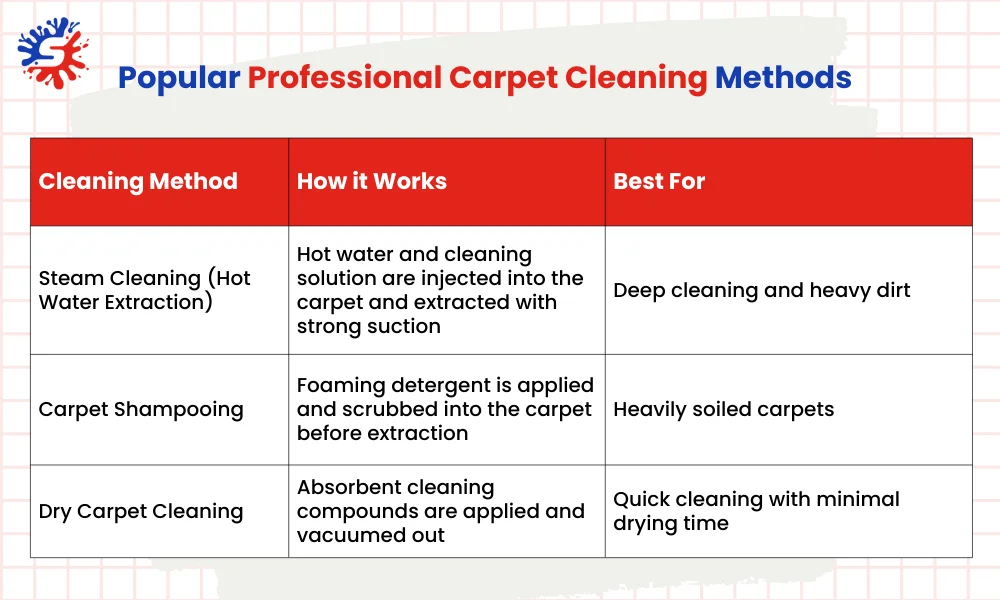
Step 3: Choose the Right Carpet Cleaning Method
Different carpets and levels of dirt require different cleaning methods. Choosing the correct method helps achieve better results while protecting the carpet fibres.
Step 4: Deep Clean the Carpet and Remove Residue
After selecting the cleaning method, the deep-cleaning stage begins. This is where embedded dirt, oils, and contaminants are removed from the carpet fibres.
Step-by-step process:
-
Prepare the cleaning machine and appropriate solution.
-
Work in small sections of the carpet.
-
Apply the cleaning solution evenly across the carpet.
-
Use extraction or scrubbing to lift dirt from the fibres.
-
Rinse the carpet with clean water if required to remove residue.
Step 5: Allow Proper Drying to Prevent Odours and Mould
Drying is a critical step that many people overlook. If carpets remain damp for too long, moisture can lead to unpleasant odours or mould growth.
To ensure proper drying:
-
Open windows and improve ventilation in the room
-
Use fans or air movers to speed up drying
-
Avoid walking on the carpet until it is mostly dry
-
Keep furniture off the carpet during the drying period
-
Use air conditioning or a dehumidifier if the humidity is high
Common Carpet Cleaning Mistakes That Damage Carpets
Even with good intentions, many people damage their carpets by using improper cleaning methods. These mistakes can weaken carpet fibres, leave residue behind, or create long-term issues such as mould and odours.
Understanding what not to do is just as important as knowing the proper cleaning process. Avoiding the following mistakes can help protect your carpet and maintain its appearance for longer.
Using Too Much Water or Cleaning Solution
Many DIY carpet cleaning attempts involve soaking the carpet with too much water or detergent. While it may seem like more liquid will clean better, the opposite is usually true.
Excess water can seep deep into the carpet padding and underlay. When moisture becomes trapped beneath the surface, it can lead to unpleasant smells, mould growth, and damage to the flooring underneath.
Too much cleaning solution can also leave sticky residue behind. This residue attracts dirt more quickly, causing the carpet to become dirty again sooner.
Scrubbing Stains Instead of Blotting Them
A common mistake when dealing with stains is scrubbing the carpet aggressively. While scrubbing might appear to remove the stain more quickly, it often spreads it and damages the fibres.
Carpet fibres are designed to stand upright. Harsh scrubbing can twist, fray, or permanently flatten these fibres. It can also push the stain deeper into the carpet backing, making it harder to remove later.
The correct approach is to gently blot the stain with a clean cloth or paper towel. Blotting lifts the stain without forcing it deeper into the material.
Skipping Proper Drying and Ventilation
Proper drying is essential after any carpet cleaning process. Skipping this step can create several problems.
Common issues caused by poor drying include:
-
Musty or unpleasant carpet odours
-
Increased risk of mould or mildew growth
-
Carpet fibres becoming stiff or flattened
-
Dirt sticks to damp fibres more easily
-
Potential damage to carpet backing and padding
Using the Wrong Cleaning Products for Carpet Fibres
Using the wrong cleaning product can damage fibres, cause fading, or leave chemical residue behind. Different carpet materials require different cleaning approaches.
|
Carpet Fibre Type |
Recommended Cleaning Approach |
Products to Avoid |
|
Nylon |
Hot water extraction or mild detergent cleaning |
Strong bleach or harsh alkaline cleaners |
|
Polyester |
Low moisture or steam cleaning |
Heavy oil-based cleaners |
|
Wool |
Gentle cleaning solutions and low-moisture methods |
High heat and strong chemicals |
|
Olefin (Polypropylene) |
Low moisture cleaning and light detergents |
Solvent-based stain removers |
DIY Carpet Cleaning vs Hiring a Professional Cleaner
Many homeowners and businesses try to clean carpets themselves to save money. While DIY cleaning can help with routine maintenance, it does not always remove deep dirt, bacteria, or stubborn stains.
When DIY Cleaning Works Well (Light Dirt and Small Stains)
DIY carpet cleaning is effective for basic maintenance and minor surface issues. Regular vacuuming and quick stain treatment can prevent dirt from building up over time.
DIY cleaning usually works well in situations such as:
-
Removing light surface dust and debris
-
Cleaning small spills or fresh stains
-
Maintaining low-traffic areas like bedrooms
-
Spot cleaning food or drink stains quickly
-
Regular weekly or fortnightly vacuuming
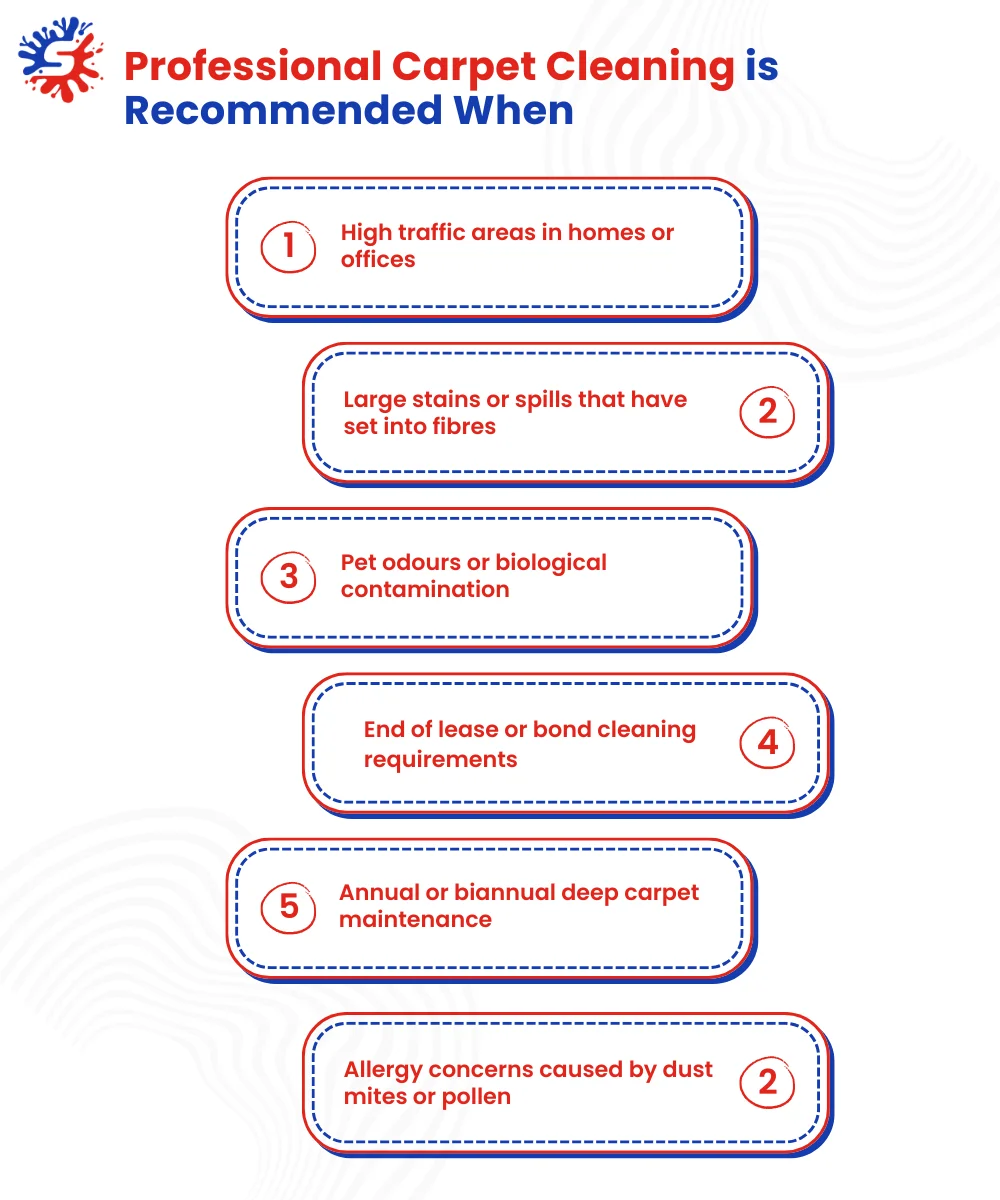
Situations Where Professional Cleaning Is the Better Option
Some carpet problems require professional equipment and experience. Deep contamination, heavy foot traffic, and persistent odours are difficult to solve with household tools.
Professional carpet cleaning is usually recommended for
Cost Factors That Affect Professional Carpet Cleaning Services
The price of professional carpet cleaning can vary depending on several factors. Understanding these variables helps property owners plan their cleaning budget more accurately.
|
Cost Factor |
How it Affects Pricing |
|
Carpet size |
Larger carpeted areas require more time and equipment |
|
Level of dirt or staining |
Heavily soiled carpets require additional treatment |
|
Cleaning method used |
Steam cleaning or specialised treatments may cost more |
|
Number of rooms or areas |
Multiple rooms increase labour and setup time |
|
Stain or odour treatments |
Special chemicals or processes may be required |
|
Location and accessibility |
Difficult access or multi-level properties may increase cost |
Benefits of Professional Equipment and Expertise
Professional cleaners use specialised equipment designed to remove deep contaminants without damaging carpet fibres. These machines use stronger suction and controlled water pressure to extract dirt and cleaning solutions more effectively.
Commercial carpet-cleaning equipment can deliver significantly greater extraction power than household machines. This allows professionals to remove deeply embedded soil, oils, and allergens that normal vacuuming cannot reach.
Professional cleaners also understand different carpet materials and cleaning methods, which helps prevent fibre damage and ensures safer cleaning results.
How to Get the Best Results When Booking a Carpet Cleaning Service
Taking a few simple steps before booking can help ensure you receive an accurate quote, better cleaning results, and fewer unexpected issues during the service.
Questions to Ask Before Hiring a Carpet Cleaning Company
Before selecting a carpet cleaning provider, it is important to understand their process, equipment, and experience. Asking a few key questions can help you avoid poor-quality services.
Consider asking the following questions:
-
What carpet cleaning method do you use such as steam cleaning or dry cleaning
-
Are your cleaners trained or certified in professional carpet cleaning standards
-
What products do you use, and are they safe for children and pets
-
How long will the carpet take to dry after cleaning
-
Do you offer stain treatment for difficult spots
-
Is there a satisfaction guarantee if stains remain
Information to Prepare for an Accurate Cleaning Quote
Providing clear details when requesting a quote helps cleaning companies estimate the job accurately. This prevents pricing surprises and allows cleaners to bring the right equipment.
Checklist to prepare before requesting a quote:
-
Total number of carpeted rooms or areas
-
Approximate room sizes or total square metres
-
Type of carpet, if known, such as wool, nylon, or polyester
-
Level of dirt or visible stains
-
Presence of pet stains or odours
-
Parking or building access conditions
Red Flags to Watch for When Choosing a Cleaner
Not all cleaning services deliver the same quality. Some providers advertise extremely low prices but use shortcuts that lead to poor cleaning results.
Watch for these warning signs:
-
Prices that seem significantly lower than other quotes
-
No explanation of the cleaning method used
-
Lack of insurance or business credentials
-
No clear process for stain treatment or drying
-
Poor customer reviews or unresolved complaints
Conclusion
Carpets endure heavy daily wear in both homes and workplaces. Without proper care, contaminants accumulate over time and can affect indoor air quality and the flooring's lifespan. Getting expert help at the right time can restore your carpets and ensure the best cleaning method is used for long-lasting results.
If your carpets are starting to look worn, stained, or dull, it may be time to take the next step. Request a quote today or call us to schedule our cleaning service to keep your home or workplace carpets clean, fresh, and long-lasting.