How the Sydney Hospitality Sector Should Handle Vivid Sydney 2026
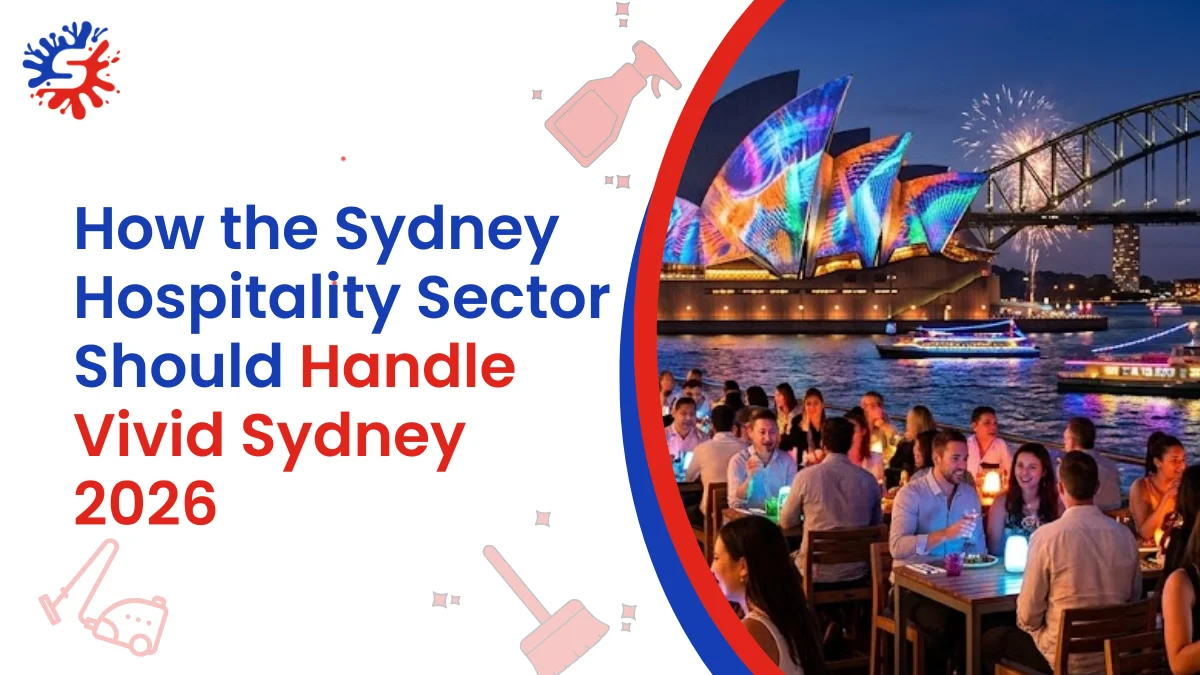
On Friday, 22 May 2026, the lights go on across Sydney Harbour and they do not go off until Saturday, 13 June, 23 consecutive nights. Millions of visitors moving through the Sydney CBD, Circular Quay, The Rocks, Barangaroo, and Darling Harbour in a single sustained wave.
Vivid Sydney is the Southern Hemisphere's largest multi-artform festival. It is also, for every hotel, pub, bar, restaurant, and commercial venue in the Sydney CBD, a 23-night operational audit conducted entirely in public, in real time, with every failure recorded and published on Google, TripAdvisor, and Booking.com.
Key Takeaways
- Increase cleaning frequency to accommodate the expected high number of visitors attending the 23-day event.
- Focus sanitation efforts on high-touch surfaces where 80% of cross-contamination occurs in hospitality settings.
- Implement a 15-minute restroom maintenance cycle to prevent the 30% decline in guest satisfaction associated with poor facility hygiene.
- Double waste management efforts during the 6 PM to 11 PM peak window when foot traffic increases by over 200%.
- Prioritize window and entrance clarity to satisfy the 90% of patrons who judge a venue's internal hygiene by its exterior appearance.
What Vivid 2026 Actually Demands From Your Business
Most venue managers understand that Vivid Sydney brings foot traffic. Not everyone understands the scale of what that actually means in operational terms. In 2024, Vivid Sydney attracted 2.42 million attendees and injected more than $180 million into the NSW visitor economy.
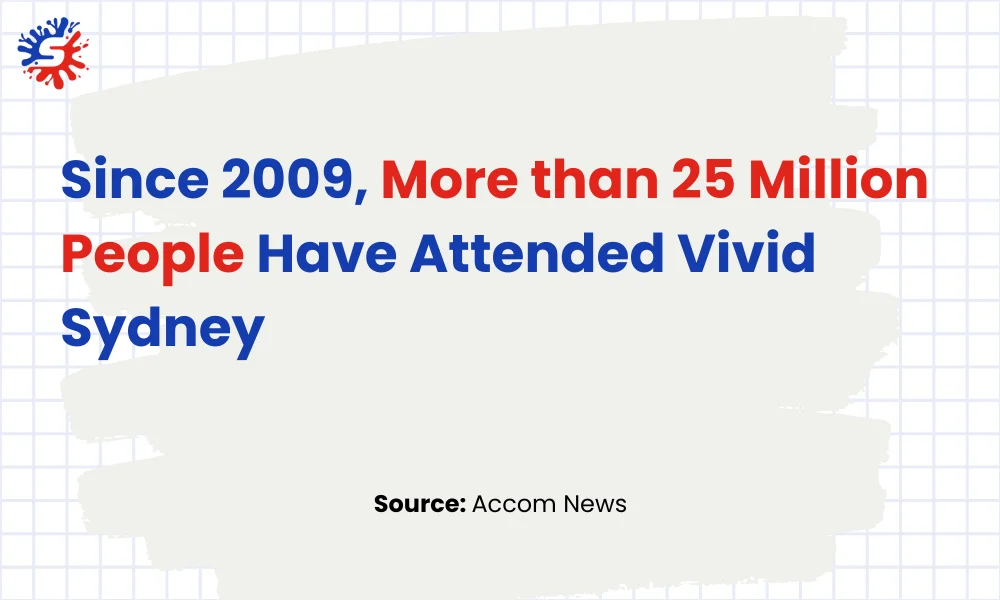
Total visits across the festival's history since 2009 have now surpassed 25 million people, with more than $1.3 billion in visitor expenditure generated over the festival's lifetime. In 2025, four separate Saturdays each attracted crowds nearing 200,000 across the festival precinct.
The NSW Government reported that on average, more than 81% of Vivid visitors purchased food and beverages during their visit. A record 51,169 restaurant diners were recorded on Saturday, 24 May 2025, the first full day of the festival, representing a 45% increase on the equivalent figure from 2024.
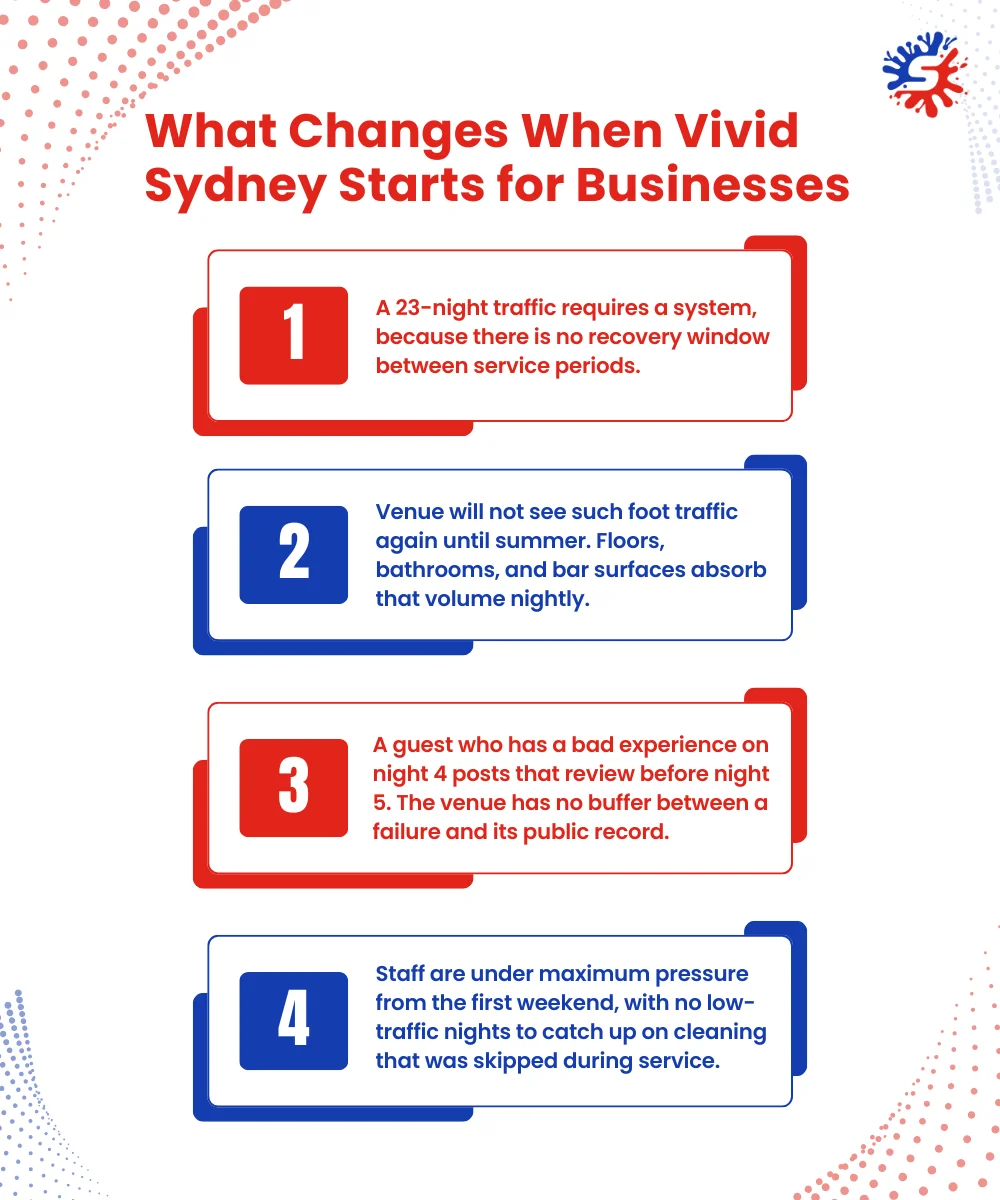
What Changes When Vivid Sydney Starts
The festival sustains a plateau of elevated demand for more than three weeks. That distinction matters for cleaning strategy:
90% Occupancy and Flawless Turnover Cannot Coexist Without a Plan
For Sydney CBD hotels, Vivid is the closest thing to a guaranteed full house that winter offers. It is also the period where the gap between a well-prepared housekeeping operation and an under-resourced one becomes visible to every guest.
The Room Turnover Pressure Point
During peak occupancy periods, the average turnaround time for a hotel room is 3 to 4 hours. Within that window, the average cleaning and inspection time per room is less than an hour. At 90% occupancy across a full-size Sydney CBD property, that is a significant daily operational pressure that compounds across 23 consecutive nights.
The Housekeeping Shortage Problem That Vivid Will Expose
A hotel entering Vivid season with a housekeeping team at 60-70% capacity is not going to maintain 90%-occupancy turnover standards for 23 nights. The only buffer is either a professional cleaning partner who covers the gaps or a failure of cleanliness standards that shows up in guest reviews.
The data on what happens to reviews when cleanliness slips during peak season is unambiguous. Shiji's Global Review Index Q2 2025 found that cleanliness scores are the first hotel department score to decline under peak operational stress, with the cleanliness index dropping by 1% point over Q2 2024.
This is the pattern Vivid will reproduce for Sydney CBD hotels in 2026 if housekeeping planning does not account for the sustained nature of the demand.
The accommodation and hotel cleaning services required during a 23-night festival differ from routine weekly cleaning. They require scheduled deep cleans between peaks, bathroom sanitisation that keeps pace with daily volume, and common-area maintenance that does not wait until damage is visible.
Crowd-Proofing 23 Nights of Continuous Pressure
For Sydney CBD pubs, bars, and restaurants, Vivid Sydney 2026 represents the kind of sustained demand that exposes every gap in cleaning and maintenance.
The specific threat is not one bad night. It is the cumulative wear across 23 consecutive service periods on floors, bar surfaces, bathrooms, and kitchen areas, with no quiet midweek period to deep-clean anything that was skipped during Friday or Saturday service.
What the Vivid Food and Beverage Surge Looks Like in Practice
The surfaces that take the most damage during sustained high-traffic periods are:
-
Bathroom fixtures and floors: The highest-volume contact surface in any hospitality venue, and the one most closely associated with overall brand perception by guests
-
Bar tops and high-contact surfaces: Cleaned repeatedly during service with cloths that accumulate bacteria rather than remove it
-
Floors: Round-in grit from thousands of footfalls across 23 nights accelerates surface degradation and creates slip risks if not properly maintained
-
Kitchen extraction and drainage areas: Higher volume service means faster organic buildup in drains and extraction filters, creating odour and fire risk
-
Entry areas and outdoor spaces: The first surface a Vivid visitor encounters and the one that forms their initial impression of the venue's standards
The hygiene risks associated with bar surfaces during sustained high-traffic service are well documented. As we covered in detail in our analysis of dirty pubs and customer retention in the Sydney CBD, bar cloths, ice machines, beer tap lines, and bathroom fixtures are the most contaminated surfaces.
Why Vivid Reviews Matter More Than Off-Season Reviews
Vivid Sydney brings visitors who amplify review behavior: domestic visitors and international tourists. They have chosen Sydney specifically for the festival and are more likely to document their experience on review platforms.
Cleanliness is the leading reason guests leave a review, positive or negative. A negative review filed during Vivid week is reaching every person who searches for a CBD venue for Vivid 2027.
The Guest Experience Standard That Vivid Creates and Businesses Have to Match
There is a specific dynamic at work during major festivals that raises the stakes of every hygiene failure. Vivid Sydney visitors have planned their evening, often booking in advance, and have arrived with expectations shaped by the festival's scale and production quality.
What Cleanliness Means to Guests in 2026
A 2024 study analysed the key determinants of customer satisfaction in the hospitality industry. 85% of guests consider cleanliness a primary factor influencing their overall experience, while 78% highlight service quality. Cleanliness ranked first.
The J.D. Power Study, which surveyed 39,219 guests across 102 hotel brands, confirmed that cleanliness is the biggest driver of guest room satisfaction for 28 consecutive years. No other factor has displaced it.
Preparation is the Competitive Advantage
The venues seeking higher review scores, more repeat bookings, and smoother operations for Vivid 2026 are already planning their cleaning programs. The venues that will spend June managing complaints are waiting until the second week of May to decide.
What to Complete Before 22 May 2026
The pre-festival deep clean is the foundation of the entire blueprint. It brings all high-risk areas to a verified standard before sustained pressure begins, so that in-service maintenance during Vivid maintains a known baseline rather than trying to recover from accumulated neglect.
By venue type, the critical pre-cleaning covers:
Hotels and Accommodation
-
Deep clean of all guest bathrooms, including grout, tile surfaces, and fixture sanitisation
-
Carpet extraction across all corridors and high-traffic common areas
-
Upholstery cleaning on lobby seating and guest lounge furniture
-
HVAC filter inspection and cleaning across all floors
-
Deep clean of kitchen and food preparation areas, including extraction filters and grease traps
-
Bathroom vanity, mirror, and touch point sanitisation in all public areas
-
External window and glass frontage cleaning for lobby and entry areas
Pubs, Bars, and Restaurants
-
Beer line flush and full sanitisation of tap systems and faucets
-
Ice machine internal decontamination of bins, paddles, and storage surfaces
-
Kitchen extraction hood and filter deep clean
-
Drain cleaning in the bar, kitchen, and bathroom areas
-
Floor deep clean, including grout lines in tile areas and beneath bar fixtures
-
Bathroom full sanitisation of all fixtures, touch points, and surfaces
-
Bar surface disinfection with correct contact time, not just a wipe-down
Our commercial cleaning best practices guide covers the specific standards that apply to each of these areas and what proper completion looks like versus a surface pass.
What Gets Scheduled Across the 23 Nights
The in-festival cleaning schedule operates differently from normal service cleaning. The objective is to maintain a consistent standard throughout the festival so that the cumulative wear does not become visible to guests.
For most Sydney CBD hospitality venues, they need professional cleaning support at specific intervals across the 23 nights:
-
Every 3 to 4 nights: Deep bathroom sanitisation, drain cleaning, and floor extraction in high-traffic areas
-
Weekly: Beer line flush, ice machine check, bar surface deep disinfection, and kitchen extraction maintenance
-
Mid-festival: Common area refresh for hotels, including corridor carpets, lobby furniture, and glass surfaces
-
Post-high-traffic weekends: Targeted cleaning of the surfaces that see the most volume on Vivid Saturdays before the next service period opens
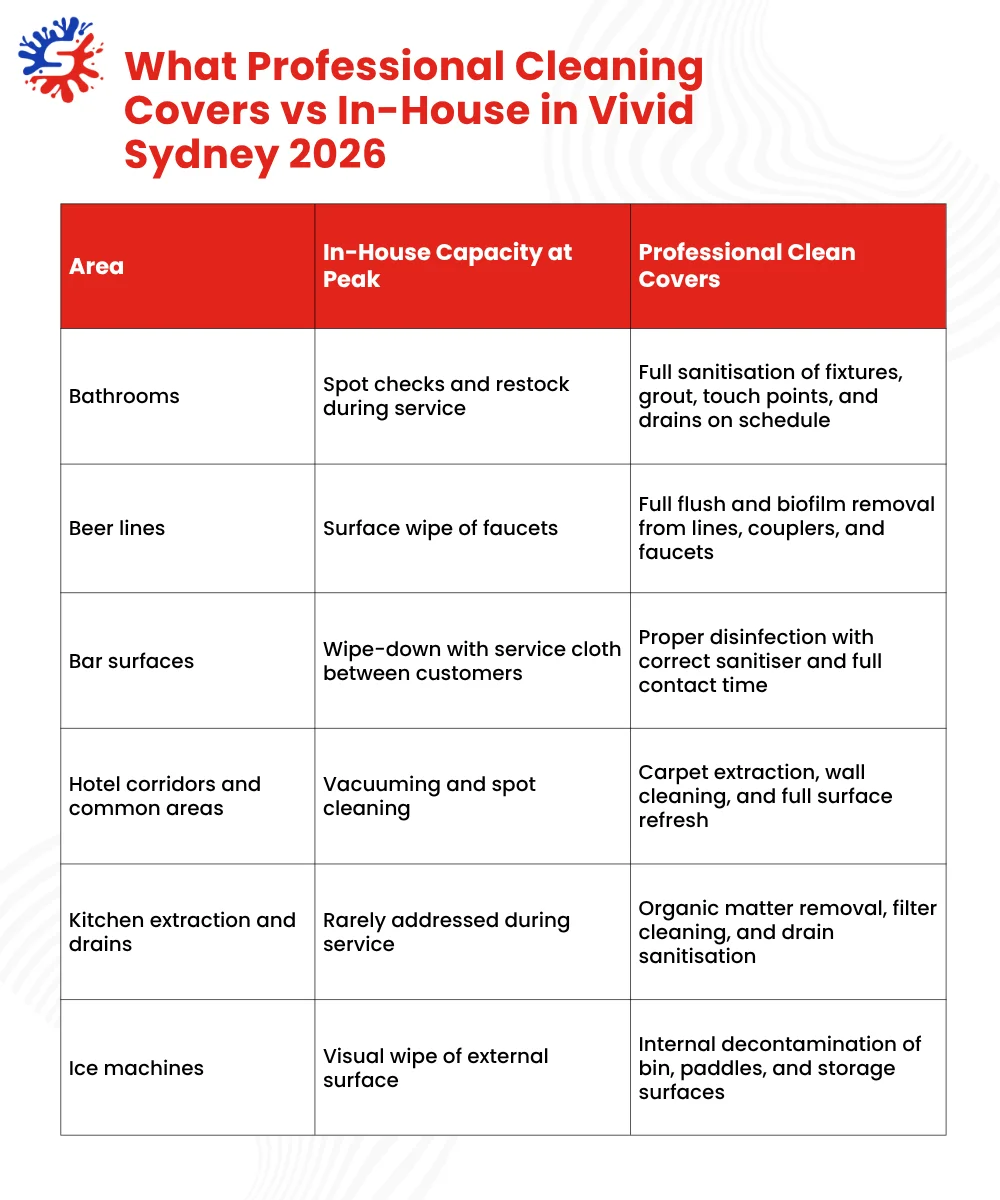
Where Professional Cleaning Covers What In-House Teams Cannot
The most important thing to understand about a professional cleaning program during Vivid is what it enables internal staff to achieve under peak service pressure.
Our 30-second audit of your cleaning standards helps to identify where your existing routine is likely to fall short before the festival opens.
The Airbnb and Short-Stay Accommodation Window
Vivid Sydney 2026 is also the largest spike in short-term rental demand of Sydney's winter. For Airbnb operators and short-stay property managers in the CBD and surrounding suburbs, the festival creates a booking window that is both a significant revenue opportunity and a challenge for cleaning operations.
As covered in our detailed breakdown of Airbnb cleaning statistics and their impact on bookings, cleanliness is consistently the single most-reviewed category. During a high-visibility period, when guest expectations are elevated and review volume is higher than usual, the risk of a cleanliness failure increases.
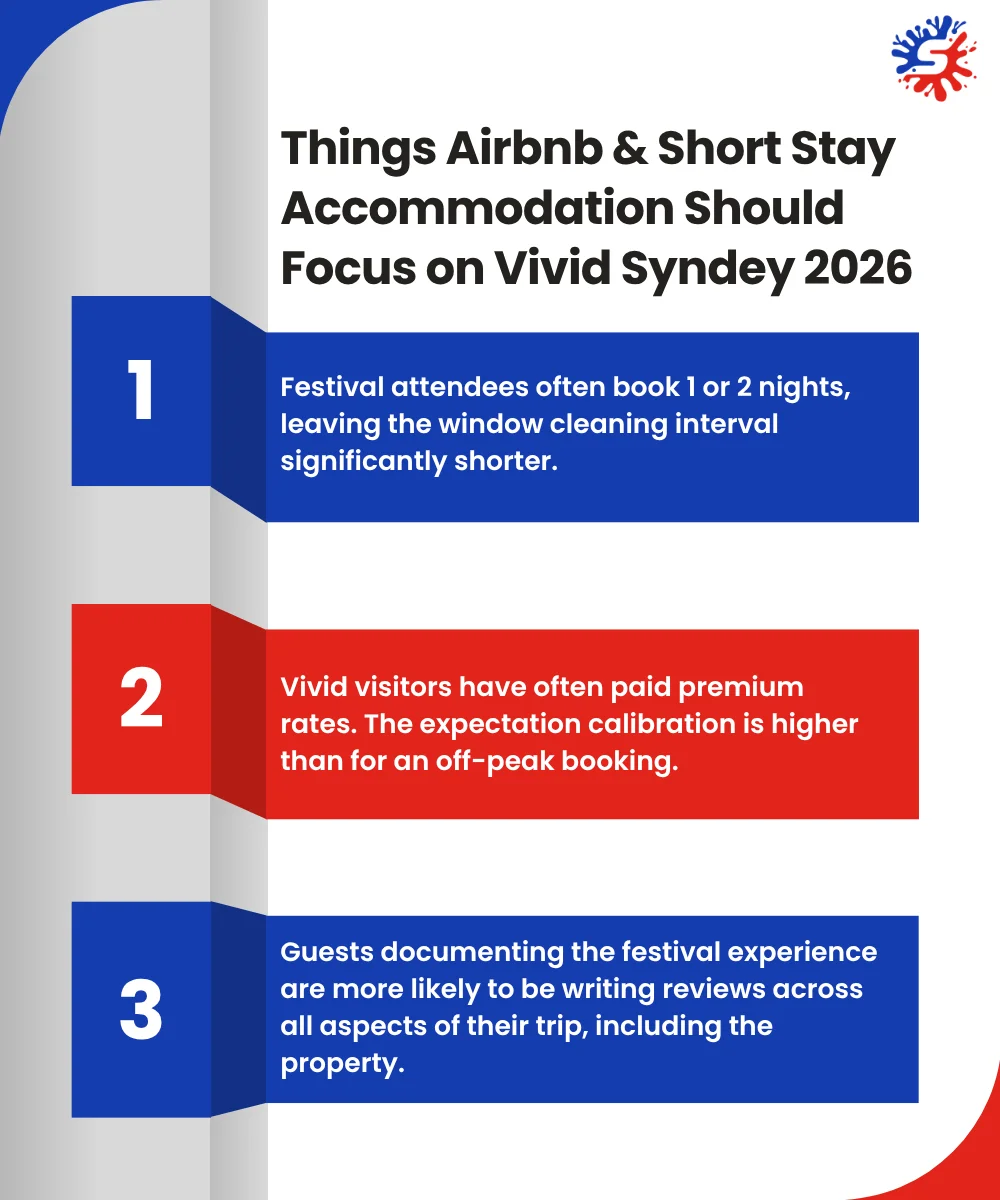
Three things that change during Vivid for short-stay operators:
Conclusion
A Sydney CBD business that enters the festival with a professional cleaning partner is positioned to come out of Vivid in a better competitive position than it entered it. Stronger reviews, stronger word-of-mouth, stronger repeat-booking signals for 2027.
A venue that enters Vivid with the same cleaning routine it uses in March risks a result that will appear in guest reviews before the end of the first week. The hospitality cleaning services that Spark Clean Australia provides are designed to handle the pressures Sydney CBD venues face during major events.
We work around your service hours, cover the high-risk areas that in-service cleaning cannot reach, and provide the scheduling flexibility to keep up with demand. If you want to discuss what a Vivid 2026 cleaning program looks like for your venue, contact Spark Clean Australia.
Frequently Asked Questions
Find quick answers to booking, payments, pet-friendly policies, deep cleaning, and more. Our team is dedicated to making the process effortless and transparent. If you have additional questions, we're here to help ensure a seamless experience.
Get In Touch