Airbnb Cleaning Statistics That Impact Bookings & Guest Reviews
The short-term rental industry in Australia is thriving. Thousands of hosts are welcoming guests every single night. But behind the polished listing photos and five-star promises lies a question: are short-term rentals as clean as guests believe they are?
A guest wondering what is actually lurking on that TV remote or simply someone who cares about hygiene in shared spaces, this data-driven guide covers everything. We have compiled statistics from authentic sources, academic journals, Airbnb's own internal data, independent microbiological studies, and leading property management research bodies.
17 Airbnb & Short-Term Rental Hygiene Statistics
1. Airbnb’s 5 Step Cleaning Protocol
94% of Airbnb reviews indicate guests are satisfied when hosts follow the 5-step cleaning process, with 4 or 5-star ratings after their stays. While this sounds positive, it also means 6% of reviews signal dissatisfaction, an enormous number across millions of global listings.
Source: Airbnb
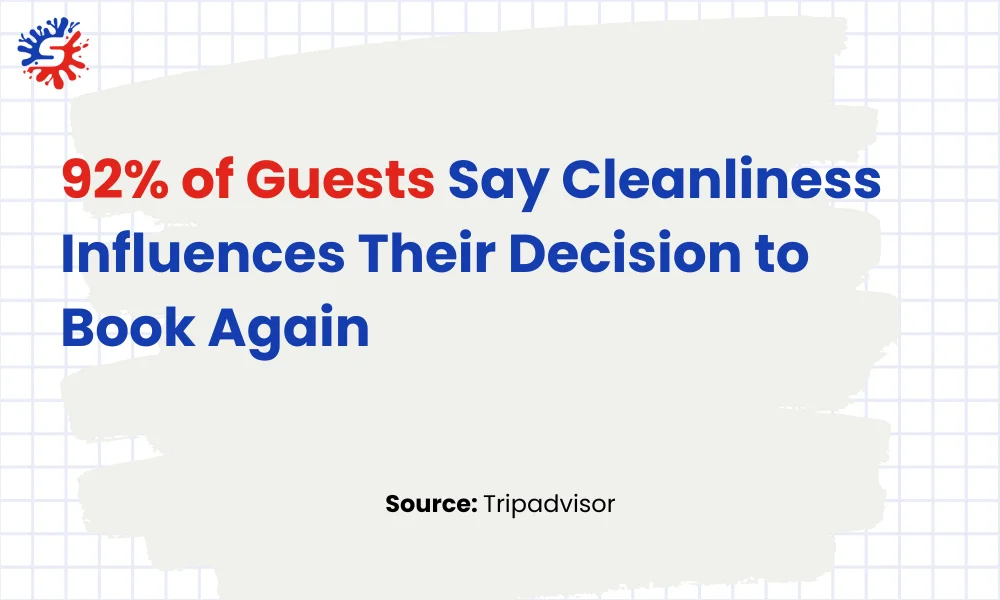
2. 92% Guests Rebook Clean Rentals
92% of guests say cleanliness influences their decision to book again. This single statistic underlines why maintaining spotless standards is a retention strategy, not just a hygiene obligation.
Source: Tripadvisor
3. 90% Gests Choose Rentals Based on Cleanliness Review
90% of guests using Booking.com and Airbnb say cleanliness is a key factor when choosing where to stay. This makes cleanliness the most consistently cited priority across all accommodation research.
Source: BedBooking
4. 4 Out of 5 People are Likely to Leave a Positive Review of a Clean Rental
78% of guests are more likely to leave a positive review if the rental is clean and well-maintained. By contrast, a visibly dirty property almost guarantees a critical review.
Source: Hospitable, 2024
5. Shared Space Sink Faucets and Bacteria
Home-sharing sink faucets had 250,000 times as many bacteria as their hotel counterparts. Faucet handles are among the most-touched surfaces in any bathroom, and among the most commonly missed during casual cleaning.
Source: Water Filter Guru
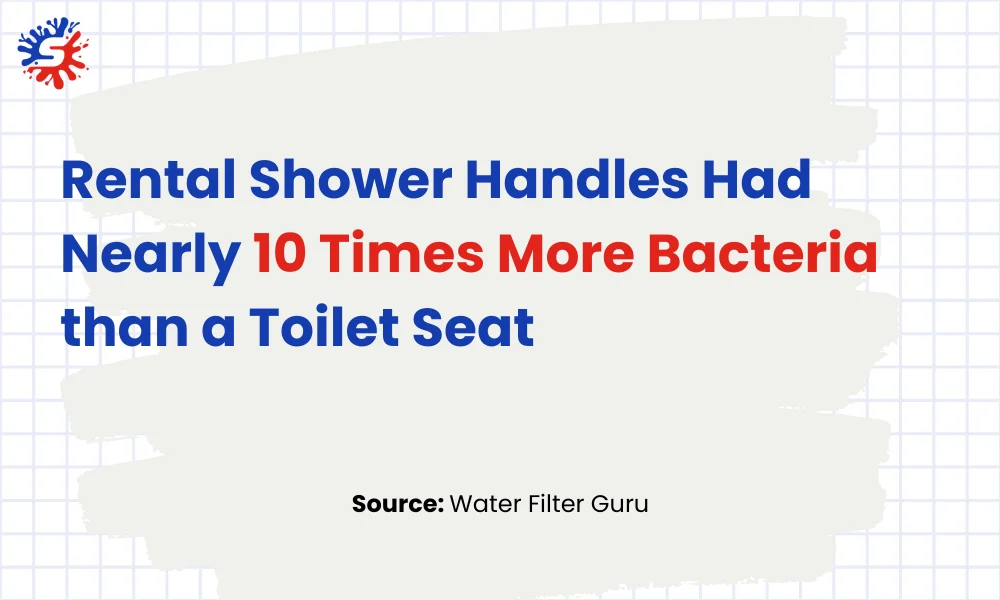
6. Rental Shower Handles Had Nearly 10 Times More Bacteria than a Toilet Seat
Vacation rental shower handles had nearly 10 times as many bacteria as a toilet seat, a sobering figure for any guest who grabs that handle first thing in the morning.
Source: Water Filter Guru
7. 81% of Hotel Surfaces Contain Fecal Bacteria
81% of surfaces sampled in hotels and short-stay accommodations contained fecal bacteria. Researchers found that light switches and TV remotes were among the most heavily contaminated surfaces.
Source: Scientific American
8. 140,000 CFUs of Bacteria Were Found on Airbnb Headboard
When Tuck Sleep conducted swab testing at short-term rentals, they found that a top-rated Airbnb headboard tested positive for 140,000 CFUs of bacteria, primarily gram-positive bacteria associated with skin infections. A headboard that looks clean can still be extensively contaminated.
Source: Tuck
9. Towles Inside Bathroom Carries 164,000 Bacteria per Square Inch
Research consistently shows that 90% of bathroom towels become contaminated with coliform bacteria (the family that includes E. coli). The average used towel harbours 164,000 bacteria per square inch.
Source: CABI
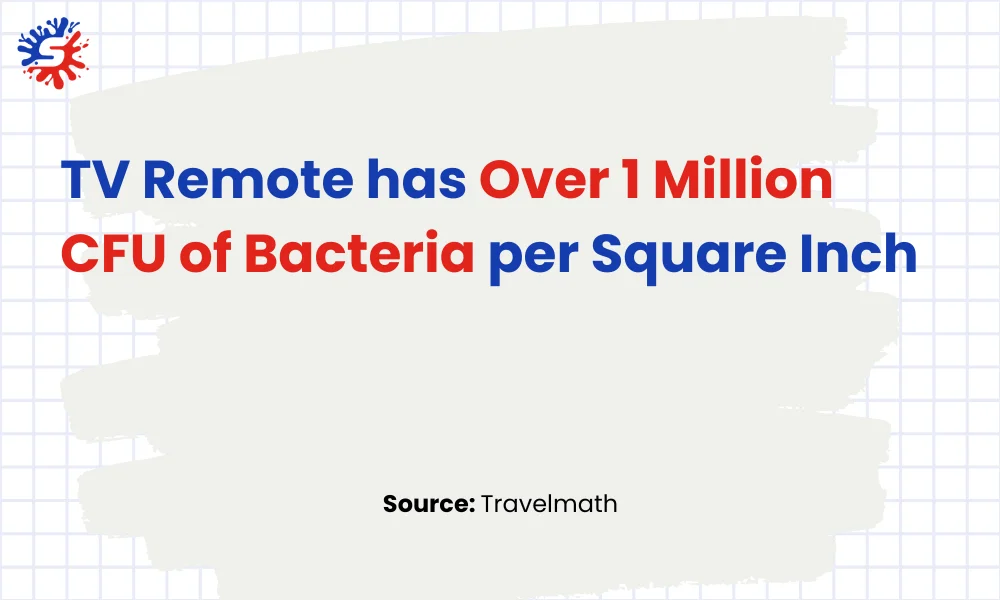
10. TV Remote has Over 1 Million CFU of Bacteria per Square Inch
The TV remote was identified as one of the dirtiest items in short-stay accommodation, with an average of 1,211,687 CFUs per square inch. With its irregular surface full of crevices between buttons, it is notoriously difficult to clean and is rarely prioritised during quick turnover cleans.
Source: Travelmath
11. Bathroom Counter has Over 2.5 Million CFU of Bacteria per Square Inch
In four-star accommodation, bathroom counters were the single most bacteria-laden surface of all areas tested, averaging up to 2,534,773 CFUs per square inch, approximately eight times dirtier than the cleanest three-star equivalent.
Source:Travelmath
12. Airbnb With Avg Rating of 4.8 or More Receives 20% More Bookings than Competitors
Properties with cleanliness ratings above 4.8 out of 5 receive 20% more bookings than those with lower cleanliness scores. In a market as competitive as Sydney or Melbourne, that differential can represent tens of thousands of dollars in annual revenue.
Source: Hostify
13. A Negative Review Can Reduce Booking by 5%
A single negative cleanliness review can reduce future bookings by up to 5%, and ten such reviews can reduce overall revenue by approximately 2%. In a market where margins are already squeezed by rising costs, this is a meaningful financial impact from a rushed turnover clean.
Source: Hostify
14. Cleaning Complaint Refunds Costs Airbnb Hosts $50 and $300 per Stay
The average cleaning-related guest issue costs Airbnb hosts between $50 and $300 per stay in refunds. These expenses that rapidly exceed the cost of professional cleaning.
Source: Hostaway
15. 33% of Short-Term Rental Guests Complaints During a Booking is Cleanliness
33% of short-term rental guests reported a lack of cleanliness as one of their five biggest complaints during a booking. Third, only to poor internet (39%) and poor property maintenance (38%), both of which also have cleanliness-related dimensions.
Source: Consumer Affairs
16. Australian Indoor Areas are 2 to 3 Times More Polluted than Outdoor Air
According to CSIRO, research on Australian homes, indoor air can be 2 to 5 times more polluted than outdoor air. In a short-term rental where guests bring their own allergens, pathogens, and biological debris, this risk is compounded with every new booking.
Source: CSIRO
17. Dust Mites Thrive in Bedrooms When Humidity Exceeds 60%
Dust mites thrive in bedding, carpets, and soft furnishings in environments where indoor temperature ranges between 20 and 30°C and humidity exceeds 60%. For short-term rental carpets that may go months between deep cleans, dust mite populations can reach significant levels.
Source: Sunstar
Conclusion
The data is clear: in the world of short-term rentals, cleanliness is a critical business metric. While a high-resolution photo might get a guest through the door, the invisible reality of bacteria levels and air quality determines whether they leave a five-star review or a formal complaint.
Don't let a missed headboard or a dusty carpet cost you 20% of your potential bookings. By prioritizing professional-grade hygiene, you aren't just cleaning a room; you’re investing in guest trust, higher rankings, and long-term profitability.
If you want to transform your Airbnb or short-term rental from a potential hygiene risk into a consistently five-star, guest-ready property, contact Spark Clean Australia today.