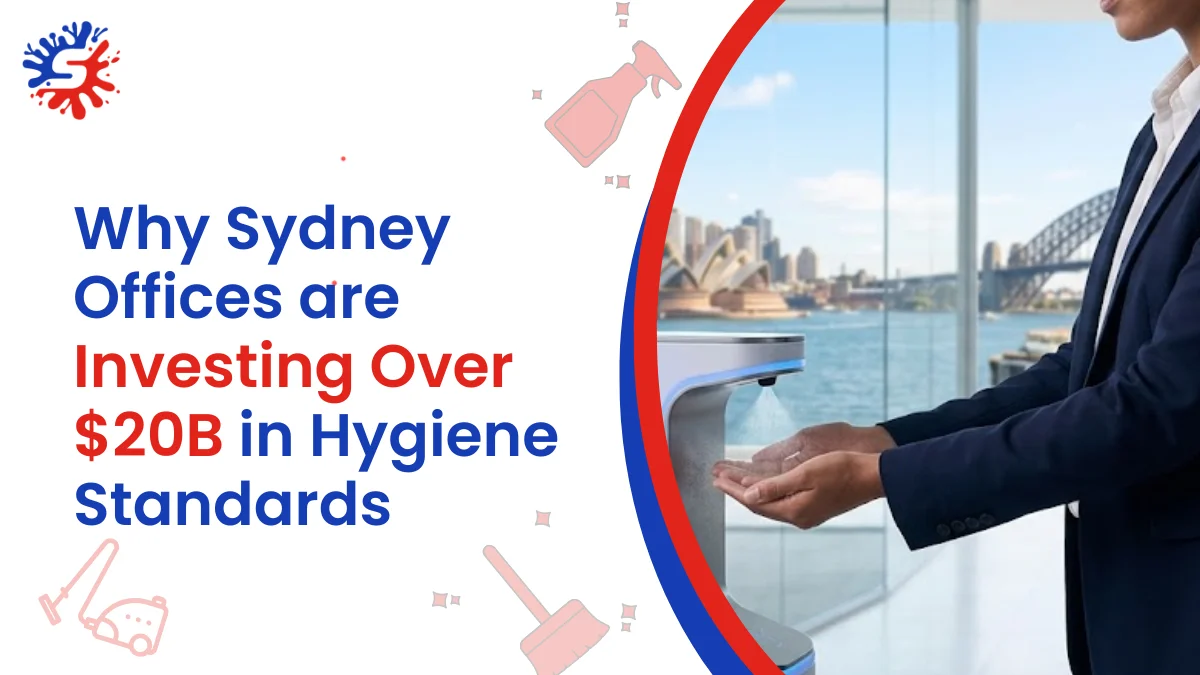
Why Sydney Offices are Investing Over $20B in Hygiene Standards
The commercial cleaning industry is over 20 billion AUD in 2026, and it's not slowing down. Businesses around the world are spending serious money on hygiene, cleaning, and healthy environments.
The question is whether your business is treating that spend as a grudging line item or as a genuine ROI decision.
Key Takeaways
- The average office worker is only productive for 2 hours 53 minutes (36%) of an 8-hour day
- It takes 23 minutes to refocus after each interruption, and workplace distractions add up quickly
- Office desks can hold over 10 million bacteria; 400x more than a toilet seat
- 80% of infections spread via direty hands in surfaces, making proper sanitisation critical
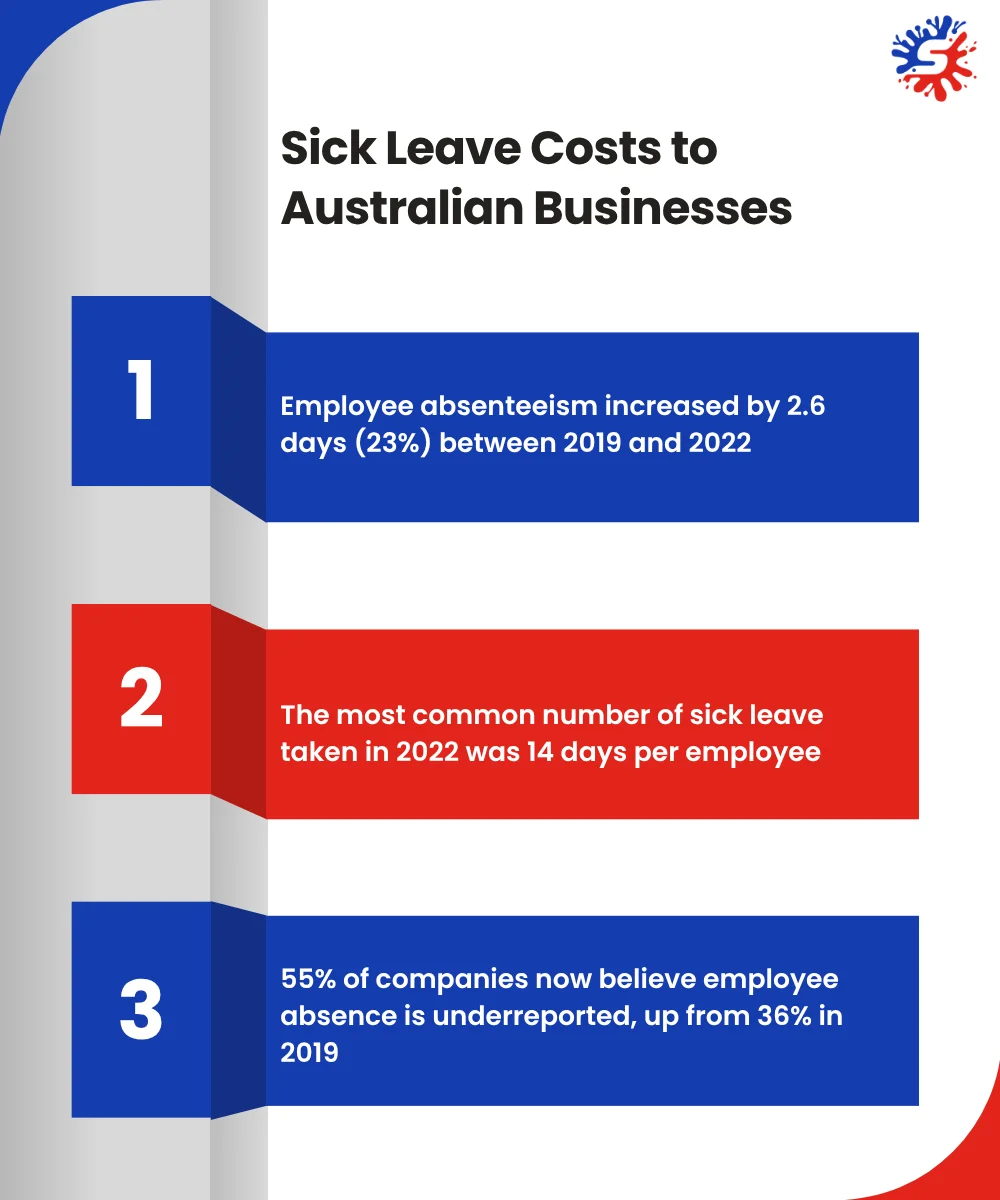
- Employee absenteeism in Australia increased by 23% (2.6 extra days) between 2019 and 2022
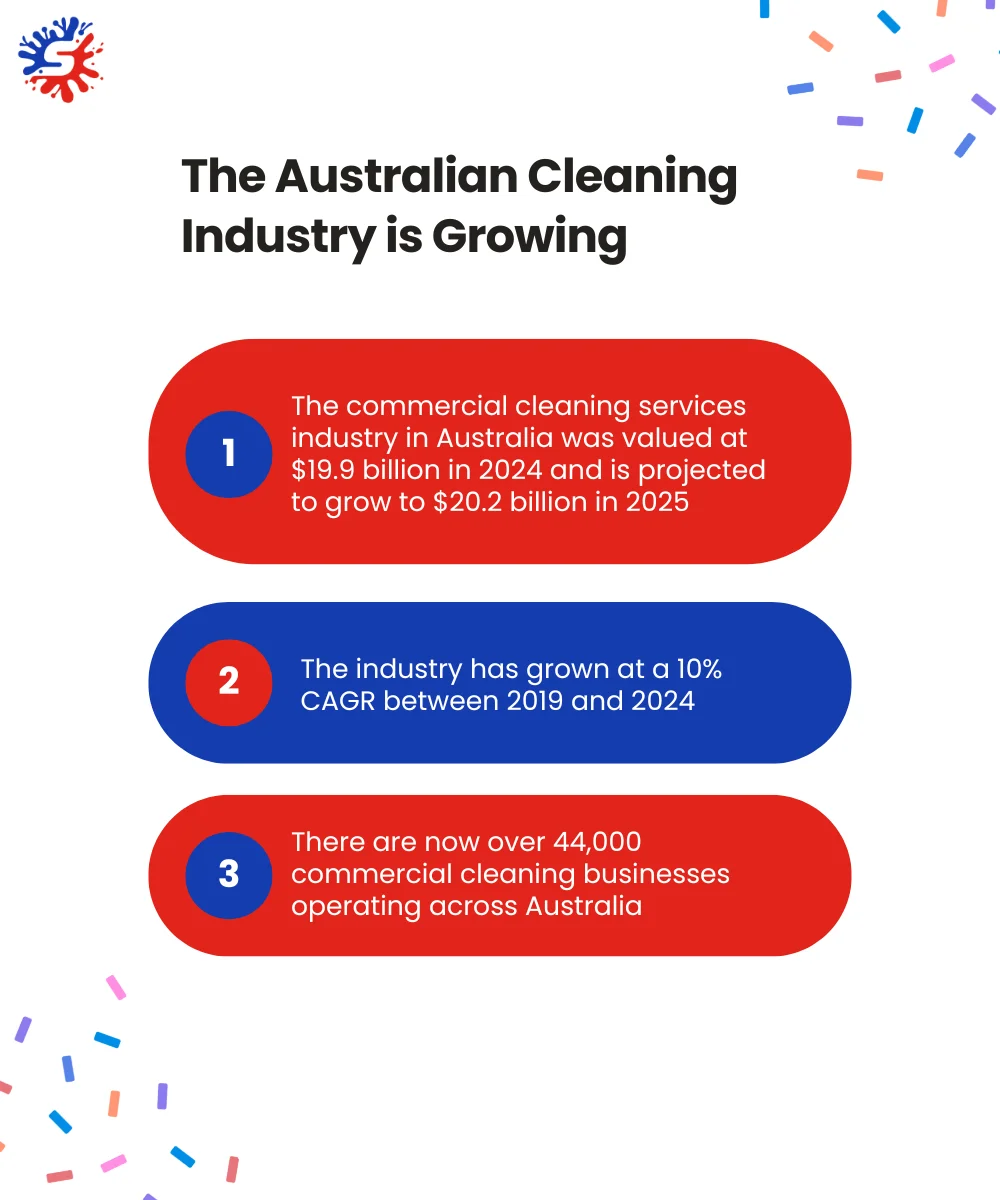
- The commercial cleaning industry has grown to $20B+ in Australia, showing strong demand for healthier workplaces
The Hidden Tax on Your Productivity
Most business owners focus on meetings, slow software, and profits. What they miss is the silent one: a workspace that's subtly, constantly pulling on the brain.
It's a bin that's been full since Tuesday. A sticky keyboard that nobody's wiped down. A cluttered meeting table with last week's coffee cups still sitting on it. Nobody's complaining, but everybody's affected.
A disorganised environment reduces the brain's ability to focus and increases cognitive load. Visual clutter actively competes with your employees' brains for attention, draining energy that should be going into actual work. That finding is supported by UCLA researchers, who found that people in cluttered environments had measurably higher cortisol levels, the body's primary stress hormone.
The Productive Hours Crisis
An average office worker is productive for only 2 hours and 53 minutes in an 8-hour workday. That's roughly 36% of a shift. Workers get interrupted during work hours, and after each interruption, it takes 23 minutes to fully regain focus.
Run those numbers out: just 20 interruptions in a workday theoretically eliminates focus time entirely. A single environmental distraction is functionally equivalent to an interruption. It doesn't derail a meeting. It just quietly bleeds cognitive energy that never gets recovered.
Research directly linking objective workspace cleanliness to worker output has been published in peer-reviewed academic journals. A 2018 study found that higher measured cleanliness correlates significantly with both higher perceived productivity and higher work satisfaction among office employees.
What's Actually Growing in Your Office Right Now
Let's get into the biology, because it's genuinely alarming. Research found that the average office desk harbours over 10 million bacteria, 400 times more than the average toilet seat.
The reason is behavioural, not mysterious. Employees eat at their desks, cough, and then touch their faces and keyboards. And unlike bathroom surfaces, which most people recognize as dirty and therefore clean regularly, desks are rarely disinfected between professional cleans.
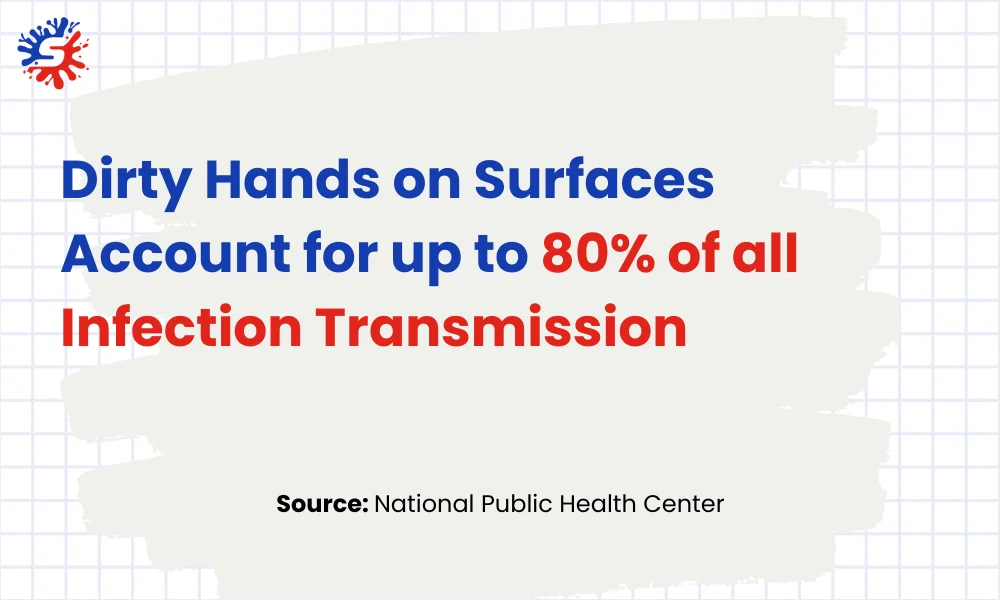
According to research, dirty hands on surfaces account for up to 80% of all infection transmission. In an office setting where people frequently touch objects, contamination spreads extraordinarily fast.
What Sick Leave is Costing Australian Businesses
This is where it starts to feel very real for Sydney’s business owners.
Australia's absence problem has been quietly worsening for years. According to the 2023 DHS report, which surveyed 132 companies covering over half a million employees:
The Air You're Breathing is Affecting Brainpower
Beyond germs and clutter, there's a third invisible force at work in most offices: air quality.
Researchers at Harvard conducted a year-long study involving 300+ office workers across six countries, published in Environmental Research Letters in 2021. Their findings were stark:
Increased concentrations of fine particulate matter (PM2.5) and lower ventilation rates were directly associated with slower response times and reduced accuracy on cognitive tests. They specifically noted impaired cognitive function at particulate levels typical of standard indoor environments.
Dust, mould, allergens, and particulate matter accumulate in uncleaned offices. Air filters clog. Carpets trap airborne debris. Surfaces collect fine particles that re-enter the air. A thorough professional clean directly addresses the air-quality conditions that are flagged as cognitively damaging.
The Australian Cleaning Industry is Growing
Businesses aren't investing in this space on gut feel. The numbers show a market responding to genuine demand.
According to IBISWorld's 2024/2025 Australian industry data:
Why Surface Cleaning isn't Good Enough
There's an important distinction worth making. A quick vacuum and a bin emptied overnight is not the same as a professionally planned cleaning program.
Bacteria on desks don't disappear without proper disinfectant or disinfecting wipes; without them, bacteria levels on desktop surfaces can rise significantly in a single day. Air quality isn't improved by surface cleaning alone; particulate matter in carpets, on surfaces, and in HVAC filters requires systematic attention.
What Spark Clean Australia Does Differently
At Spark Clean Australia, we don't treat commercial cleaning as a commodity. Every Sydney CBD office we clean is treated as a productivity environment, because that's what the research demands.
Our approach covers:
-
High-touch surface disinfection targeting the contamination hotspots: desks, phones, keyboards, door handles, lift buttons, and kitchen surfaces.
-
Regular deep cleans that go beyond the surface to address the particulate accumulation linked to cognitive decline.
-
Systematic declutter support that creates the organised, low-cortisol environment essential for sustained focus.
-
Consistent scheduling, because the benefits of a clean office compound when maintained, not when addressed irregularly.
The global hygiene market is growing because the evidence linking clean environments to human performance has become impossible to ignore. Sydney businesses that treat their workspace as a strategic asset are the ones building the kind of team health, client confidence, and productivity that shows up directly in their results.
Ready to see what a professionally cleaned Sydney CBD office can do for your team's output? Get in touch with Spark Clean Australia for a tailored quote.
Frequently Asked Questions
Find quick answers to booking, payments, pet-friendly policies, deep cleaning, and more. Our team is dedicated to making the process effortless and transparent. If you have additional questions, we're here to help ensure a seamless experience.
Get In Touch