Difference Between "Looking Clean" and "Sanitized" Commercial Cleaning
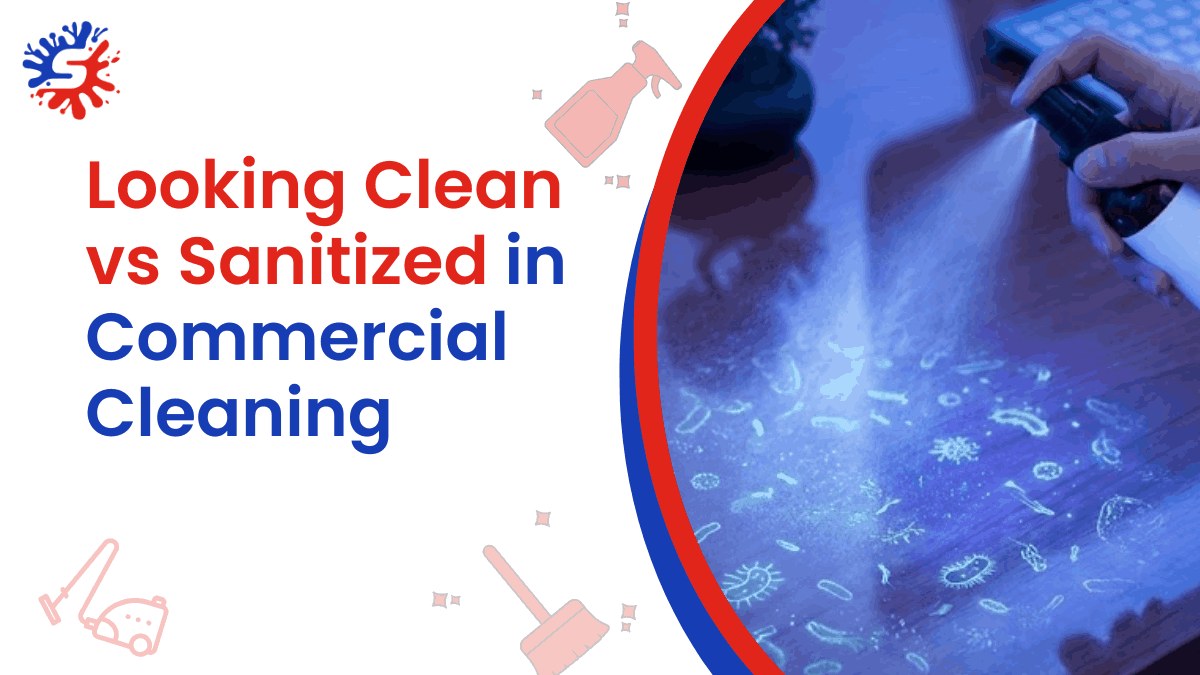
Just having sleek interiors and organised workstations does not guarantee the health and productivity of your employees. Workplace hygiene has measurable impacts on employee well-being and business outcomes.
For business owners and facilities managers, understanding this difference is critical. When cleaning is treated as a strategic investment rather than a cosmetic task, it becomes a proactive measure that safeguards operations and boosts morale.
The Business Risk of Relying on “Surface Clean” Alone
When businesses focus only on keeping floors and desks looking tidy, they miss a key point: a visually neat office does not necessarily stop germs from spreading between staff and visitors. A hygienic workplace requires targeted cleaning and sanitisation of high-touch areas to reduce the risk of infection and illness.
Why a Tidy Office Can Still Be a Hygiene Liability
Most workplaces are cleaned to look presentable, but that may not protect staff from pathogens hiding on key surfaces. In one workplace survey, only 40-50% of high-touch surfaces were consistently cleaned before targeted hygiene programmes were introduced.
High-Touch Hotspots That Spread Germs Fast in Commercial Spaces
Here are common locations where germs build up rapidly if not sanitised regularly:
-
Door handles and push plates (contacted constantly by every employee)
-
Shared keyboards, mice, and phones (multiple users per day)
-
Light switches and elevator buttons (often overlooked)
-
Kitchen appliances such as fridge handles and coffee machines
-
Meeting room tables and chair arms
The Financial Impact: Sick Leave, Lost Productivity, and Client Perception
Poor hygiene practices contribute to hidden operational costs, making them more than just a cleanliness issue.
-
Loss in productivity when staff call in sick due to preventable infections
-
Overtime or temporary staffing costs to cover absent workers
-
Negative client impressions from visibly unclean or poorly maintained workspaces
-
Increased HR and operational strain from repeated short-term absenteeism
Quick Audit: Are You Paying for Appearance or Protection?
Use this checklist to assess if your cleaning programme is hygiene-focused:
-
Do you sanitise high-touch points multiple times per day?
-
Are surface disinfection methods documented and measured?
-
Is there tracking showing a year-on-year reduction in staff sick days?
-
Do your cleaners have training in infection control protocols?
-
Are clients or visitors provided with visible hygiene reassurance (sanitiser stands, clear cleaning records)?
What True Commercial Sanitisation Includes (And Why It Costs More)
Before we break down what a hygiene-focused sanitisation programme actually involves, it helps to understand why just wiping desks and floors is not enough. True sanitisation combines cleaning, sanitising, and sometimes disinfecting so that harmful germs are reduced to safe levels and, where necessary, eliminated almost entirely.
According to public health guidelines, a sanitiser must reduce bacteria on surfaces by 99% within a short contact time to be considered effective. Any true sanitisation programme will involve clear steps, trained staff, and approved products to achieve these outcomes.
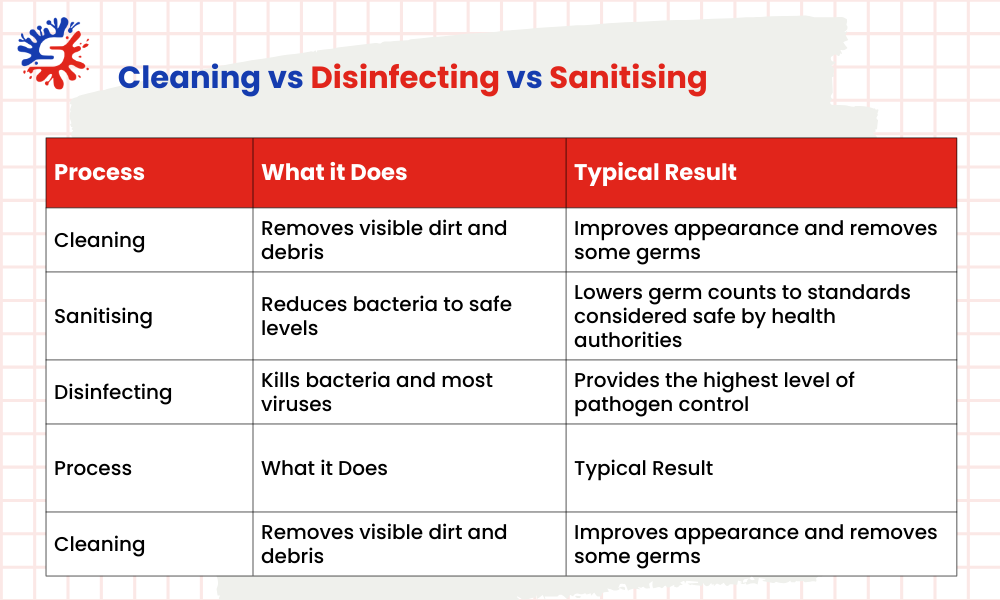
Cleaning vs Disinfecting vs Sanitising Explained for Business Owners
Here is how the three levels of hygiene differ in purpose and effect:
Step-by-Step: How a Professional Sanitisation Process Works
Professional sanitisation is not a quick wipe but a structured sequence that systematically targets unseen health risks.
-
Perform a walk-through to identify high-risk and high-touch areas.
-
Clean visibly soiled surfaces with detergents to remove dirt and organic matter.
-
Apply certified sanitising solutions with the correct dwell time to effectively reduce bacterial counts.
-
For higher risk areas or outbreaks, add a disinfectant phase targeting viruses and other pathogens.
-
Inspect and document results plus hygiene scores after each session.
Frequency Framework: Daily, Weekly, and High-Risk Area Scheduling
Most commercial programs schedule sanitisation of shared high-touch areas at least once per day, with additional cycles in high-traffic periods to keep germ levels down and help reduce workplace illness.
|
Area Type |
Suggested Frequency |
Why it Matters |
|
High-touch points |
Multiple times per day |
These surfaces get contaminated quickly |
|
General office areas |
Daily sanitisation |
Maintains an ongoing hygiene baseline |
|
Meeting rooms & phones |
Between uses |
Reduces cross-contamination |
|
Restrooms & kitchens |
Daily plus spot checks |
High germ load zones |
Compliance Considerations for Offices, Medical, Childcare, and Hospitality
Compliance not only protects people but also helps businesses avoid liability and maintain trust in client-facing sectors.
-
Follow workplace health standards or local industry regulations where they apply
-
Use products approved for sanitisation or disinfection to meet safety claims
-
Record schedules and results to demonstrate due diligence
-
Train staff in correct application methods and safety protocols
Scope Comparison: Standard Commercial Cleaning vs Hygiene Focused Program
Understanding the difference between a basic cleaning contract and a hygiene-focused commercial cleaning is critical for risk management. Many Australian businesses assume their current cleaner is covering infection control, yet research shows that only a few workers strongly agree their workplace is cleaned to a high hygienic standard.
What’s Typically Covered in a Basic Cleaning Contract
A standard commercial cleaning agreement usually focuses on visible cleanliness and presentation.
|
Area |
Typical Inclusions |
Frequency |
|
Floors |
Vacuuming and mopping |
2 or 3 Times a Week |
|
Desks |
Surface wipe |
Weekly or on request |
|
Bins |
Empty rubbish and replace liners |
Daily |
|
Bathrooms |
Clean toilets and sinks |
Daily |
|
Kitchenette |
Wipe benches and empty bins |
Daily |
What’s Added in a Risk Reduction and Sanitisation Plan
A hygiene-focused programme builds on basic cleaning with structured infection control.
|
Area |
Added Hygiene Measures |
Frequency |
|
High touch surfaces |
Targeted sanitisation with dwell time compliance |
Daily to multiple times daily |
|
Shared equipment |
Disinfection between users |
After use |
|
Bathrooms |
Documented sanitisation logs |
Daily plus checks |
|
Kitchens |
Food-safe sanitising agents |
Daily |
|
Entry points |
Hand sanitiser stations and monitoring |
Ongoing |
Add-On Services That Strengthen Workplace Health Outcomes
-
Disinfection treatments for broader surface coverage
-
Carpet steam cleaning to remove embedded contaminants
-
HVAC vent cleaning to reduce airborne dust
-
After hours deep cleaning during illness outbreaks
-
Touch point audits with reporting
Customising Scope Based on Foot Traffic, Layout and Staff Numbers
A 10-person office operating three days a week carries a different risk profile from a 60-staff call centre with daily visitors. Open-plan layouts increase shared surface contact, while high-traffic areas such as receptions and lifts require more frequent sanitisation.
When to Upgrade: DIY, Janitorial Support, or Professional Commercial Cleaning
As your business grows, so does your hygiene risk. While small teams can often manage basic cleaning internally, infection control becomes more complex as staff numbers, foot traffic, and shared spaces increase.
Understanding when to upgrade from DIY cleaning to structured commercial sanitisation helps you avoid reactive decision-making during outbreaks.
When In-House Cleaning is Usually Enough
In low-risk environments, basic internal cleaning can maintain acceptable presentation standards.
-
Small teams under 5 to 10 staff
-
Low foot traffic and no public access
-
Minimal shared equipment
-
Staff rostered to clean daily with a checklist
-
No industry-specific hygiene compliance requirements
Warning Signs Your Business Needs Professional Sanitisation Support
Workplace studies have shown that germs can survive on hard surfaces for up to 48 hours, depending on conditions, increasing the risk of transmission when sanitisation is inconsistent.
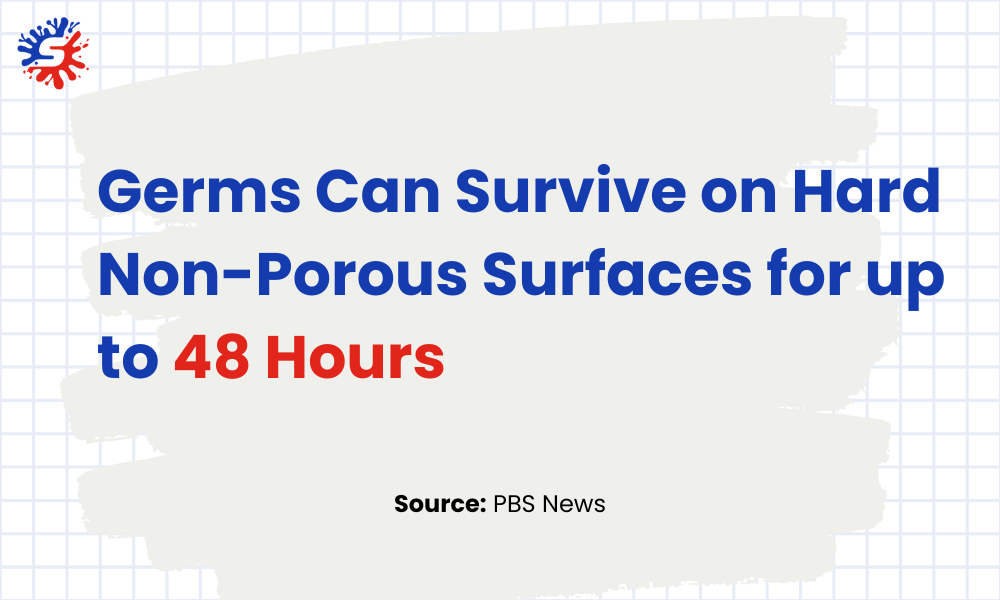
That risk grows in open-plan offices and high-density workplaces.
-
Staff sickness increasing during flu season
-
Shared desks, phones, or equipment used daily
-
Client-facing spaces with regular visitor traffic
-
No documented sanitisation process
-
Cleaning tasks are constantly skipped due to the workload
Cost Drivers Explained: Size, Access, Frequency, and Risk Level
|
Cost Factor |
How it Impacts Pricing |
Example Scenario |
|
Site size |
Larger areas require more labour hours |
1,000 sqm office vs 250 sqm suite |
|
Access hours |
After hours services may require premium staffing |
Cleaning after 6 pm |
|
Frequency |
Daily or multiple daily visits increase cost |
Medical clinic vs small office |
|
Risk level |
Higher compliance needs require specialist products and training |
Childcare or aged care setting |
Choosing a Commercial Cleaning Partner That Protects Your Reputation
By this stage, it is clear that hygiene directly affects staff wellbeing, compliance, and client confidence. The wrong cleaning partner can expose your business to operational and reputational risk.
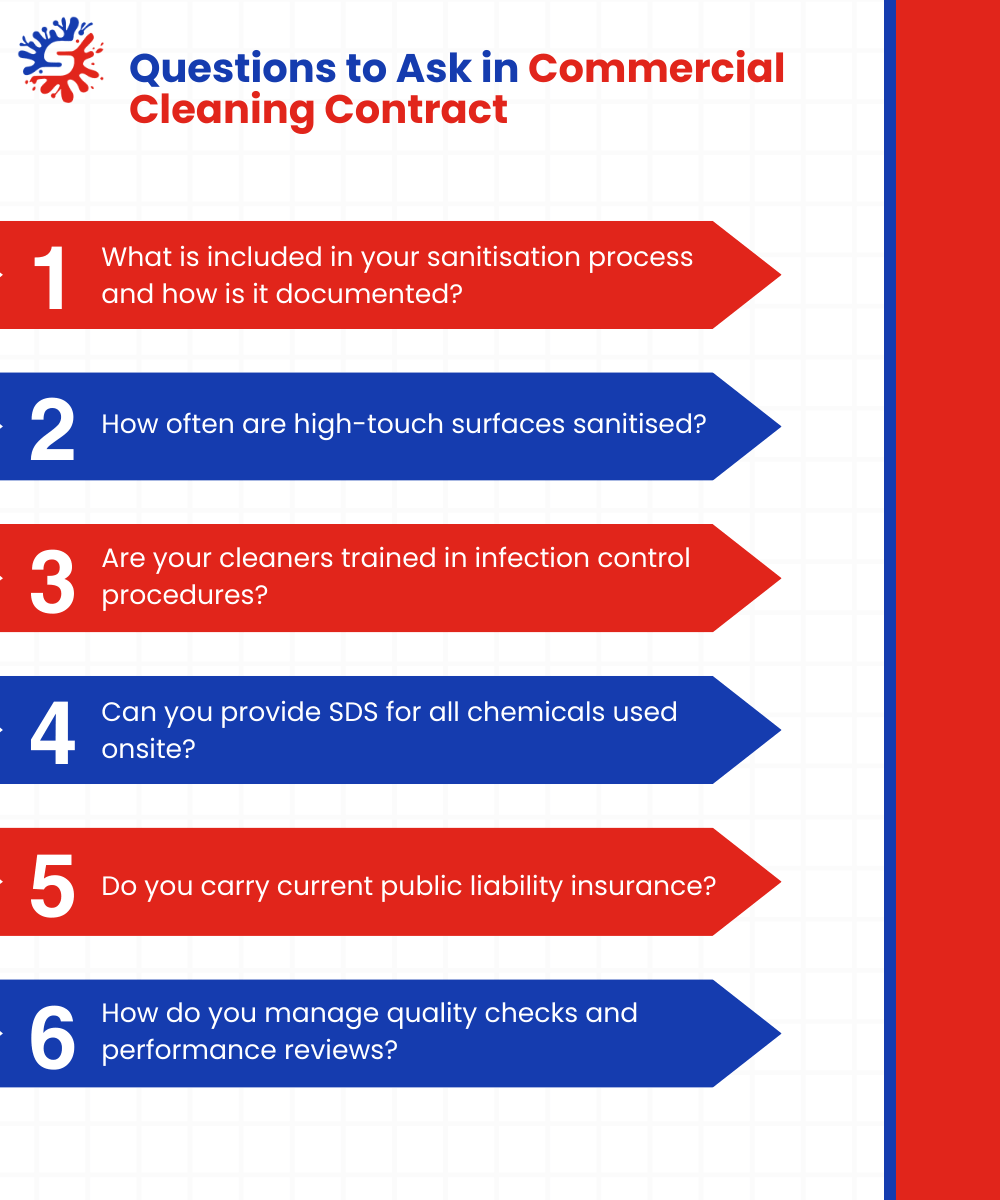
Questions to Ask Before Signing a Cleaning Agreement
Clear answers reduce uncertainty and help you compare providers fairly.
 Red Flags: Vague Scopes, No Insurance, No Clear Sanitisation Method
If a provider cannot explain how germs are reduced, they are likely focused on appearance rather than protection.
-
Quotes that list only “general cleaning” with no details
-
No written cleaning checklist or task schedule
-
No proof of insurance or police checks
-
No explanation of dwell time or sanitising products used
-
Inconsistent communication or unclear supervision structure
Quote Readiness Checklist: Information to Provide for Accurate Pricing
Providing this detail upfront helps avoid underquoting or scope gaps later.
-
Total floor area in square metres
-
Number of staff onsite daily
-
Operating hours and access times
-
Industry type and compliance requirements
-
Frequency required for cleaning and sanitisation
-
Known high-risk areas such as kitchens, clinics, or shared equipment
Conclusion
Organisations that prioritise hygiene can reduce avoidable illness, strengthen employee confidence, and present a professional image to clients. Visible cleanliness and documented sanitisation protocols work together to protect your workforce and your brand.
Taking action today can help prevent tomorrow’s absenteeism, protect productivity, and reinforce trust with staff and clients alike. Consider scheduling an on-site review, booking a hygiene performance evaluation, or calling for a customised cleaning plan that aligns with your business goals.