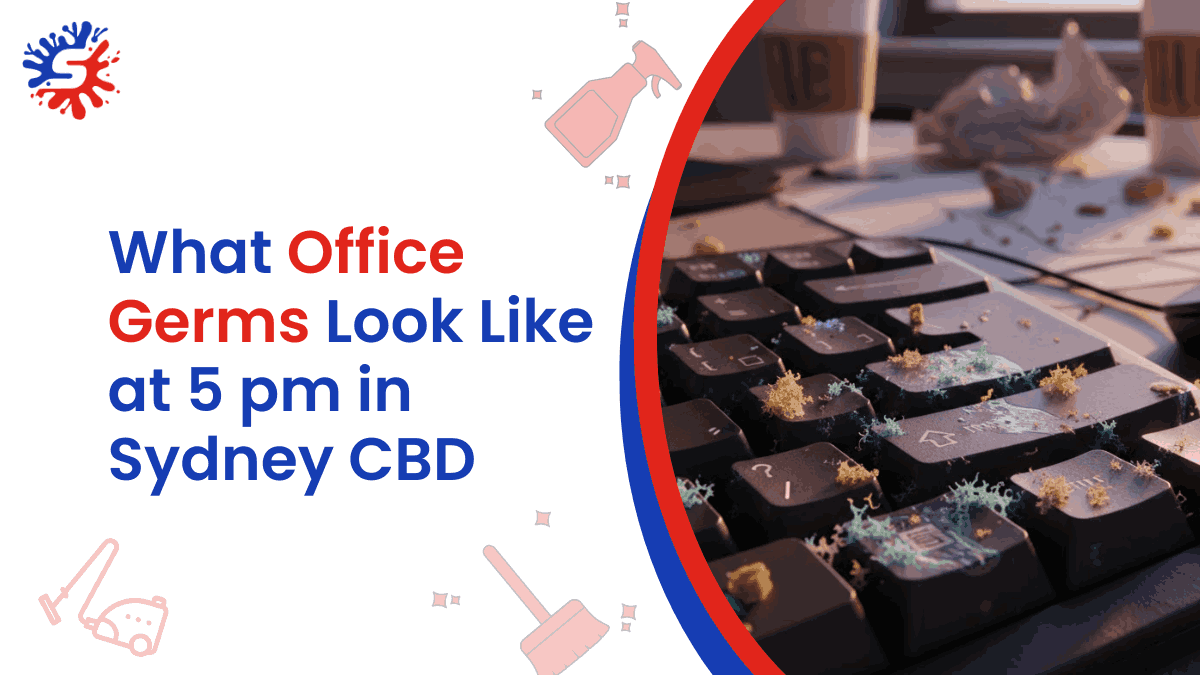
What Office Germs Look Like at 5 pm in Sydney CBD
A clean office boosts your staff's health and productivity and improves how clients perceive your business. In busy commercial areas, workplaces often share kitchens, bathrooms, meeting rooms, and high-touch equipment, increasing the risk of germ transmission.
Structured, consistent office cleaning is a practical way to protect your team and maintain a professional environment.
The 5 pm Hygiene Reality in Aussie Offices
By 5 pm, many surfaces staff and visitors touch throughout the day have accumulated a heavy load of microbes and bacteria. These are places everyone reaches for, yet they are often overlooked during quick cleans or skipped.
The High-Touch Surfaces That Carry the Most Germs by EoD
Here are some of the spots that build up microbes fast:
-
Desks and workstations: The average office desk can harbour more than 10 million bacteria, dirtier than a toilet seat.
-
Computer keyboards and mice: Touched constantly yet rarely disinfected, these are prime spots for bacteria transfer.
-
Door handles and light switches: Used by nearly everyone in the office multiple times daily, spreading microbes between hands and surfaces.
-
Phones and headsets: Shared or individually used, these get touched frequently without cleaning.
-
Kitchen appliances: Shared food-prep areas increase the risk of contamination when not cleaned frequently.
Shared Areas Where Cross-Contamination Happens Fast
Shared spaces in an office are where multiple people interact with the same surfaces in a short timeframe. Kitchens and break rooms see repeated use of fridge handles, counters, and appliance buttons, which can quickly become reservoirs of bacteria.
On the other hand, bathrooms in offices are major cross-contamination zones too. Items such as faucet handles, flush buttons, and door latches are touched by many people throughout the day, with varying hand-washing habits, which increases the spread of microbes.
Similarly, meeting rooms used by different teams or clients multiple times a day are frequently touched by tables, chairs, remote controls, and light switches. This creates a chain of touch points ripe for germ transfer if not cleaned properly.
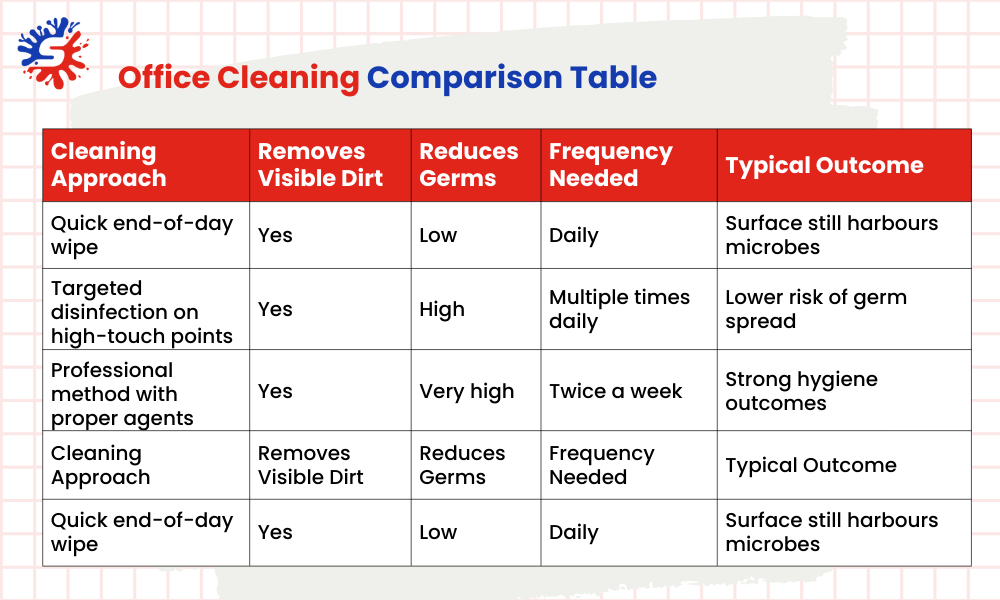
Why “Quick Wipe-Downs” Don’t Reduce Germ Load Effectively
Quick wipe-downs at the end of the day often look like cleaning but don’t actually remove or kill most microbes. Professional cleaning involves more thorough steps and the right disinfectants. The table below shows a comparison:
Impact on Staff Health, Sick Leave, and Business Reputation
When germs build up on surfaces throughout the workday, staff are more likely to catch colds, flu, or stomach bugs from each other. Surface contact accounts for a large share of communicable disease transmission because people touch hundreds of surfaces and then their face within minutes.
More illness leads to higher rates of absenteeism and presenteeism, reduced productivity, and revenue loss. It can also affect your business's reputation if visitors notice unclean spaces or if staff frequently call in sick.
What Professional Office Cleaning in Sydney Should Actually Cover
A good professional office cleaning should deliver consistent, measurable hygiene and health benefits for staff and visitors each time the team cleans. Below, you’ll see what a quality cleaning service usually includes and the critical hygiene steps that should never be optional.
Core Daily Cleaning Tasks Most Providers Include
A proper daily office cleaning helps keep dirt, debris, and other contaminants under control, keeping your workplace healthier every day. Typical tasks include:
-
Empty and sanitise all trash and recycling bins and replace liners.
-
Vacuum carpets and sweep/mop hard floors.
-
Dust and wipe desks, workstations, tables, and counters.
-
Disinfect high-touch surfaces such as door handles and light switches.
-
Clean and sanitise restrooms, and refill consumables such as soap and paper towels.
-
Sanitize kitchen and pantry surfaces, including sinks and tabletop areas.
Hygiene-Critical Disinfection Points That Should Never Be Optional
Some parts of your office absolutely need more than a swipe with a cloth to stop germ transfer. Professional standards require:
-
Full restroom disinfection, not just surface cleaning
-
Sanitising high-touch shared tech (keyboards, phones, touch panels)
-
Food prep area disinfection, including fridges and microwaves
-
Entrance and reception area surface sanitisation
How After-Hours Cleaning Reduces Workplace Disruption and Germ Spread
When cleaning happens after hours, professional cleaners can:
-
Move freely to get into corners and hard-to-reach spots.
-
Conduct thorough disinfection without interrupting meetings or workflows.
-
Empty and replace bins without disrupting daily office routines.
DIY Cleaning vs Professional Office Cleaners in Sydney CBD
For some small teams, basic in-house cleaning may be enough. However, in high-traffic workplaces, professional office cleaning becomes a practical business decision rather than a luxury.
When In-House Cleaning is Enough
In-house or shared staff cleaning can work if:
-
You have a small team of 3 to 5 people with minimal foot traffic.
-
The office has no shared kitchen or only light use.
-
Staff rotate simple tasks like emptying bins and wiping desks daily.
-
There are no compliance requirements linked to health, childcare or medical services.
-
You only need basic presentation cleaning, not structured disinfection.
When Professional Cleaning Becomes the Smarter Business Decision
Professional office cleaners in Sydney are usually the better option when:
-
Your office has 10 or more staff sharing workstations or facilities.
-
You have high-touch shared areas like kitchens, bathrooms, and meeting rooms.
-
Clients or customers visit your premises regularly.
-
You need documented cleaning checklists for compliance.
-
Staff illness is affecting productivity.
Risk vs Cost Comparison for Small, Medium, and High-Traffic Offices
Offices with higher traffic naturally have higher exposure to shared surface contamination and benefit more from structured professional cleaning.
|
Office Type |
Germ Exposure Risk |
Cleaning Approach |
Short-Term Cost |
Long-Term Risk |
|
Small, low traffic |
Low to moderate |
Basic in-house cleaning |
Low |
Moderate if inconsistent |
|
Medium shared office |
Moderate |
Hybrid or professional |
Medium |
Lower with structured cleaning |
|
High-traffic or client-facing |
High |
Professional plus disinfection |
Higher |
Significantly reduced risk |
Hidden Costs of Inconsistent Cleaning
What many businesses overlook are the indirect costs of inconsistent cleaning. If surfaces are missed or hygiene drops, you face:
-
Re-cleans after complaints from staff or visitors
-
Reduced morale due to unclean kitchens or bathrooms
-
More sick leave and temporary staffing gaps
-
Lost productivity from cleaning tasks pulled into admin staff workloads
How to Choose a Reliable Office Cleaning Provider
Choosing the right office cleaning provider is about reliability, compliance, and consistent hygiene outcomes. A clear scope and trained cleaners protect your business from risk and ensure your workplace stays presentable and safe every day.
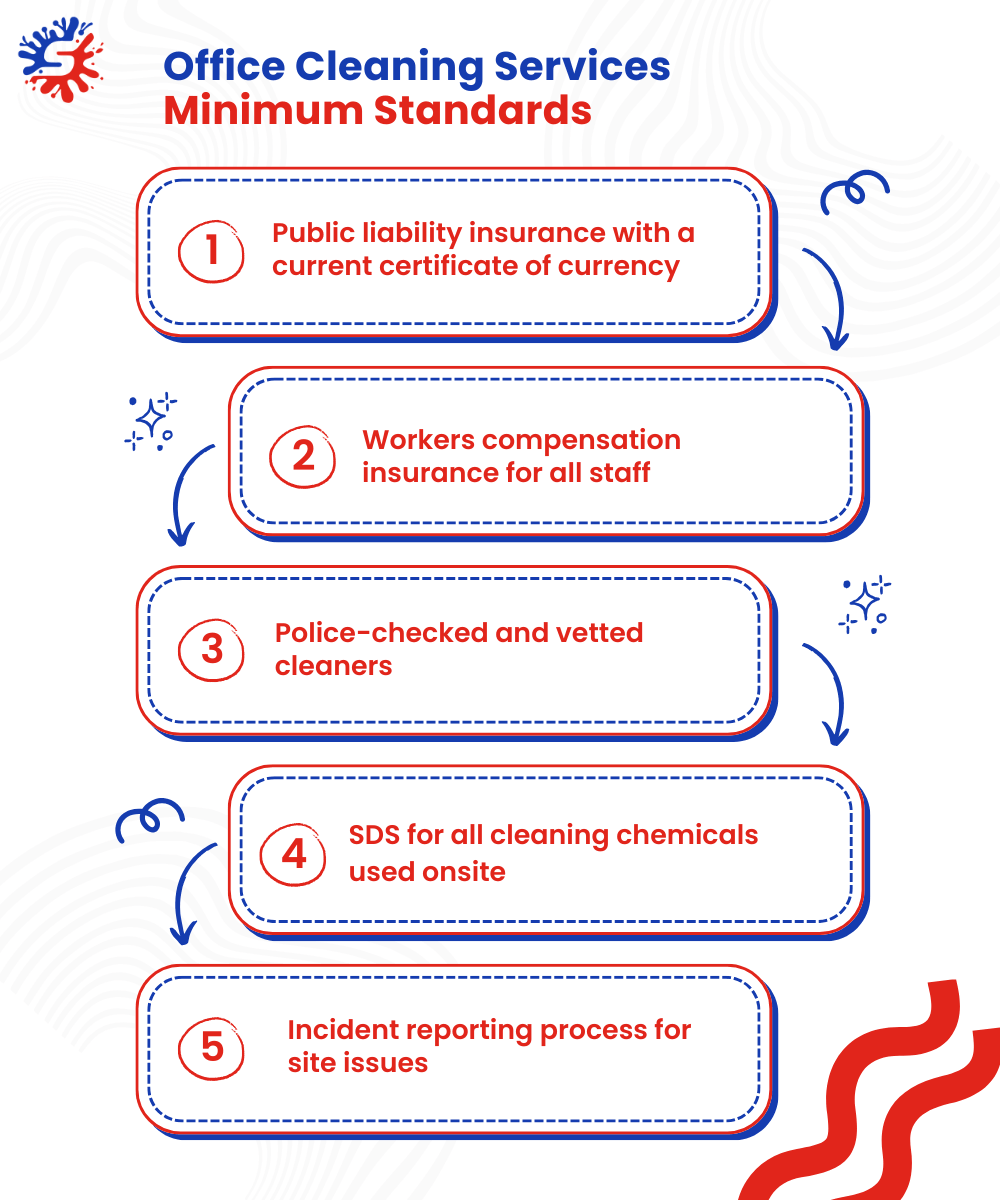
Non-Negotiables: Worker Compensation, Police Checks, and Public Liability Insurance
Any professional office cleaning provider should meet these minimum standards:
Questions to Ask Before Accepting a Cleaning Quote
A detailed conversation upfront prevents scope gaps later. Consider asking:
-
What exactly is included in the daily cleaning checklist?
-
Are high-touch surfaces disinfected every visit?
-
How are consumables like soap and paper restocked?
-
Is there a supervisor or quality inspection process?
-
What happens if we are not satisfied with a clean?
-
Can cleaning be scheduled after hours?
-
Are add-on services clearly itemised?
Red Flags to Watch for When Comparing Providers
Be cautious if you notice:
-
Extremely low pricing compared to other quotes
-
No written cleaning scope provided
-
No proof of insurance
-
Cash-only arrangements
-
Unclear staff screening processes
-
No formal complaint resolution process
What a Clear, Transparent Cleaning Proposal Should Include
A strong proposal removes guesswork and sets clear expectations on both sides. When the scope is mapped properly from the start, your office is far more likely to receive consistent, reliable cleaning results.
|
Proposal Element |
What You Should See |
|
Scope of works |
Room-by-room task list with frequency |
|
Pricing structure |
Clear weekly or monthly rate in AUD |
|
Add-on services |
Separate pricing for carpets, windows, deep cleans |
|
Cleaning schedule |
Days, times and after-hours details |
|
Compliance documents |
Insurance certificates and safety documents |
|
Service guarantee |
Clear satisfaction or rectification policy |
Getting a Fast, Accurate Quote for Your Office
Getting a clear quote for office cleaning in should not be complicated. The more accurate information you provide upfront, the more precise and realistic your pricing will be.
Quote-Readiness Checklist: Information to Prepare Before Contacting a Cleaner
Before requesting a quote, have this information ready:
-
Total office size in square metres
-
Number of staff onsite daily
-
Number of bathrooms and kitchen areas
-
Flooring types such as carpet, vinyl or tiles
-
Frequency required, such as daily or fortnightly
-
Preferred cleaning time such as after-hours or early morning
-
Any compliance requirements for your industry
-
Known problem areas such as high-traffic zones
What Impacts Office Cleaning Pricing (Size, Frequency, Risk Areas, Access)
|
Pricing Factor |
How it Affects Cost |
|
Office size |
Larger spaces require more labour hours |
|
Cleaning frequency |
Daily services cost more than weekly |
|
High-risk areas |
Kitchens and bathrooms increase time and disinfectant use |
|
After-hours access |
May affect staffing and scheduling |
|
Special services |
Carpet cleaning or deep cleaning is additional |
|
Site complexity |
Multiple levels or restricted access adds time |
How to Book an After-Hours Cleaning in Sydney
Follow these simple steps:
-
Gather your office details using the checklist above.
-
Contact us by phone, chat, or online booking.
-
Confirm preferred cleaning time.
-
Review the proposed cleaning checklist and frequency.
-
Receive a written quote outlining inclusions and pricing.
Conclusion
Maintaining high hygiene standards in a busy workplace takes more than a quick tidy-up. Understanding what should be included in a proper cleaning scope helps you avoid gaps that lead to complaints, re-cleans, or inconsistent results.
If you are reviewing your current cleaning setup or planning for a new office space, now is a good time to reassess your hygiene standards. A tailored plan based on your office size, traffic levels, and compliance requirements will always deliver better long-term value.
Speak with our team today and receive a detailed proposal that matches your workplace requirements.