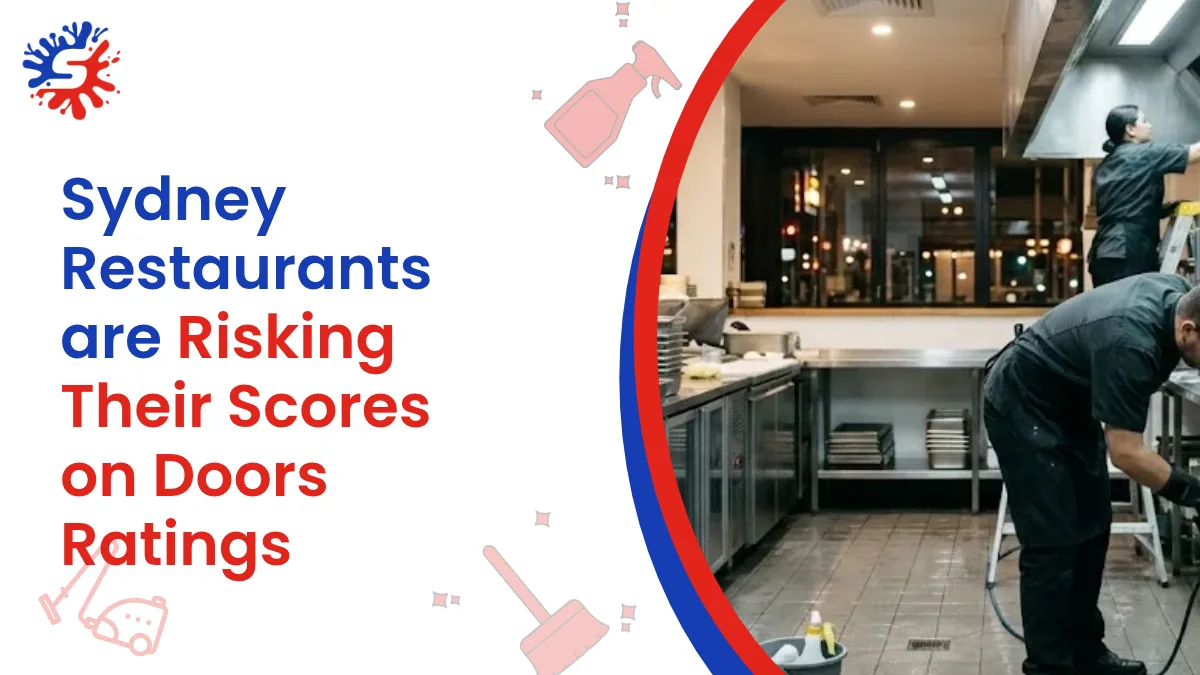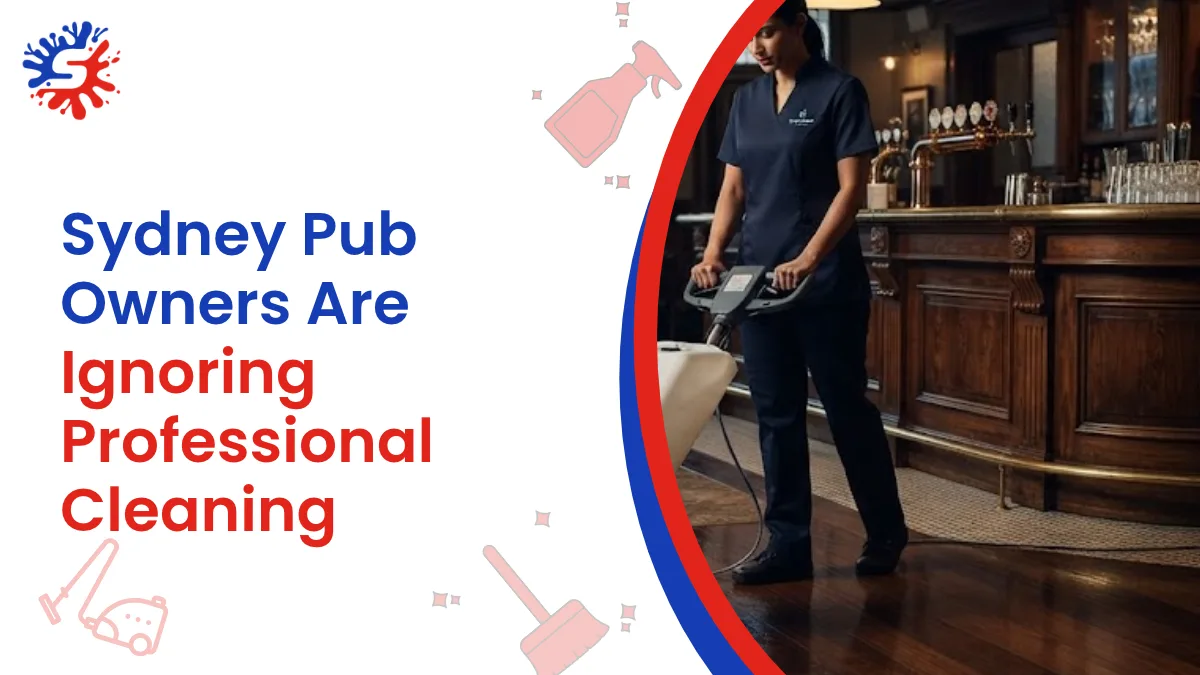
Get Your Sydney Restaurant Ready for Summer Cleaning

Summer in Sydney is the hospitality industry's golden season. The warm weather brings a massive influx of locals and tourists eager to dine out. But this boom also brings a serious challenge: maintaining impeccable hygiene standards during the year's hottest, busiest time.
Australia's commercial cleaning services market reached a staggering $20.7 billion in 2026, continuing to grow. This massive investment highlights just how seriously Australian businesses take cleanliness.
For restaurant owners, a spotless venue is about compliance, safety, and protecting your hard-earned reputation.
Key Takeaways
- Sydney's hot and humid summer weather significantly accelerates bacterial growth and pest activity, making proactive and rigorous cleaning schedules essential.
- Adhering to FSANZ Standard 3.2.2 and maintaining a certified Food Safety Supervisor is legally required to avoid heavy fines or forced closures in NSW.
- Front-of-house areas need daily attention to protect public health and customer trust.
- Grease build-up inside exhaust canopies poses a catastrophic fire hazard during summer and requires professional scraping and degreasing.
- Using GECA-certified, eco-friendly cleaning products protects both the local environment and your busy kitchen staff's respiratory health.
- Outsourcing deep cleaning to commercial experts ensures regulatory compliance while letting your culinary team focus on food service and customer experience.
Why Summer Cleaning is Different in Sydney
Sydney summers are famous for their beauty, but they are also infamous for high humidity and scorching temperatures. This weather creates unique challenges for restaurant managers and commercial kitchens.
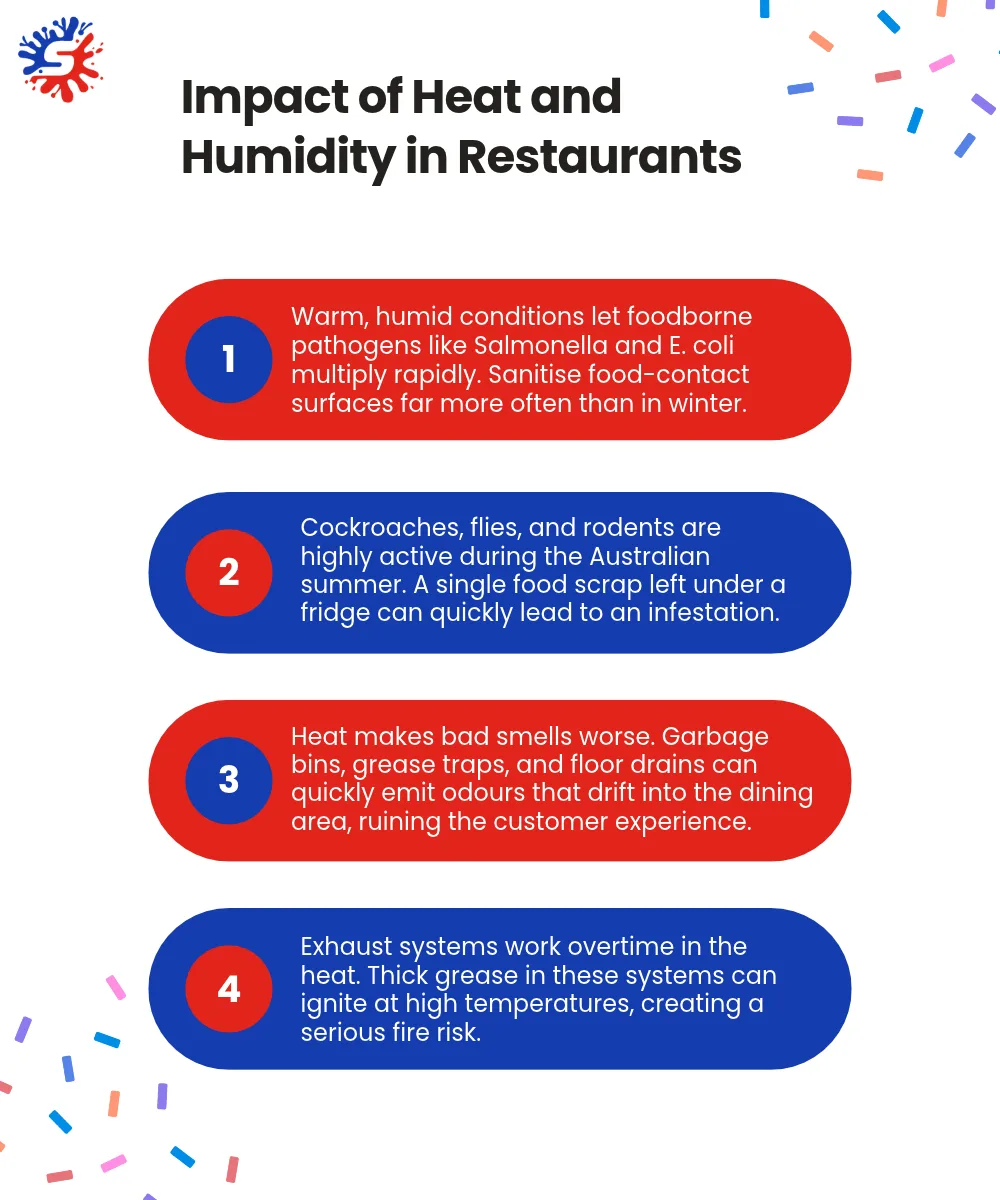
The Impact of Heat and Humidity
As temperatures rise, your kitchen becomes a breeding ground for bacteria and pests.
Coping with Heavy Foot Traffic
Summer means more patrons walking through your doors. More foot traffic means more dirt tracked in from the streets, more spills on the tables, and more wear and tear on your bathrooms.
Handling this volume requires a proactive cleaning strategy, not a reactive one. You cannot wait until the end of the shift to clean a spill; you need continuous maintenance.
NSW Food Authority Regulations
In New South Wales, food safety is strictly regulated. Failing to meet these standards can result in hefty fines, public naming and shaming, or even immediate closure of your business.
FSANZ Standards and Local Laws Explained
Australian food businesses must comply with the strict hygiene regulations set by the FSANZ Standard 3.2.2 and 3.2.2A. Below is a breakdown of what these laws require of your business.
|
Regulation / Standard |
What It Means for Your Restaurant |
Penalty for Non-Compliance |
|
Standard 3.2.2 (Food Safety Practices) |
Keep all food-contact surfaces, equipment, and premises clean, sanitized, and free of contamination risks. |
Fines can run into tens of thousands of dollars, or the license can be suspended. |
|
Standard 3.2.2A (Recent Update) |
Requires businesses to have at least one trained Food Safety Supervisor and ensures all food handlers have documented training. |
Infringement notices and potential business closure for serious health risks. |
|
Local Council Inspections |
Health Inspectors can enter your property at any time without permission to take samples, check training records, and inspect all areas. |
The Council can immediately close the premises if they pose a serious public health threat. |
The Role of the Food Safety Supervisor
Every restaurant in NSW must have a designated Food Safety Supervisor. This person oversees cleaning schedules, ensures staff are trained, and monitors daily hygiene practices. Their job gets twice as hard in the summer, which is why your team needs a robust, easy-to-follow cleaning system.
For peace of mind, many venues partner with professional commercial kitchen cleaners to ensure they meet and exceed these strict government standards.
Front-of-House Summer Preparation
Your customers eat with their eyes first. If the front-of-house (FOH) is dirty, patrons will assume the kitchen is worse.
Making a Flawless First Impression
In summer, bright sunlight exposes every smudge on your windows and every speck of dust on your light fixtures. FOH cleaning needs to focus on creating a bright, welcoming environment.
-
Window Cleaning: Salt in the coastal Sydney air and fingerprints can cloud glass. Wash windows inside and out weekly.
-
Air Conditioning Vents: Before summer hits in full force, dust and wipe down FOH air conditioning vents. Dirty vents blow dust directly onto diners' plates.
-
Entryways and Mats: Deep clean your welcome mats to remove the dirt built up from the wetter months.
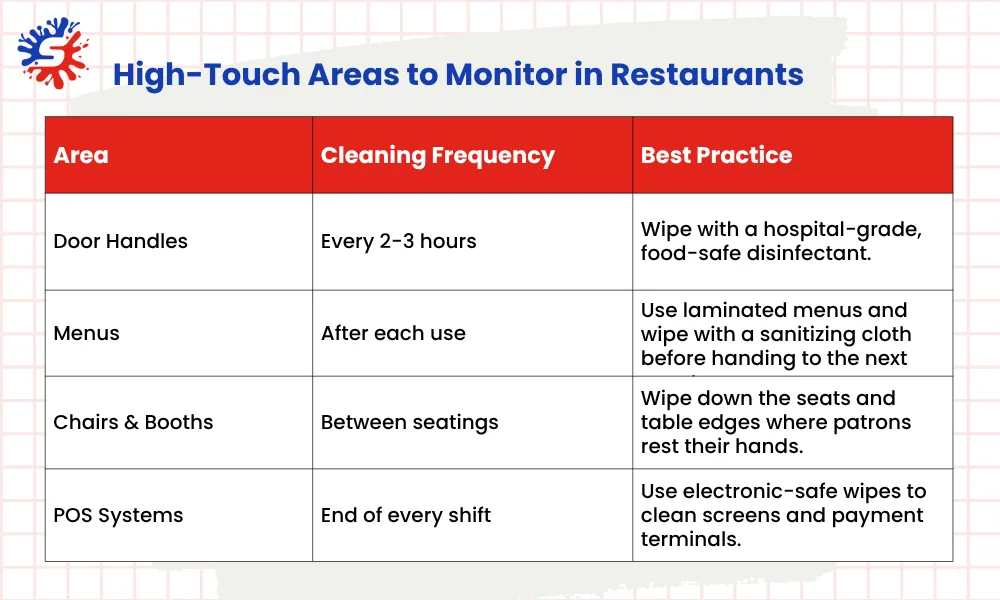
High-Touch Areas to Monitor
With infectious illnesses still a concern for many diners, focus on high-touch points.
The Commercial Kitchen Summer Cleaning Checklist
The kitchen is the heart of your restaurant. Keeping it clean protects your food quality. Below is a structured checklist to help your staff stay on top of the mess.
Daily Cleaning Tasks: Keeping the Chaos at Bay
Daily tasks are non-negotiable. They are the frontline defence against bacteria and pests.
-
Food Prep Benches: Wash with hot, soapy water, rinse, and spray with a food-grade sanitizer.
-
Cooking Equipment: Scrape and wipe down grills, stovetops, and fryers after use. Grease trays must be emptied every single night.
-
Floors: Sweep all loose debris. Mop with warm water and a strong degreaser, focusing on areas under prep tables and cooking lines.
-
Sinks and Drains: Scrub all sinks and ensure floor drains are clear of food scraps to prevent blockages and smells.
-
Waste Disposal: Empty all internal bins, wash the lids, and replace the liners. Never leave rubbish inside the kitchen overnight.
Weekly Maintenance Duties
Weekly tasks address the grime that builds up slowly over a few days.
|
Cleaning Area |
Weekly Task |
Why It Matters for Summer |
|
Splashbacks & Walls |
Scrub tiled surfaces and remove oil spots. |
Oil goes rancid faster in the heat, creating foul smells. |
|
Refrigeration Seals |
Clean the rubber door gaskets with a soft brush and detergent. |
Broken seals let warm air in, causing food spoilage and high energy bills. |
|
Exhaust Filters |
Remove canopy filters and soak them in a heavy-duty degreaser. |
Reduces the immediate risk of a kitchen fire. |
|
Floor Drains |
Flush with enzymatic cleaners. |
Prevents fruit flies and drain flies from breeding in the warm weather. |
Monthly and Quarterly Deep Cleans
Even with perfect daily and weekly routines, grease and carbon build up in places your staff can't reach during a normal shift. This is where a deep clean becomes vital.
Deep scrubbing of grout lines is necessary because regular daily mopping only pushes dirty water into the porous grout, causing it to darken and become slippery. Quarterly deep cleaning also involves pulling out heavy equipment, like ovens, fryers, and double-door fridges, to clean the hidden walls and floors behind them.
For many Sydney restaurants, doing a quarterly deep clean internally is too exhausting for staff already working long hours. That is why outsourcing to deep-cleaning experts is a smart business move.
Appliance-by-Appliance Deep Dive
Different equipment requires different cleaning methods. Using the wrong chemical can damage expensive stainless steel or leave toxic residues near food.
Exhaust Canopies and Ductwork
Kitchen exhaust systems are one of the most highly regulated areas in commercial kitchens. Over time, atomised grease from cooking is sucked up into the canopy, filters, and ductwork. In the summer heat, this grease becomes highly combustible.
While your staff can clean the removable filters weekly, professionals should clean the internal ductwork and exhaust fans every 3 to 6 months. Professionals use specialised scraping tools and heavy-duty foaming degreasers to ensure compliance with Australian fire safety standards.
Cool Rooms and Refrigeration Units
Your cool room is your most valuable asset during a Sydney summer. If it fails, you lose thousands of dollars in stock.
-
Shelving: Remove all food (temporarily store it in freezers or secondary fridges). Wash the shelves with hot water and detergent.
-
Floors: Mop the cool room floor. Spills in a cool room can freeze or become dangerously slick.
-
Condenser Coils: Dust and vacuum the condenser coils. Blocked coils force the fridge motor to work harder, which can lead to complete failure on a 40-degree day.
-
Spoilage Checks: Go through all inventory and throw out anything expired. Summer is no time to risk old prep.
Deep Fryers and Ovens
Fryers and ovens take a massive beating during busy service.
|
Appliance |
Deep Cleaning Method |
Frequency |
|
Deep Fryers |
Drain the oil. Perform a "boil-out" using a specialised fryer cleaner and water. Scrub the baskets and heating elements, drain, rinse thoroughly, and dry before adding new oil. |
Weekly to Fortnightly |
|
Commercial Ovens |
Remove racks to soak. Spray the interior with oven cleaner, let it sit for the recommended time to break down carbon, then scrub and wipe down with clean water. Inspect door seals. |
Weekly |
|
Ice Machines |
Empty the ice. Use a manufacturer-approved descaling solution to clean internal components. Wash the bin out to prevent pink mould build-up. |
Monthly |
Eco-Friendly Cleaning Solutions for Modern Restaurants
Today's consumers care about the environment, and your cleaning routine should, too. In Australia, the shift toward sustainable, eco-friendly cleaning products is massive.
Why GECA-Certified Products Matter
When stocking up on summer cleaning chemicals, look for GECA (Good Environmental Choice Australia) certification. GECA-certified products are verified as safer for the environment and your staff's health.
Low-VOC (Volatile Organic Compound) formulas reduce indoor air pollution. In a hot, busy kitchen, your chefs shouldn't have to inhale harsh bleach or heavy chemical fumes. Biodegradable active ingredients break down safely in the waterways, helping protect Sydney's beautiful harbour and beaches.
Always keep up-to-date Safety Data Sheets (SDS) for every chemical on site, as health inspectors will check them during their visits.
How to Train Your Staff for Summer Hygiene
You can have the best cleaning products and schedules in the world, but if your staff isn't properly trained, your restaurant will fail hygiene inspections.
Creating a Culture of Cleanliness
-
Clear Instructions: Do not just tell staff to "clean the kitchen." Provide visual guides. Pin up laminated checklists on the wall so everyone knows exactly what is expected.
-
Proper Tools: Make sure your staff has the right tools for the job. Provide colour-coded microfibre cloths to prevent cross-contamination (e.g., blue for glass, green for kitchens, red for bathrooms).
-
Lead by Example: Restaurant managers and head chefs must enforce the rules. If the head chef ignores a spill, the kitchen hands will do the same.
-
Reward Consistency: Acknowledge staff members who consistently maintain a high standard of cleanliness.
-
Pre-Summer Refresher: Hold a mandatory staff meeting in November before the December rush hits. Review the NSW Food Authority guidelines and remind staff of the critical importance of handwashing, sanitizing stations, and temperature logs.
The Cost of Ignoring Food Safety in NSW
Poor cleaning practices have severe consequences. The NSW Food Authority maintains an online Name and Shame list that publicly details food businesses that have breached food safety laws.
Fines, Penalties, and Reputation Damage
In the age of social media, a single photo of a dirty bathroom or a cockroach in the dining room can go viral and destroy a restaurant's reputation overnight. Investing in proper cleaning is the cheapest form of PR insurance you can buy.
|
Consequence |
Details |
Impact on Business |
|
Penalty Notices (Fines) |
Issued on the spot by local council health inspectors for dirty premises or lack of training records. |
Can range from hundreds to thousands of dollars per offence. |
|
Name and Shame Registry |
Being listed on the NSW government website for food safety breaches. |
Immediate loss of customer trust. Local media often picks up these stories, causing long-term brand damage. |
|
Suspended License |
For serious or repeated offences, your food business license can be suspended. |
You lose revenue while the business is forcibly closed. Staff may leave to find stable work. |
|
Pest Infestations |
Failing to clean properly invites rodents and roaches. |
Emergency pest control is expensive, and patrons who see pests will leave devastating 1-star reviews. |
Why Partner with Commercial Cleaners this Summer
By the time the final table is cleared and the doors are locked at midnight, asking your staff to spend another two hours deep-cleaning floors and scrubbing ovens is a recipe for low morale and high staff turnover.
This is why many of Sydney's top hospitality venues rely on outsourced cleaning partners.
The Benefits of Outsourcing Kitchen Cleaning to Spark Clean Australia
A professional cleaning team is your silent partner, ensuring that when you unlock the doors the next morning, the venue is pristine, smells fresh, and is ready for another massive summer day.
When you book a restaurant cleaning service with us, you get more than a mop and bucket.
-
Our teams understand FSANZ standards and know exactly what health inspectors are looking for.
-
We use industrial scrubbers, commercial-grade steam cleaners, and high-pressure washers that most restaurants don't own.
-
Staff sick days won't impact your venue's cleanliness. We show up every time, fully insured and police-checked.
-
Let your chefs focus on cooking and your waitstaff focus on customer service. Leave the heavy degreasing and late-night scrubbing to the professionals.
Conclusion
Getting your Sydney restaurant ready for the summer rush requires planning, the right equipment, and a strict adherence to daily, weekly, and monthly routines.
Don't let dirt, grease, or a surprise health inspection derail your most profitable season. Equip your staff with the right checklists, enforce a culture of cleanliness, and know when to call in the experts.
If you want to keep your restaurant spotless, compliant, and ready to welcome summer crowds, it is time to bring in the professionals. Book today for a tailored, obligation-free quote on our commercial restaurant cleaning services. Let us handle the mess, so you can focus on serving up an unforgettable summer!
Frequently Asked Questions
Find quick answers to booking, payments, pet-friendly policies, deep cleaning, and more. Our team is dedicated to making the process effortless and transparent. If you have additional questions, we're here to help ensure a seamless experience.
Get In Touch