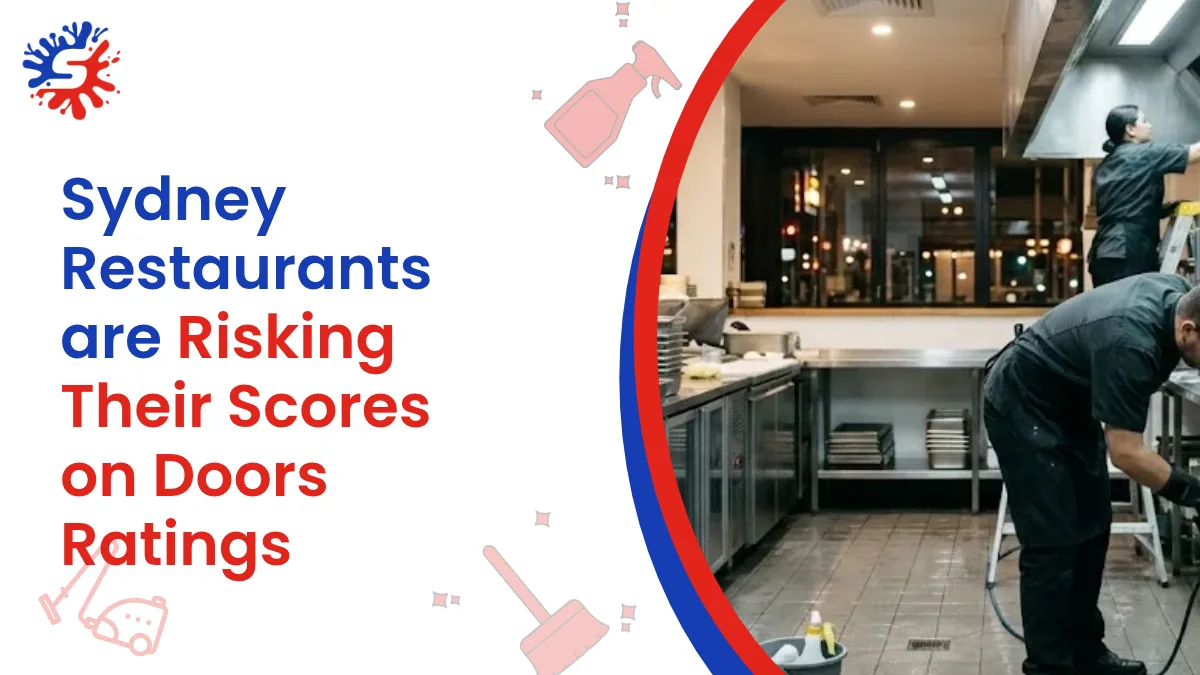
Sydney Restaurants are Risking Their Scores on Doors Ratings
Running a successful hospitality venue in Sydney takes far more than a great menu, good coffee, and a prime location. Public trust is your most valuable currency, and nothing destroys that trust faster than a missing hygiene certificate or an appearance on a public enforcement register.
Across New South Wales, local councils and food regulators have tightened their oversight of commercial kitchens. Foodborne illness now costs the Australian economy approximately $3 billion each year, up from $2.81 billion in 2023.
Australia experiences roughly 4.7 million cases of foodborne illness every year, leading to around 47,900 hospitalisations. Consumer awareness is also at an all-time high. Also, 66% of surveyed Australians recall experiencing food poisoning or gastroenteritis.
Key Takeaways
- Foodborne illness costs the Australian economy approximately $3 billion annually.
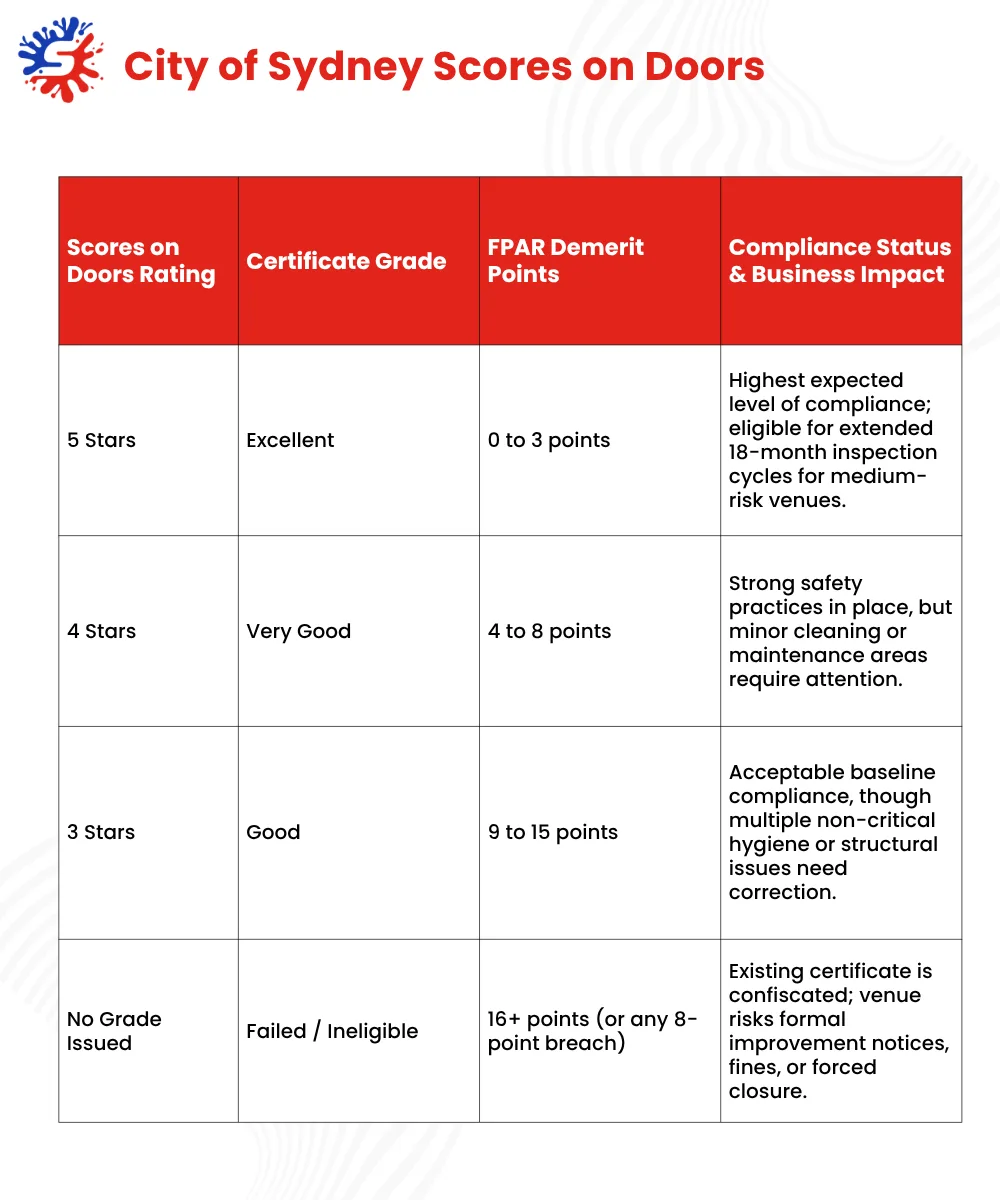
- Accumulating just 16 demerit points, or a single 8-point critical breach, strips a Sydney venue of its Scores on Doors certificate.
- Skipping exhaust canopies, cool room condenser coils, and floor drains is the fastest way for commercial kitchens to fail a routine health inspection.
- Partnering with professional commercial cleaners protects Sydney restaurants from landing on the public NSW Name and Shame register.
- Implementing a structured daily, weekly, and monthly sanitation schedule guarantees continuous readiness for unannounced council visits.
How the NSW Scores on Doors Program Grades Your Venue
When diners walk down a busy Sydney street looking for a place to eat, the green and gold certificate displayed on a restaurant's front window acts as an instant seal of approval. Administered jointly by the City of Sydney and participating local councils across NSW, the Scores on Doors program converts official health inspection results into an easy-to-understand star rating.
During an unannounced visit, council officers evaluate your venue using the standardised Scores on Doors and the Food Premises Assessment Report (FPAR) checklist.
The Financial Cost of Landing on the NSW Name and Shame List
Losing your window star rating is embarrassing, but the regulatory enforcement that follows a failed inspection can cripple a hospitality business financially. Retail food sector compliance sits at 97% across NSW food businesses.
If a Sydney restaurant receives a penalty notice, the NSW Food Authority publishes it on the official NSW Food Authority Register of Penalty Notices, commonly known across the hospitality industry as the "Name and Shame" list. Because penalty notices are publicly searchable at any time, local media outlets and food bloggers routinely scan this database to publish articles exposing non-compliant suburban cafes and restaurants.
-
On-the-Spot Penalty Infringement Notices: Standard council fines for failing to keep food premises or equipment clean typically start at $440 for individuals and $880 for corporations per offence, and inspectors frequently issue multiple notices during a single visit if both kitchen surfaces and handwashing stations are neglected.
-
Reinspection Fees and Prohibition Orders: Councils charge mandatory reinspection fees to verify that improvement notices have been met, and if an EHO deems an unclean kitchen an imminent public health threat, they will issue a Prohibition Order that legally shuts your doors until a complete deep clean is verified.
-
Long-Term Revenue Loss: Appearing on the Name and Shame register remains visible online for 12 months, often triggering a significant drop in walk-in traffic and bookings.
As our recent analysis of the top 5 non-compliance issues shows, Sydney venues in high-density dining precincts are regularly fined for equipment cleanliness failures after a single prior warning.
Why Standard End-of-Shift Wipe-Downs Are No Longer Enough
Most restaurant owners assume their kitchen is clean because the stainless steel prep benches look shiny when the head chef locks up at midnight. However, there is a massive biological difference between a surface that looks visibly tidy and one that is microbiologically sanitised.
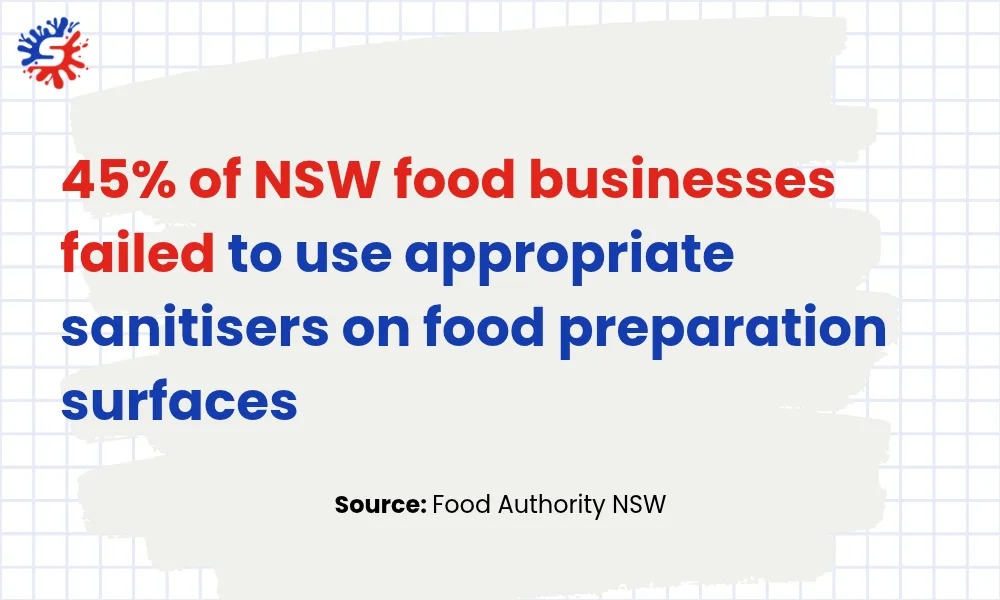
For NSW food businesses, 45% of surveyed food businesses failed to use appropriate sanitisers on food preparation surfaces. Even more concerning, over 50% of venues storing raw egg dressings in squeeze bottles had visible grime around the dispenser rims and topped them up without washing or sanitising between batches.
As our deep dive into kitchen hygiene statistics highlights, wiping down benches with a damp, reused dishcloth does not eliminate pathogens. Research shows that an average counter-wiping cloth can harbour 134,630 bacteria per square inch, while a commercial kitchen drain can contain 567,845 bacteria per square inch.
The Most Common Cleaning Failures Triggering Demerit Points in Sydney Kitchens
Knowing exactly what council Environmental Health Officers look for during an inspection is key to protecting your Scores on Doors certificate. Inspectors do not just stand in the middle of your kitchen and glance at your prep tables; they carry torches, thermometers, and mirrors to inspect the dark, damp, and awkward spaces that daily wipe-downs miss.
Hidden Grease Traps, Exhaust Canopies, and Under-Equipment Grime
When commercial fryers, chargrills, and wok burners run for 12 hours a day, vaporised cooking oil rises into the air and settles on every surrounding surface. While kitchen hands wipe down the front panels of ovens and fridges, thick layers of carbonised grease and food debris steadily accumulate underneath, behind, and between heavy fixed appliances.
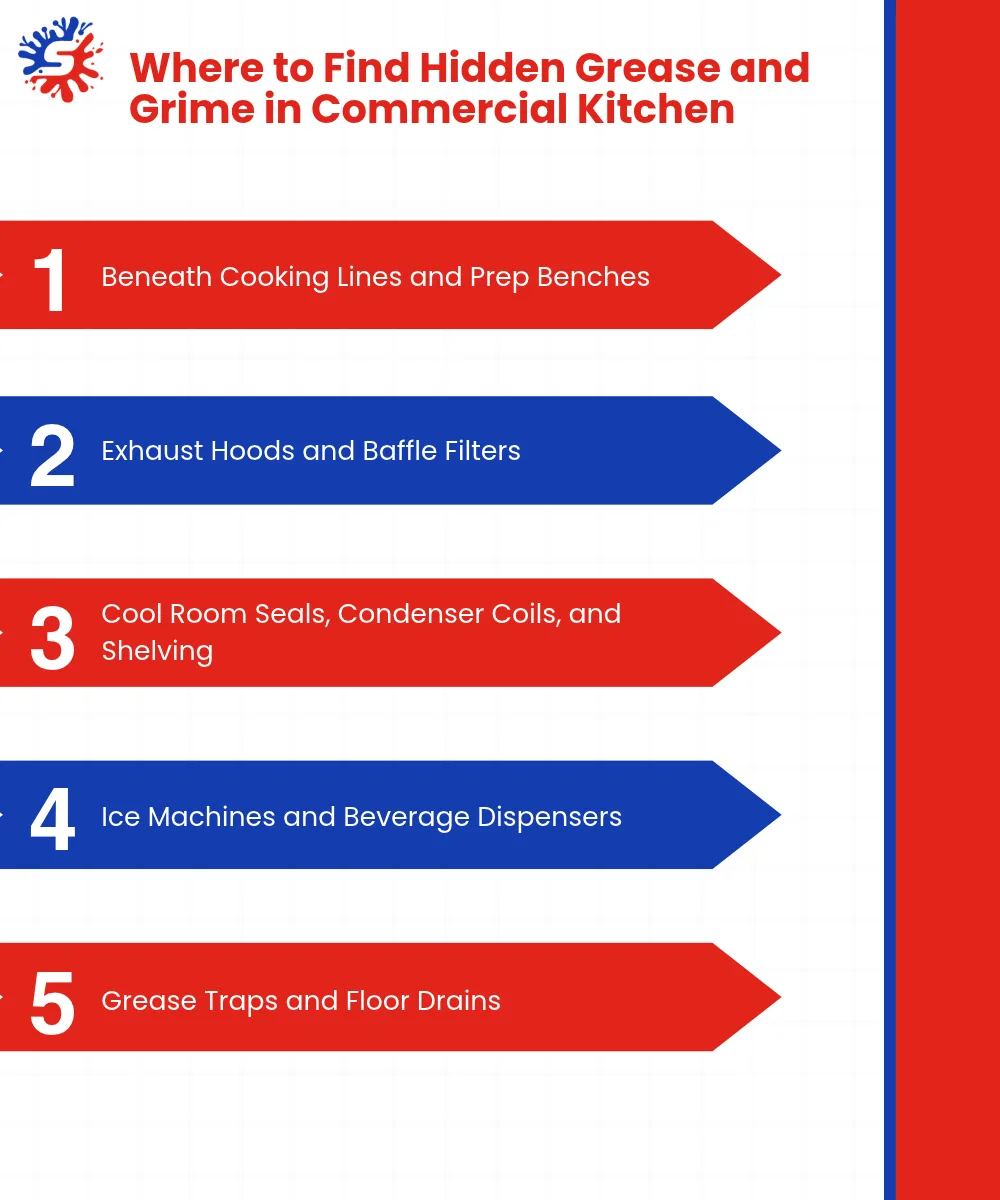
Keeping these zones compliant requires pulling equipment away from walls, soaking filters in industrial decarbonising tanks, and using commercial steam cleaners, tasks we recently detailed in our guide to getting your Sydney restaurant ready for summer cleaning.
Handwashing Station Neglect and Cross-Contamination Risks
If there is one area where Sydney council officers show zero leniency, it is handwashing compliance. Under the FPAR scoring system, failing to maintain dedicated, properly stocked handwashing facilities can result in an immediate 4-point or 8-point deduction.
In a commercial kitchen, council officers penalise venues heavily when they discover the handwashing basin being used as a dump sink. Equally critical is preventing surface cross-contamination between raw meats, allergens, and ready-to-eat salads. A strict system of separate equipment ensures red cloths and mops used in washrooms never touch green food preparation zones or blue bar areas.
Pest Activity Fuelled by Poor Waste and Floor Sanitation
In Sydney’s warm, humid coastal climate, cockroaches, rats, and mice are a year-round menace for food retailers. However, many restaurant owners mistakenly think pest control is solely the responsibility of their monthly pest exterminator.
When an EHO finds cockroach droppings behind a dishwasher or gnaw marks on dry store packaging, bait stations alone won't save you from an 8-point critical breach and a hefty fine. Pests enter commercial kitchens for three reasons: food, water, and shelter. Even a tiny smear of grease left on the underside of a prep bench or pooled water left in an uneven tile grout line overnight is enough to sustain a cockroach colony.
If internal rubbish bins are left unlined or uncovered overnight, or outdoor council dumpsters overflow with grease-soaked cardboard, rodents will quickly find their way through tiny gaps around plumbing pipes and doors. Deep sanitation strips away the microscopic food sources that attract vermin in the first place, making chemical pest treatments effective rather than a losing battle.
Front-of-House and Washroom Hygiene Blind Spots
While the back-of-house kitchen makes up most of the checklist, your front-of-house dining room and customer washrooms play a decisive role. If a customer walks into your restroom and sees overflowing sanitary bins, dirty tap handles, or grime on the floor tiles, they immediately assume your kitchen is in the exact same state.
As we covered in our breakdown of bathroom hygiene statistics, washroom touchpoints and tap handles are prime vectors for Norovirus and E. coli transmission. Under NSW food regulations, staff toilets and customer amenities must be kept clean and stocked with warm water and soap to stop pathogens from migrating back into the dining room and kitchen.
|
Venue Zone |
Common Cleaning Oversight |
Regulatory & Customer Risk |
Recommended Action |
|
Customer & Staff Washrooms |
Empty soap dispensers, dirty tap handles, and damp cloth towels. |
Up to 8 FPAR demerit points for inadequate handwashing facilities; customer complaints to council. |
Daily hospital-grade disinfection of touchpoints and restocking of single-use paper towels. |
|
Dining Room Carpets & Booths |
Crumb build-up in booth seams and grease tracked from kitchen onto carpets. |
Attracts rodents and cockroaches after hours; creates persistent musty odours. |
Daily HEPA vacuuming plus scheduled hot-water extraction for carpets and upholstery. |
|
HVAC Vents & High Ledges |
Thick dust and grease settling on air conditioning grilles above tables. |
Blows dust, mould spores, and allergens directly onto diners' plates during service. |
Monthly high-reach dusting and filter degreasing. |
|
Street-Facing Glass & Entryways |
Coastal salt air, fingerprints, and grease film clouding front windows. |
Obscures your Scores on Doors certificate and creates a poor first impression. |
Weekly inside-and-out professional window cleaning. |
How Professional Commercial Cleaning Protects Your 5-Star Rating
Trying to achieve a 5-star rating by asking your chefs and kitchen hands to scrub harder is a recipe for staff burnout and compliance failure. Culinary professionals are trained to prep, cook, and plate exceptional food under high pressure. By partnering with a dedicated commercial cleaning service in Sydney, hospitality owners bridge the gap between basic daily tidying and forensic food safety compliance.
Food-Safe Sanitisation vs. Superficial Domestic Cleaning
One of the biggest traps small cafes and independent restaurants fall into is buying supermarket detergents and domestic cleaning tools. Household sprays aren't formulated to cut through heavy commercial animal fats, vegetable oils, and baked-on carbon, nor do they meet strict contact-time and dilution requirements.
Professional commercial cleaners follow a rigorous two-stage sanitation process. First, they use food-safe degreasers and high-temperature steam cleaners to break down grease and residues. Second, a food-grade sanitiser is applied at the exact dilution ratio and left for the required contact time to reduce bacteria to safe levels.
Relieving Staff Burnout and Slashing Hidden Operational Costs
Hospitality staff shortages and high turnover are a major headache for Sydney venue operators. When staff just finished an 8-hour shift, forcing them to spend another two hours scrubbing floor drains and scraping rangehood filters leads to resentment, fatigue, and sloppy work. Worse still, paying overtime penalty rates to qualified chefs to perform heavy cleaning is an inefficient use of your payroll budget.
As we explored in our analysis of why every dollar you spend on cleaning returns far more in Sydney, poor workplace hygiene drives up staff absenteeism and presenteeism. Furthermore, up to 80% of common infections spread via hands touching contaminated surfaces.
In a commercial kitchen, keeping staff amenities, breakrooms, and prep zones professionally sanitised keeps your chefs healthy and on the roster while protecting your kitchen appliances.
Customised After-Hours Scheduling and Audit-Ready Reporting
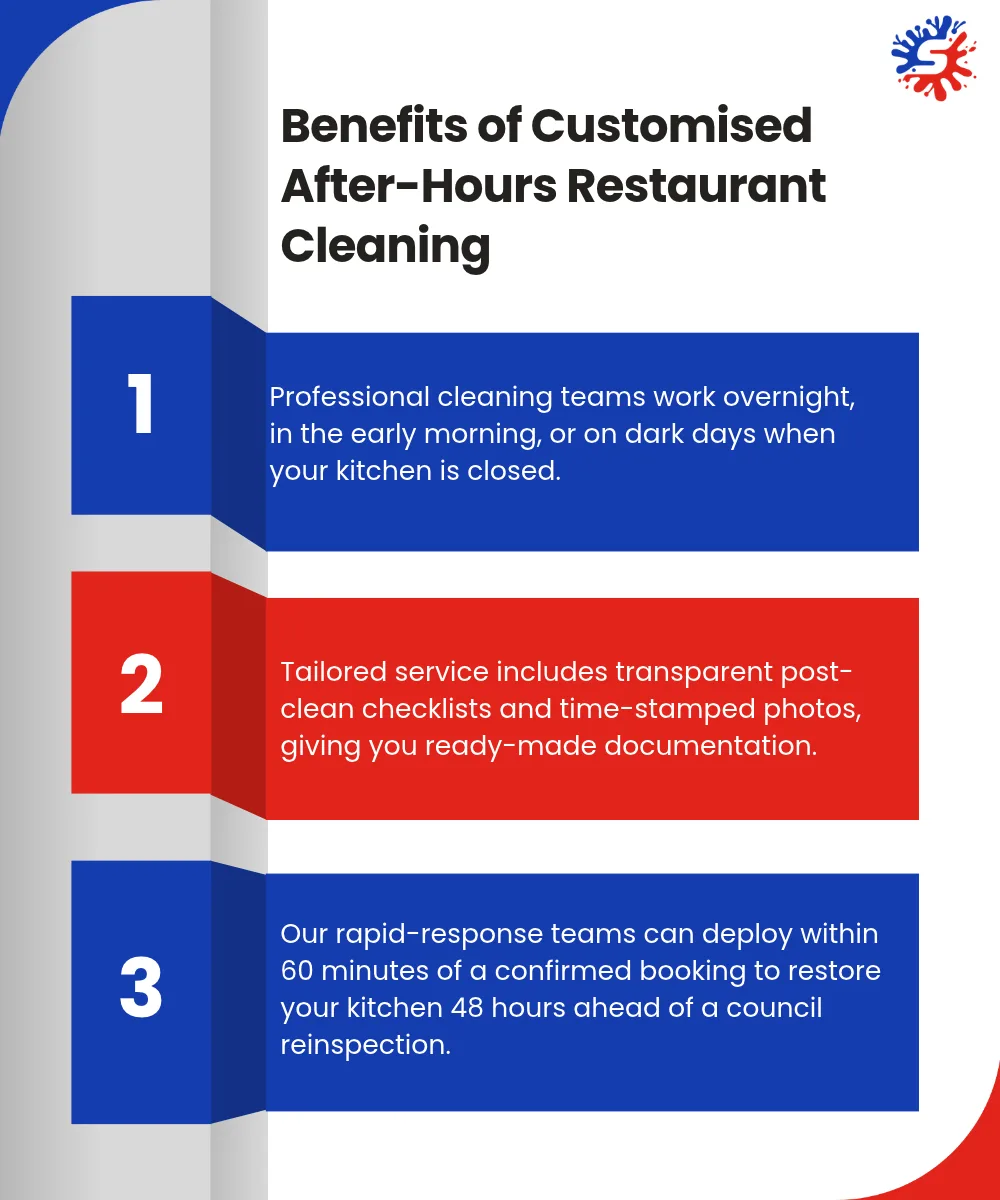
Category 1 and Category 2 food service businesses across NSW must maintain a certified Food Safety Supervisor, ensure all food handlers complete mandatory hygiene training, and substantiate their critical food safety controls.
Your Action Plan to Achieve and Keep a 5-Star Scores on Doors
Waiting until a council officer walks through your front door with a clipboard is too late to worry about grease buildup behind your combi oven. Because Scores on Doors inspections are strictly unannounced, the only way to guarantee a 5-star Excellent certificate is to build a layered hygiene system.
The Daily, Weekly, and Monthly Restaurant Cleaning Checklist
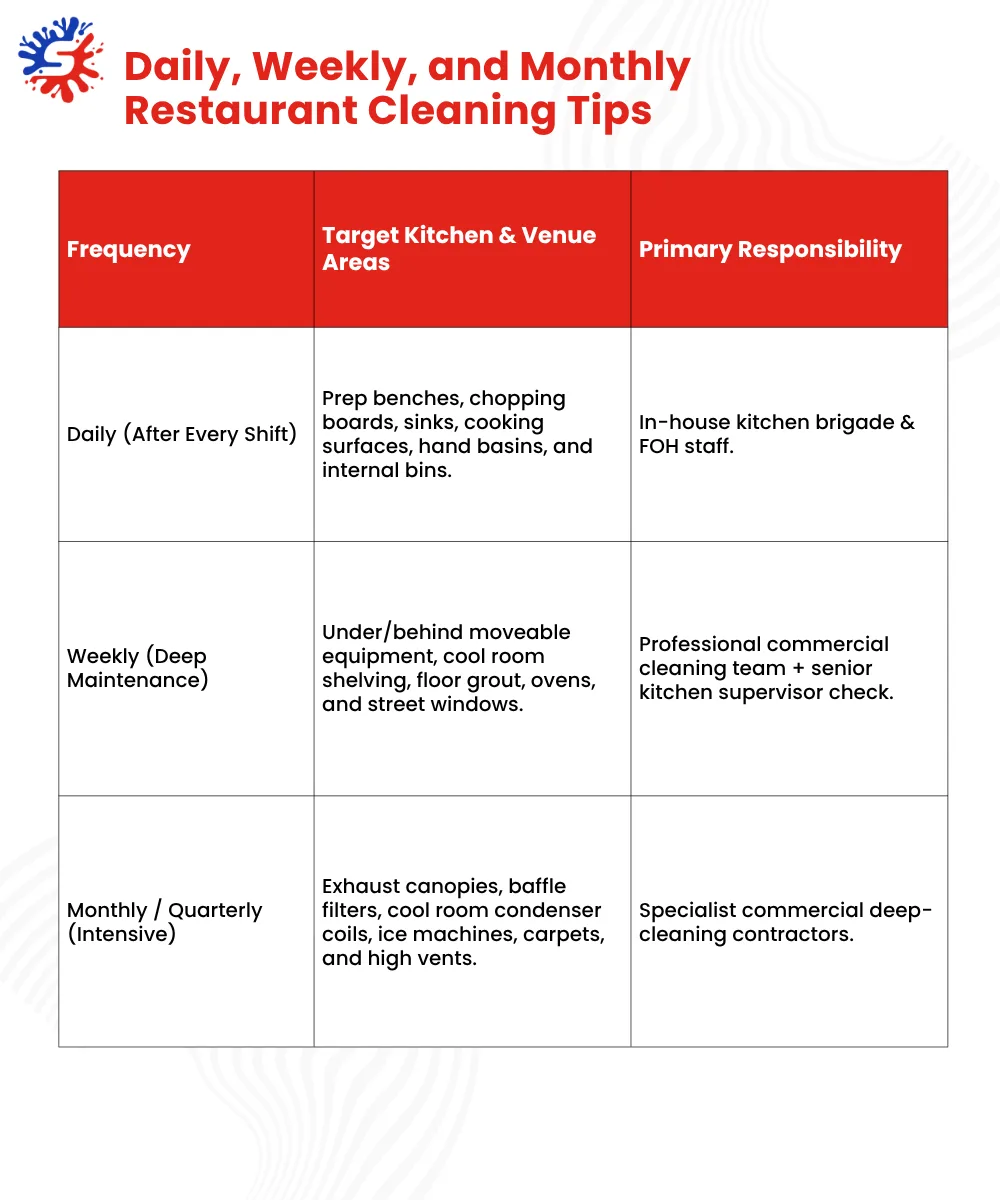
To keep your FPAR demerit points between 0 and 3 at all times, your cleaning schedule must divide responsibilities clearly between what your kitchen brigade handles after each service and what specialist cleaners tackle on a weekly and monthly rotation.
Conducting Mock Self-Inspections Using the Official FPAR Checklist
One of the smartest habits a restaurant manager or Head Chef can adopt is running a monthly 20-minute mock inspection before the morning prep shift begins. The NSW Food Authority makes its official FPAR checklist publicly available so business owners can see the council's exact criteria.
-
Grab a torch and walk through your venue as if you have never seen it before.
-
Check that your Food Safety Supervisor certificate is current and kept on the premises where an officer can view it immediately.
-
Test your cool room and display fridge thermometers to confirm potentially hazardous foods are stored safely at or below 5°C.
-
Look underneath your cooking line, check the rims of your squeeze bottles, inspect the rubber seals on your under-bench fridges.
Catching issues during a monthly self-audit is the difference between proudly displaying a 5-star certificate and explaining a downgraded rating to your customers.
Partnering with Spark Clean Australia for Stress-Free Compliance
In a city that takes dining as seriously as Sydney, your venue's cleanliness underpins your brand reputation, customer safety, and profitability. You should not have to cross your fingers and hope for the best every time a council officer walks down your property.
Our police-checked, fully insured cleaning specialists use commercial-grade steam cleaners, industrial floor scrubbers, HEPA filtration vacuums, and eco-friendly, food-safe sanitisers to eliminate grease, bacteria, and pest attractants from every corner of your venue.
With 24/7 flexible scheduling, upfront transparent pricing, photo-verified post-service checklists, and a 100% satisfaction guarantee, we handle the heavy scrubbing so your culinary team can focus on delivering unforgettable food.
Ready to safeguard your restaurant from demerit points, fines, and the Name and Shame register? Book today or call us for a free site assessment and receive a tailored commercial kitchen and hospitality cleaning quote.
Frequently Asked Questions
Find quick answers to booking, payments, pet-friendly policies, deep cleaning, and more. Our team is dedicated to making the process effortless and transparent. If you have additional questions, we're here to help ensure a seamless experience.
Get In Touch