
Carpet Hygiene Stats Every Australian Homeowner Needs to Read
Across millions of Australian homes, carpets lie underfoot every single day, quietly accumulating one of the most diverse and dangerous collections. Most homeowners vacuum regularly, spot-clean the occasional spill, and consider the job done.
The science, however, tells a very different story, one of dormant viruses, microscopic parasites, toxic chemical emissions, and invisible reservoirs of disease-causing bacteria.
22 Carpet Hygeine Stats
1. Your Carpet Is 4,000 Times Dirtier Than Your Toilet Seat
The average carpet contains approximately 200,000 bacteria per square inch, which is around 500 times more contaminated than a toilet seat. The reason is simple: toilet seats are hard, smooth, regularly disinfected surfaces. Carpets are warm, fibrous, rarely sanitised environments that trap and feed microbial life.
Source: Carpet Bright UK
2. Carpets Can Absorb Up to Four Times Their Own Weight in Dirt
Beyond the one-pound-per-yard benchmark, carpets can absorb up to four times their weight in accumulated grime before the fibers begin to visibly break down. This includes everything from tracked-in soil, fine dust, and pollutants to biological debris, pet dander, and food residue.
Source: LifeHack

3. Staphylococcus Aureus Can Survive in Carpet for Up to 35 Days
Hospital research involving installed carpet strips found that coagulase-positive Staphylococcus aureus remained detectable for 35 consecutive days after carpet installation. Microbial counts in the carpet increased steadily with time and foot traffic, reaching a plateau at approximately four weeks.
Source: PubMed Central
4. Bacteria Counts Plateau at Around Four Weeks in Residential Carpet
Scientific studies examining microbial contamination in installed carpet confirm that bacterial populations do not grow indefinitely; instead, they reach a stable "plateau" level at approximately four weeks. Critically, routine vacuuming was shown to produce only a slight reduction in the total number of recoverable microorganisms, leaving the majority of bacteria firmly embedded at the base of the fibers.
Source: PubMed Central
5. Campylobacter Thrives in Damp Carpet Environments
Campylobacter, a bacterium responsible for one of the most common causes of food poisoning in Australia, is particularly attracted to moist carpet environments. Damp or poorly ventilated carpet is an ideal breeding ground for this pathogen, which enters the home through contaminated footwear, pet contact, and food spillage. Infection symptoms include diarrhoea, stomach cramps, and vomiting.
Source: Carpet Bright UK
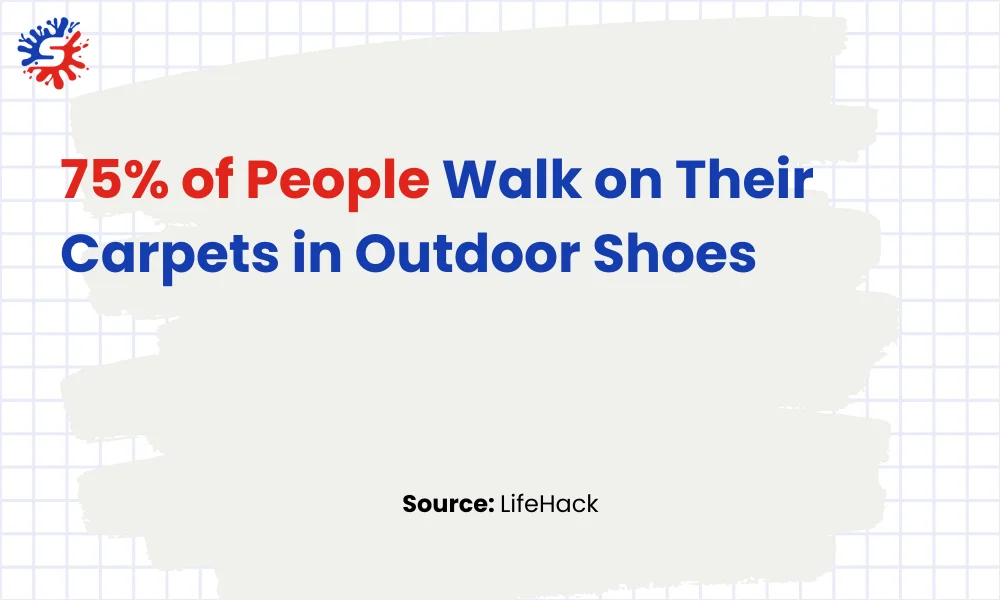
6. 75% of People Walk on Their Carpets in Outdoor Shoes
Three-quarters of people admit to walking on their home carpets while wearing shoes that have been worn outside. Every step introduces bacteria, pollutants, pesticides, and biological matter from the street directly into the carpet pile, and standard vacuuming cannot remove what has been physically ground into the base of the fibers.
Source: LifeHack
7. 90% of People Admit to Dropping Food on the Carpet and Eating It
Nine out of ten people admit to applying the "five-second rule" when food is dropped on the carpet. Given that bacteria and pathogens are immediately transferred to food on contact, this is one of the most common and underappreciated ways that carpet-dwelling pathogens enter the human digestive system.
Source: LifeHack
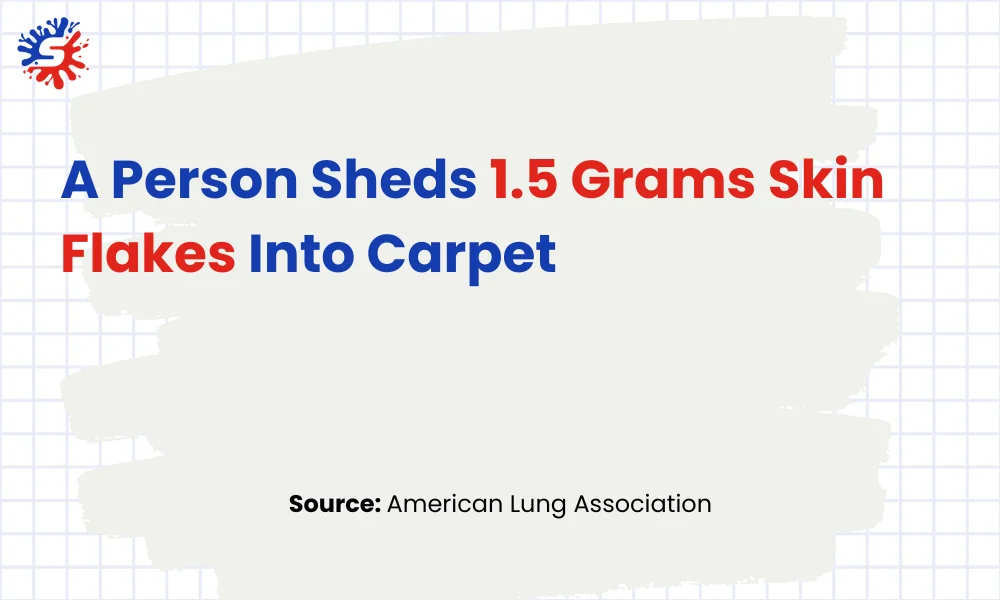
8. A Person Sheds 1.5 Grams Skin Flakes Into Carpet
Every day, the average adult sheds approximately 1.5 million microscopic skin flakes. The majority of this material settles directly into carpet fibres, where it serves as the primary food source for dust mite colonies.
Source: American Lung Association
9. Between 65 and 130 Million People Worldwide are Sensitised to Dust Mite Allergens
Global prevalence data for house dust mite allergen sensitisation ranges from 65 to 130 million people in the general population. Among asthmatic patients specifically, sensitisation rates reach as high as 50%, the allergens living inside household carpets are a direct trigger for potentially life-threatening respiratory events.
Source: ScienceDirect
10. Dust Mite Allergen Levels Can Vary More Than 20-Fold Between Seasons
Research on dust from bedding, carpet, and sofas in residential homes found that seasonal variation in house dust mite allergen concentration can exceed 20-fold within the same property. Levels peak most significantly between August and December. For asthma sufferers, this dramatic seasonal surge in allergen loading inside carpet fibres correlates directly with increased rates of acute asthma attacks.
Source: PubMed Central
11. The Mean Coefficient of Variation for Mite Allergen Levels in Bedroom Carpets Is 88.7%
Scientific sampling of bedroom carpets for house dust mite allergen revealed a mean coefficient of variation of 88.7%. A single carpet cleaning in one area does not address the full allergen load, which is why whole-room professional extraction is critical for allergy management.
Source: PubMed Central
12. Steam Cleaning Provides the Greatest Dust Mite Population Reduction
A peer-reviewed study comparing four carpet treatment methods: vacuuming, steam-vapour cleaning, neem oil, and benzalkonium chloride, found that steam-vapour treatment provided the statistically greatest reduction in dust mite populations. The effectiveness persisted significantly longer than vacuuming alone, with steam cleaning maintaining reduced allergen levels for up to 8 weeks.
Source: PubMed Central
13. Norovirus Can Remain Viable in Carpet for Up to 12 Days Despite Regular Vacuuming
A systematic review cited by the US Centers for Disease Control and Prevention (CDC) found that norovirus.The highly contagious stomach bug responsible for millions of gastroenteritis cases each year can remain viable in carpet fibres for up to 12 days even when the carpet is being regularly vacuumed. Standard vacuuming is insufficient to neutralise this pathogen.
Source: Centers for Disease Control and Prevention
14. Norovirus Surrogates Have Been Shown to Survive on Carpet for up to 60 Days
Laboratory research using norovirus surrogates: feline calicivirus (FCV) and murine norovirus (MNV), has demonstrated survival on carpet fibres for up to 60 days, with survival influenced by carpet material and relative humidity. Wool carpets provided a more hospitable environment for viral persistence than nylon, underscoring the importance of material-specific cleaning protocols.
Source: Consensus
15. Salmonella and Campylobacter Can Survive on Surfaces for up to 50 Days
While salmonella and campylobacter typically survive less than four hours on clean hard surfaces, they have been recorded surviving for up to 50 days on dirty, contaminated surfaces. In the complex matrix of a soiled carpet.
Source: Cleanipedia
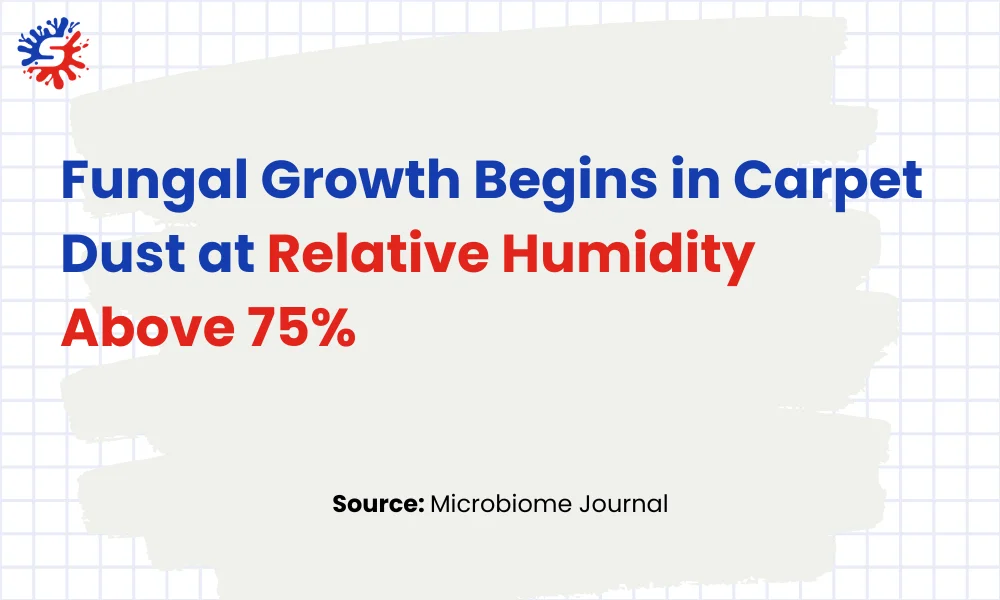
16. Fungal Growth Begins in Carpet Dust at Relative Humidity Above 75%
A peer-reviewed microbiome study found that fungal growth commenced in carpet dust samples at equilibrium relative humidity (ERH) levels exceeding 75%. This threshold is regularly met in Australian bathrooms, kitchens, laundries, and coastal properties.
Source: Microbiome Journal
17. New Synthetic Carpets Release More Than 40 Volatile Organic Compounds
Synthetic carpets are manufactured using nylon fibres on a polypropylene backing, and release over 40 identified volatile organic compounds (VOCs) including styrene and 4-phenylcyclohexane (4-PCH), the compound responsible for the distinctive "new carpet smell." Both styrene and 4-PCH are associated with respiratory symptoms, eye irritation, and skin reactions.
Source: Ecology Center
18. Carpets Can Continue Emitting VOCs for Five Years or More After Installation
The off-gassing of VOCs from synthetic carpet has been documented to continue for five years or possibly longer, as carpets release chemicals including PFAS (per- and polyfluoroalkyl substances) through routine wear and tear. The EPA and the American Lung Association both recognise VOCs from carpet as significant contributors to indoor air pollution.
Source: Ecology Center
19. 95% of Carpets Use Latex Backing That Releases Styrene and Butadiene
Approximately 95% of residential carpets use a latex-based backing derived from styrene-butadiene rubber. Both styrene and butadiene are classified as respiratory irritants at low exposure levels. Long-term exposure to elevated styrene levels is associated with nerve damage, while prolonged butadiene exposure has been linked to cancer and cardiovascular disease by toxicological research.
Source: Ecology Center
20. Pesticide Residues Were Detected in Over 67% of Child Care Centre Floor Samples
Research into early childhood education environments found that chlorpyrifos, diazinon, cis-permethrin, and trans-permethrin were detected in more than 67% of indoor floor wipe samples from child care centres. Given that carpeted floors are the primary contact surface for children in these settings, this represents a significant and largely unrecognised contamination risk.
Source: PubMed Central
21. 70% of People Move Furniture to Cover Carpet Stains Rather Than Cleaning Them
Seven in ten people admit to rearranging furniture to hide carpet stains rather than addressing them. This behaviour is significant because untreated stains act as concentrated feeding grounds for bacteria and mould, intensifying microbial activity at that specific location in the carpet.
Source: LifeHack
22. High-Traffic Carpet Areas Can Require Deep Cleaning Every 12 to 18 Months
Under normal household conditions with children, heavily used traffic areas such as hallways and living rooms should receive professional deep cleaning every 12 to 18 months. In homes with pets and smokers, the IICRC recommends cleaning traffic areas every 3 to 6 months.
Source: The Carpet and Rug Institute
Conclusion
The numbers are impossible to ignore. From 200,000 bacteria per square inch and norovirus surviving a month, the carpet in your home is one of the most complex and consequential hygiene surfaces in the modern household. Professional deep cleaning, steam extraction, targeted allergen treatment, and structured maintenance schedules are the only reliable methods for restoring carpets to a safe and hygienic standard.
If you are ready to take your home's hygiene seriously, book a free on-site assessment with Spark Clean Australia today. We offer professional carpet cleaning service delivered by trained and insured specialists across Sydney.