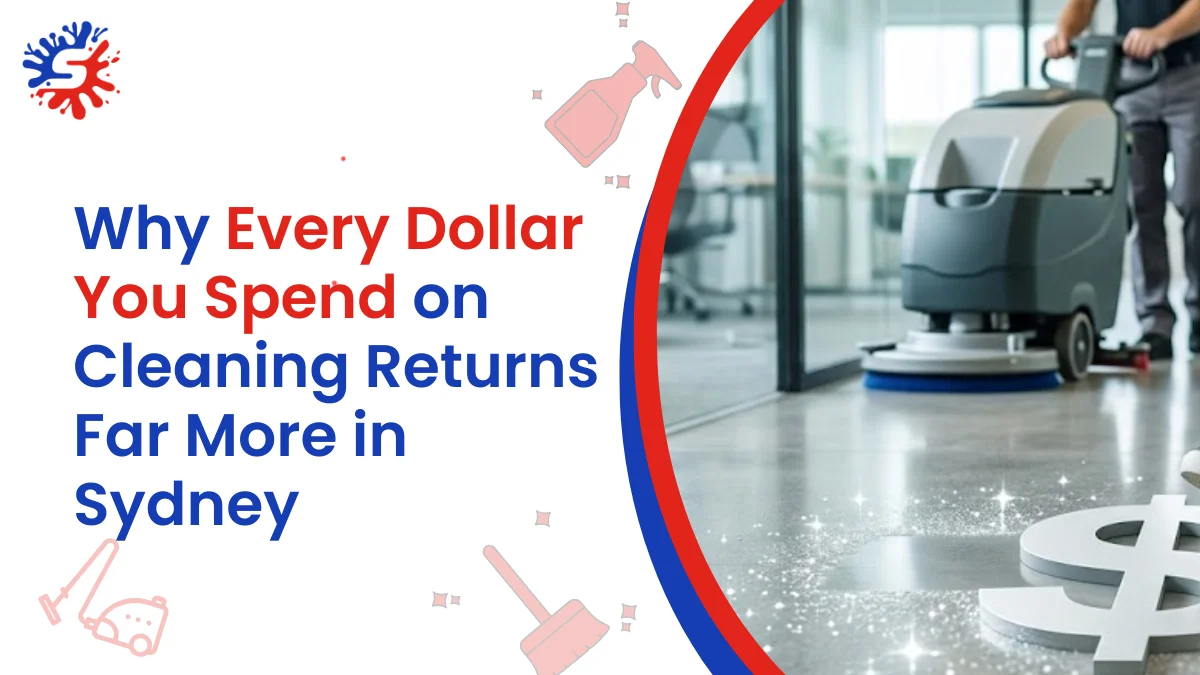
Why Every Dollar You Spend on Cleaning Returns Far More in Sydney
Most business owners look at a cleaning invoice and feel a small sting. That number sits in the expenses column, and it feels like money leaving the building.
Here is the problem with that thinking: the money is already leaving. It leaves through worn-out flooring that gets replaced years too early. It leaves through sick days, through distracted staff, through potential clients who walk into your office and quietly decide you are not what they were hoping for.
Professional cleaning does not cost you money. Skipping it does.
Key Takeaways
- Professional carpet cleaning can extend carpet life from 8 to 10-12 years, helping businesses avoid replacement costs of $25,000 to $37,500 for a 500 sqm office.
- Office desks can contain around 10 million bacteria, making workplace hygiene critical for reducing illness and productivity loss.
- Presenteeism costs Australian employers far more than absenteeism, with reduced employee performance costing around $990 per worker monthly.
- Clients judge office cleanliness within seconds, and dirty floors, desks, or reception areas can damage trust and business credibility.
- Dirty HVAC filters can increase energy consumption by up to 15%, raising operating costs across commercial buildings.
- HEPA-filtered professional cleaning helps improve indoor air quality by capturing fine dust, allergens, and airborne particles that standard vacuums miss.
What Neglect is Actually Doing to Your Office Floors
To understand where this leaking money actually goes, we have to look at the foundations of your office. While many business owners view their flooring as a static asset, it is actually a high-performance surface under constant siege.
The most immediate way poor cleaning erodes your bottom line isn’t found in a germ count, but in the rapid physical degradation of your largest interior investment.
Why Your Carpet Is Grinding Itself Down Right Now
Every time someone walks through your office, they bring something in from outside. Dirt and debris in a commercial building are tracked in on the soles of shoes. That is grit, sand, and fine particles from Sydney streets, car parks, and footpaths.
Once inside, that debris settles deep into carpet fibres. Every step grinds those particles against the weave, slowly breaking down the structure from the inside. The carpet can look fine on the surface while damage is already occurring beneath.
This is what cleaning professionals call the Sandpaper Effect. Your floor covering is being worn down by what it is trapping, not by the weight of foot traffic alone.
The Real Cost of Replacing Commercial Carpet in Sydney
Here is where the maths becomes very clear.
According to pricing guides from Sydney flooring suppliers, the cost to supply and install commercial carpet tiles in a Sydney office sits at:
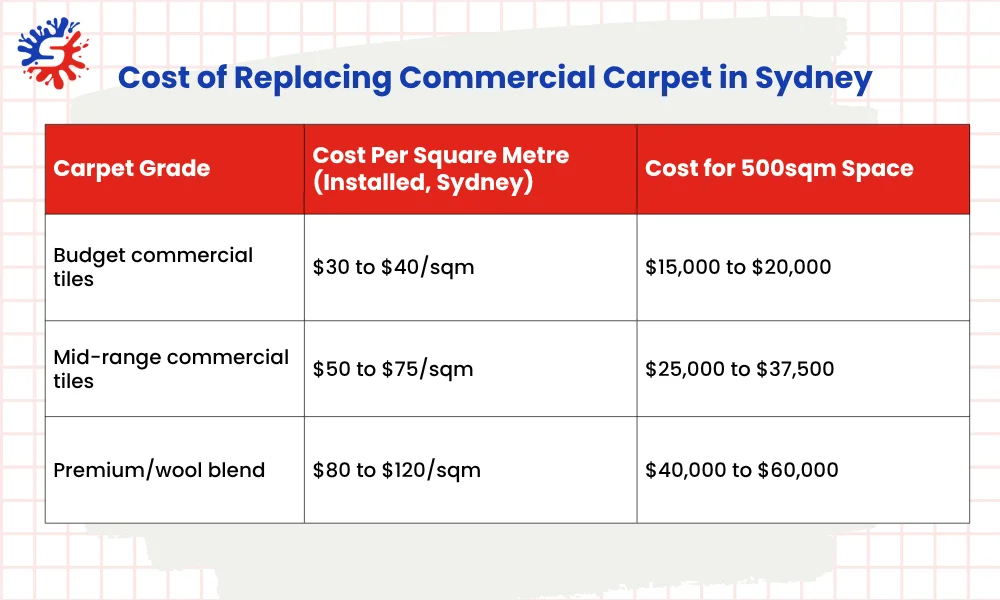
A 500 square metre commercial fit-out with mid-grade carpet tiles will cost you $25,000 to $37,500 to replace. That is before you factor in downtime, furniture removal, and the disruption to your team.
H3: What Regular Cleaning Actually Does to That Timeline
Carpets cleaned professionally last up to twice as long as those cleaned by non-professionals. A separate analysis found that professional cleaning every 12 to 18 months can extend carpet life by 2 to 4 years by removing embedded grit that vacuuming cannot reach.
Combine regular vacuuming with scheduled professional hot water extraction, and the lifespan extension can be significantly greater.
Put it in practical terms:
-
A commercial carpet expected to last 8 years without professional maintenance could last 10 to 12 years with it.
-
That is one full replacement cycle you avoid, worth $25,000 to $37,500 on a 500sqm floor.
-
Annual professional carpet cleaning for that same space costs a fraction of that.
You can read more about the hidden cost of neglected office flooring in our post on why carpet cleaning downtime is costing Sydney firms more than they think.
The Sick Leave: Bacteria, Germs, and What They Are Costing You
While sand and dirt are grinding down your floors, the microscopic particles you can’t see are bacteria and viral pathogens. If your floors are losing years of life, your team is losing days of productivity."
What is Actually Living on Your Office Desk
Before we talk about money, we need to talk about what is growing in your workspace.
Research led by Dr. Charles Gerba found that the average office desktop contains around 10 million bacteria, which is 400 times more than the average toilet seat. The reason is simple: toilets get cleaned multiple times a day because people think of them as dirty. Desks do not, even though employees eat at them, cough near them, and touch their faces while working.
Research also confirms that up to 80% of common infections are spread via hands touching contaminated surfaces, followed by touching the face. In a standard office, that transmission pathway is active all day, every day.
What Presenteeism Is Costing Australian Employers
Australia has a significant presenteeism problem. Presenteeism is when employees come to work while sick or unwell and operate at a reduced capacity. They are physically present, but their output is not.
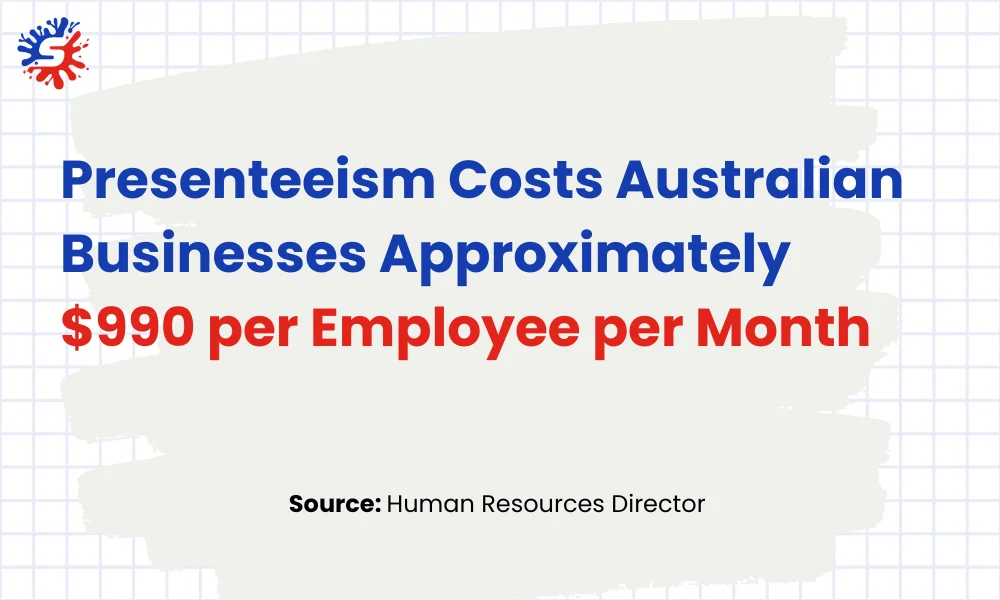
According to the 2025 Australian Healthcare Index, presenteeism costs the Australian economy an estimated $34 billion annually in lost productivity. Also, research found that presenteeism costs employers approximately $990 per employee per month, compared to $318 for absenteeism. That makes it roughly three times as expensive as sick leave because the cost is invisible.
The Cheap Cleaner is Not Saving You Money
The lift buttons, fridge handle, and microwave door. These are the surfaces that a cheap or rushed cleaning service routinely misses. They are also the highest-traffic contamination points in any office. A budget cleaning crew that skips high-touch surface disinfection is just shifting the cost onto your payroll, in the form of people at their desks who are too unwell to be productive.
Professional cleaning that covers high-touch surface disinfection addresses the transmission chain before it becomes a productivity problem. For more on workplace hygiene and how it directly affects your team, read our dedicated stats post.
The First 7 Seconds: How Cleanliness Shapes What Clients Think of Your Business
High-touch disinfection and hygiene protocols protect your staff, but they also serve a secondary, more public-facing purpose. Beyond the biology of the workspace lies the psychology of it, and how a single glance at your reception area can win or lose a contract
Why Clients Decide Before You Open Your Mouth
First impressions are not formed rationally. They are formed in seconds, through visual and environmental cues that register before a single word is exchanged.
Individuals believe a business must be clean before they are willing to spend money there. Also, staff hygiene plays a significant role in whether they return to a business.
A client walks into your office. Their brain processes the environment immediately. A stained entry mat, a grimy reception desk, and dusty window ledges do not read as "we have been busy." They read as "we are not careful."
The same cognitive shortcut, called the halo effect in psychology, works in reverse. A clean, well-maintained space signals that the business inside is well run. Clients extrapolate. If the floors are maintained, the work probably is too.
What Customers Notice First
Consumers are asked what they first notice when judging the cleanliness of a commercial space.
-
First thing they look at floors when judging cleanliness
-
Toilets and kitchens follow
-
Reception areas and general visible surfaces come next
Your carpet, your hard floors, and your entry matting are your silent sales team. They speak before your receptionist does.
If you are thinking about this from an Airbnb or accommodation perspective, see our separate post on how cleanliness directly affects bookings and guest reviews.
How Smarter Cleaning Lowers Your Energy Bills
The final piece of the ROI puzzle isn't found on the floor or in the air, but in the efficiency of the very machines that keep your building running.
The HVAC Connection Most Business Owners Never Think About
Here is a surprising link for most business owners: your cleaning standards directly affect your electricity bill. Every commercial building has an HVAC system. That system runs air through filters to heat, cool, and circulate air through your office.
When those filters clog with dust, particulate matter, and debris from uncleaned surfaces and carpets, the system has to work harder to push air through them. Research and industry data show that dirty or clogged HVAC filters can increase energy consumption by up to 15%.
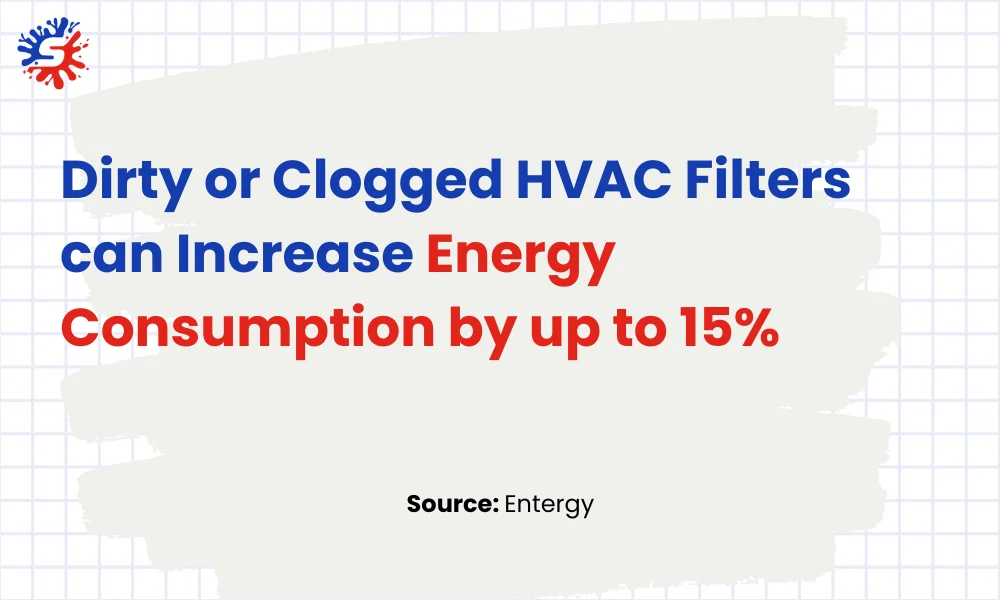
Across a full year, on a commercial energy bill in Sydney, that is not a small number. When professional cleaning removes dust from surfaces, carpets, and HVAC intake areas, the system operates at lower resistance. The filters stay cleaner for longer. Energy consumption stays lower.
Indoor Air Quality and Productivity: The Research Is Consistent
Beyond energy costs, clean air directly affects how well your team works.
Research from commercial studies found that poor indoor air quality can reduce office workers' performance by 6 to 10%. Harvard University researchers, in a study published in Environmental Research Letters, found that cognitive function scores were 61% higher in well-ventilated indoor spaces compared to standard office environments.
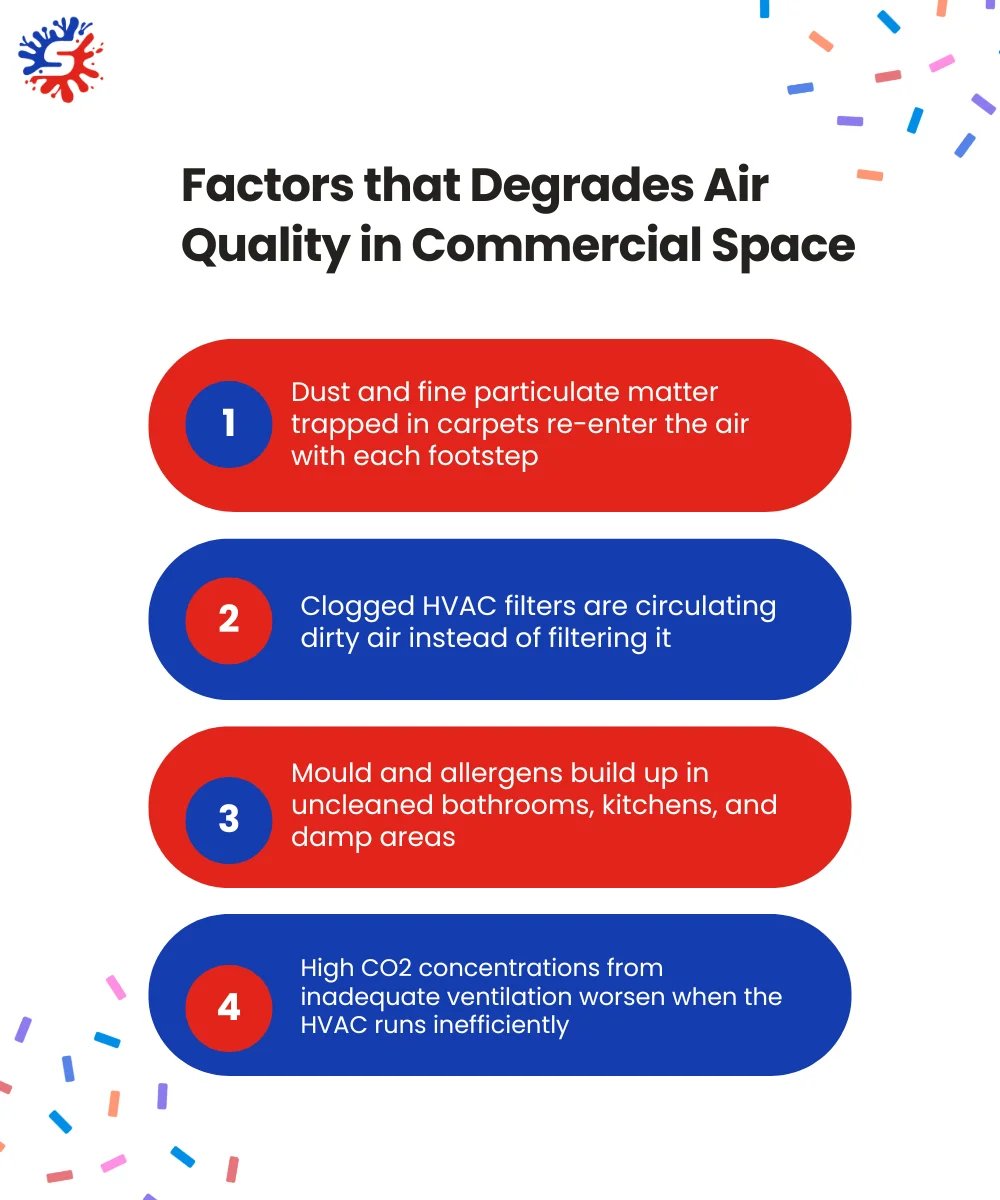
What makes air quality worse in a commercial building?
You can also read our post on kitchen hygiene statistics and bathroom hygiene statistics for more on where contamination is silently building in your commercial space.
HEPA Filtration: What it Does in a Professional Clean
A standard domestic or budget-grade vacuum removes visible debris but recirculates fine particles back into the air. A HEPA-filtered vacuum captures particles down to 0.3 microns, including many bacteria, allergens, and fine dust that would otherwise re-enter the breathing environment.
We use HEPA filtration equipment and eco-concentrate cleaning solutions as standard in our commercial and office cleaning services.
The Audit Question: Is Your Cleaning Crew Saving You Money
The commercial cleaning industry in Australia has grown to over $20 billion AUD in 2026, and the growth is driven by businesses that have done this calculation and arrived at the same answer: the return on a properly run cleaning program exceeds the cost, often significantly.
There is a question worth asking your current cleaning provider, or yourself if you are handling it in-house: Are they cleaning what your clients see, or are they cleaning what your clients do not notice until something goes wrong?
The entry mat. The lift buttons. The fridge handle. The surface under the monitor. The carpet in the corridor between the kitchen and the meeting rooms. The grout in the client's bathroom. A professional cleaning program is about cleaning the right things, in the right order, with the right equipment, on a schedule that prevents damage rather than reacting to it.
Ready to find out what professional commercial cleaning actually delivers for your Sydney business? Book a free consultation with Spark Clean Australia, and we will assess your current setup, identify the high-risk areas you may be missing, and put together a program.
Frequently Asked Questions
Find quick answers to booking, payments, pet-friendly policies, deep cleaning, and more. Our team is dedicated to making the process effortless and transparent. If you have additional questions, we're here to help ensure a seamless experience.
Get In Touch