
Kitchen Hygiene Statistics That Reveal What's in Your Plate
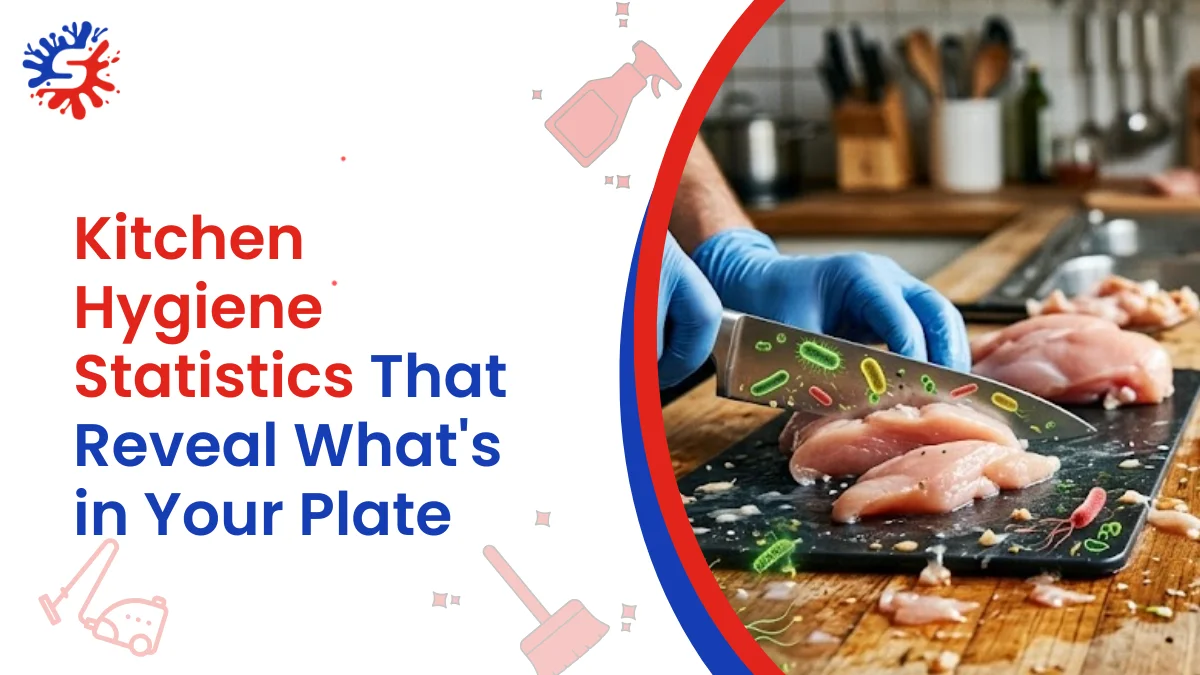
Did you know your kitchen drain harbours more as many as a toilet bowl? In a modern home, what you cannot see lurking on your benchtops, sponges, and tap handles can absolutely devastate your family's health.
While your kitchen is the heart of your home, science tells a very different story about its microscopic ecosystem. Below is your complete guide to the shocking truths, hidden dangers, and terrifying data points behind everyday kitchen hygiene and why you should seek professional help.
23 Eye-Opening Kitchen Hygiene Statistics
1. Australia's Food Poisoning Crisis
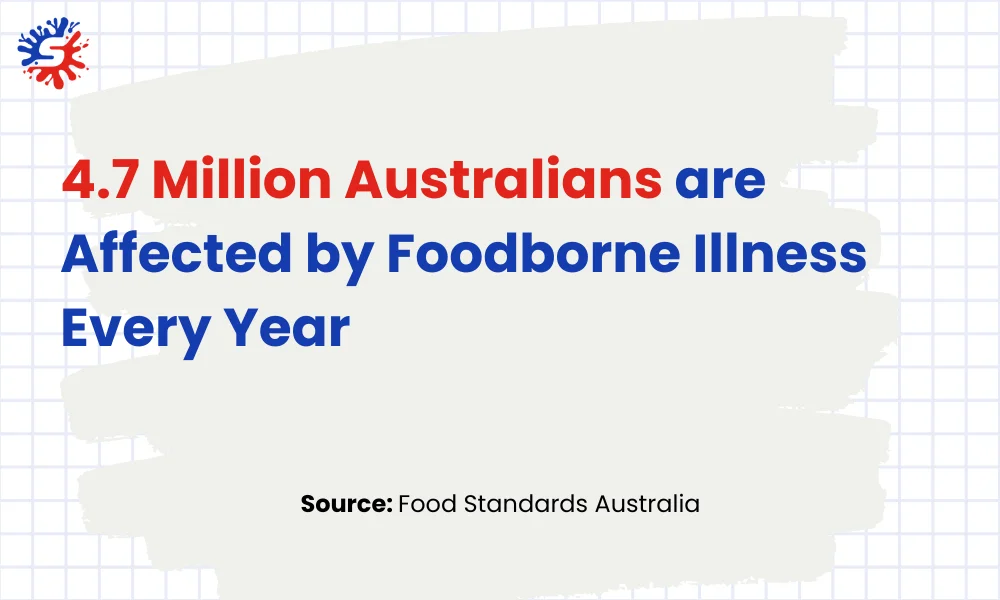
More recent estimates from Food Standards Australia put the figure for food poisoning at approximately 4.7 million Australians affected by foodborne illness every year, causing around 47,900 hospitalisations and 38 deaths annually.
Source: Food Standards Australia
2. The Economic Cost of Kitchen Contamination
The total annual cost to Australian society from foodborne illness is estimated at $1.249 billion. This figure accounts for healthcare costs, lost productivity, and the broader economic burden of preventable illness that begins in the home kitchen.
Source: Queensland Government
3. The Kitchen Beats the Bathroom for Germs
One of the most shocking findings in modern hygiene research is that the kitchen is the single germiest area in the average home. Areas where food is prepared consistently showed higher levels of bacteria and fecal contamination than any other room, including the bathroom.
Source: NSF International
4. The Dirtiest Item in Your Home: The Kitchen Sponge
The kitchen sponge is the single most contaminated item in the average household. In the NSF study, more than 75% of dish sponges and rags tested positive for coliform bacteria, a family that includes dangerous strains such as Salmonella and E. coli. As the most common cleaning tool in any home, this is deeply alarming.
Source: NSF International
5. 362 Types of Bacteria in a Single Kitchen Sponge
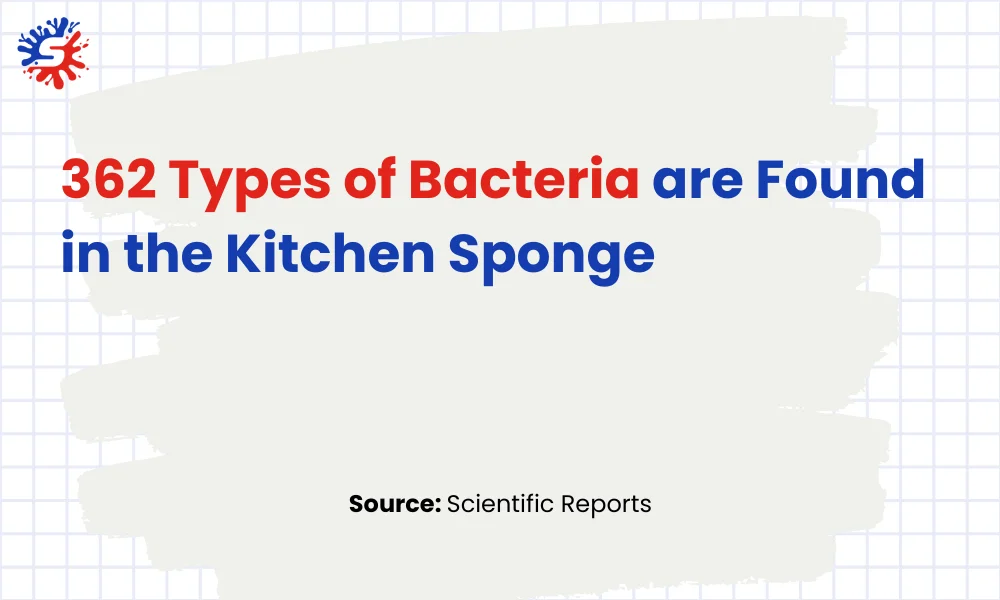
A study in which researchers performed DNA analysis on kitchen sponges from private households and discovered 362 distinct types of bacteria. Researchers described kitchen sponges as a "common microbial hot spot" and a vehicle for spreading dangerous pathogens across domestic surfaces.
Source: Scientific Reports
6. How Quickly a Used Sponge Becomes Dangerous
After just two weeks of regular kitchen use, a sponge can harbour around 8 million bacteria. Given that most Australian households replace sponges far less frequently than every two weeks, the typical kitchen sponge is a continuously growing reservoir of potential pathogens.
Source: Clemson University Home & Garden Information Center
7. The Kitchen Sink: Second Most Contaminated Surface
The kitchen sink consistently ranks as the second most contaminated item in the home after the sponge. 45% of all kitchen sinks tested positive for coliform bacteria. The very place where Australians wash their produce and their hands is itself a significant contamination risk.
Source: NSF International
8. Kitchen Drain Bacteria Count
Research measuring bacteria per square inch across common household surfaces found that the kitchen drain contains a staggering 567,845 bacteria per square inch. For context, this is nearly 200 times more bacteria per square inch than a toilet seat. Understanding the difference between looking clean and being sanitised has never been more important.
Source: CBS News
9. The Counter-Wiping Cloth
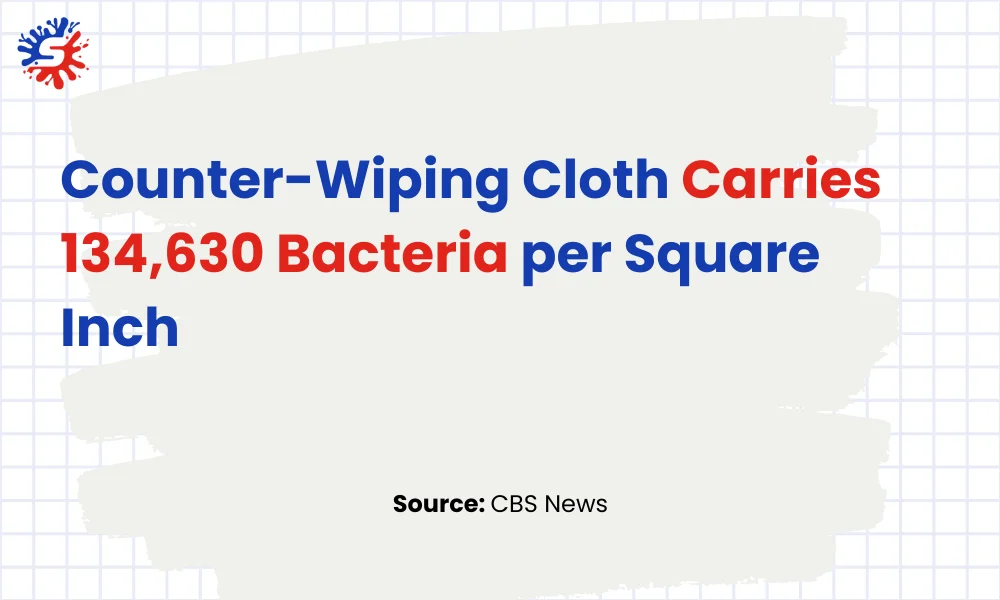
The counter-wiping cloth or dishcloth that most people use to wipe down benches after cooking harbours 134,630 bacteria per square inch. Wiping surfaces with a contaminated cloth does not clean but redistributes bacteria across larger areas of your kitchen, increasing the risk of cross-contamination.
Source: CBS News
10. The Cutting Board: 200 Times More Fecal Bacteria Than a Toilet Seat
Researchers discovered that the average household cutting board carries 200 times more fecal bacteria than a toilet seat. Knife grooves and score marks left from daily use create the ideal micro-environment for bacteria to hide, survive, and transfer to the next piece of food placed on the board.
Source: Food and Wine
11. Gut Bacteria on Cutting Boards
A 2025 study found bacteria normally found in the human gut on 44% of household cutting boards tested. Gut-related bacteria turned up on approximately two-thirds of plastic boards and about one-fifth of wooden boards, suggesting that plastic boards may carry a higher cross-contamination risk from food handlers' hands.
Source: Earth.com
12. 18% of Cutting Boards Have Coliform Bacteria
The NSF International study found coliform bacteria on 18% of all cutting boards tested across 22 households. Given that cutting boards are used to prepare almost everything consumed at the family table, this rate of contamination has direct and immediate consequences for household food safety.
Source: NSF International
13. Kitchen Dish Towels: 408 Bacteria Per Square Inch
The dish towel hanging next to your kitchen sink carries an average of 408 bacteria per square inch. Because it is frequently used for multiple purposes, a used dish towel becomes a bacterial relay station within hours of first use.
Source: CBS News
14. The Kitchen Microwave Buttons
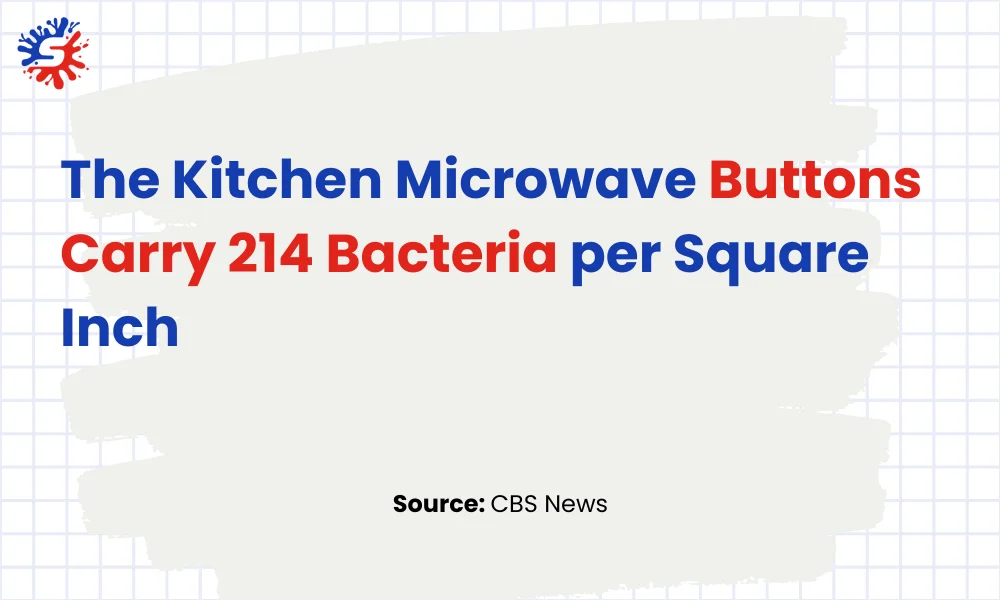
The microwave buttons that the entire household presses with unwashed hands before and after handling food carry 214 bacteria per square inch. The microwave handle consistently shows a higher bacterial load than the appliance's interior because it is touched constantly during meal preparation.
Source: CBS News
15. Bacteria in 100% of Refrigerators
A study investigating microbial contamination in domestic refrigerators found that Bacillus and Acinetobacter were present in 100% and 87.5% of tested refrigerators, respectively. No single refrigerator sampled was free of bacterial contamination, confirming that regular deep cleaning of the fridge interior is essential.
Source: ScienceDirect
16. 89 Unique Bacterial Foodborne Pathogens Found in One Kitchen Study
A study examining the bacterial communities on domestic kitchen surfaces identified 89 unique foodborne bacterial pathogens across the sampled households. Every single household tested contained at least one contaminated surface, with E. coli, Staphylococcus aureus, and Klebsiella pneumoniae as the most common pathogens found.
Source: PubMed Central
17. The Temperature Danger Zone
Bacteria grow most rapidly in the temperature range between 5°C and 60°C, a range scientists call the "Danger Zone." Within this range, bacteria can double in number in as little as 20 minutes. A kitchen benchtop, a bowl of leftover food, or a chopping board left at room temperature quickly becomes a critical contamination risk.
Source: USDA Food Safety and Inspection Service
18. The Two-Hour Rule Is Non-Negotiable
Perishable food left in the temperature danger zone for more than 2 hours becomes unsafe to eat regardless of how it looks, smells, or tastes. After 4 hours in this range, most foods carry bacterial loads high enough to cause severe illness even in healthy adults.
Source: Centers for Disease Control and Prevention
19. 70% of Australians Don't Know the Safe Cooking Temperature
A Food Safety Information Council survey found that 70% of Australians do not know the safe cooking temperature for foods that may be contaminated with Salmonella and Campylobacter. Without this knowledge, kitchens across the country routinely serve undercooked food that puts vulnerable household members at serious risk.
Source: Food Safety Information Council
20. A Third of Australian Households Include a Vulnerable Person
One in every three Australian households contains at least one person who is particularly vulnerable to severe illness from food poisoning. This makes proper home hygiene a matter of genuine health protection, not just cleanliness.
Source: Food Safety Information Council
21. Campylobacter: Australia's #1 Food Poisoning Culprit
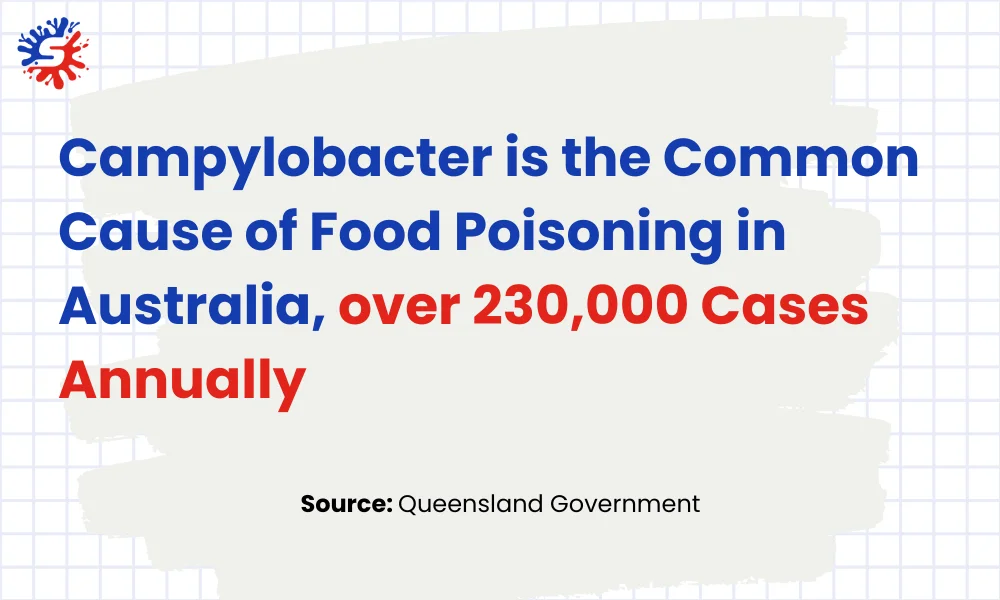
Campylobacter is the most common cause of food poisoning in Australia, with over 230,000 cases recorded annually and more than 3,200 people hospitalised in a single year. The primary source of the kitchen is raw chicken, and the main route of spread is cross-contamination due to poor hygiene during food preparation.
Source: Queensland Government
22. Unsafe Food Causes More Than 200 Diseases Globally
According to the WHO, consuming unsafe food containing harmful bacteria, viruses, parasites, or chemical substances can cause more than 200 distinct diseases. The home kitchen is one of the most significant points of exposure in the global food chain.
Source: World Health Organization
23. 600 Million People Fall Ill From Contaminated Food Every Year
The WHO estimates that approximately 600 million people fall ill after eating contaminated food each year, resulting in 420,000 deaths annually. Improved kitchen hygiene habits at the household level are among the most impactful interventions for reducing this global burden.
Source: World Health Organization
Conclusion
The numbers do not lie about the dangers lurking in your home's most used room. Professional deep cleaning is the only way to reliably break the contamination cycle in a domestic kitchen and protect your household from food poisoning Australians suffer every year.
If you want to transform your kitchen from a microbial hotspot into the safe, healthy environment your family deserves, contact Spark Clean Australia today for a comprehensive quote.