87% of Sydney Executives Say Bad Office Smell Ruined Their Pitch
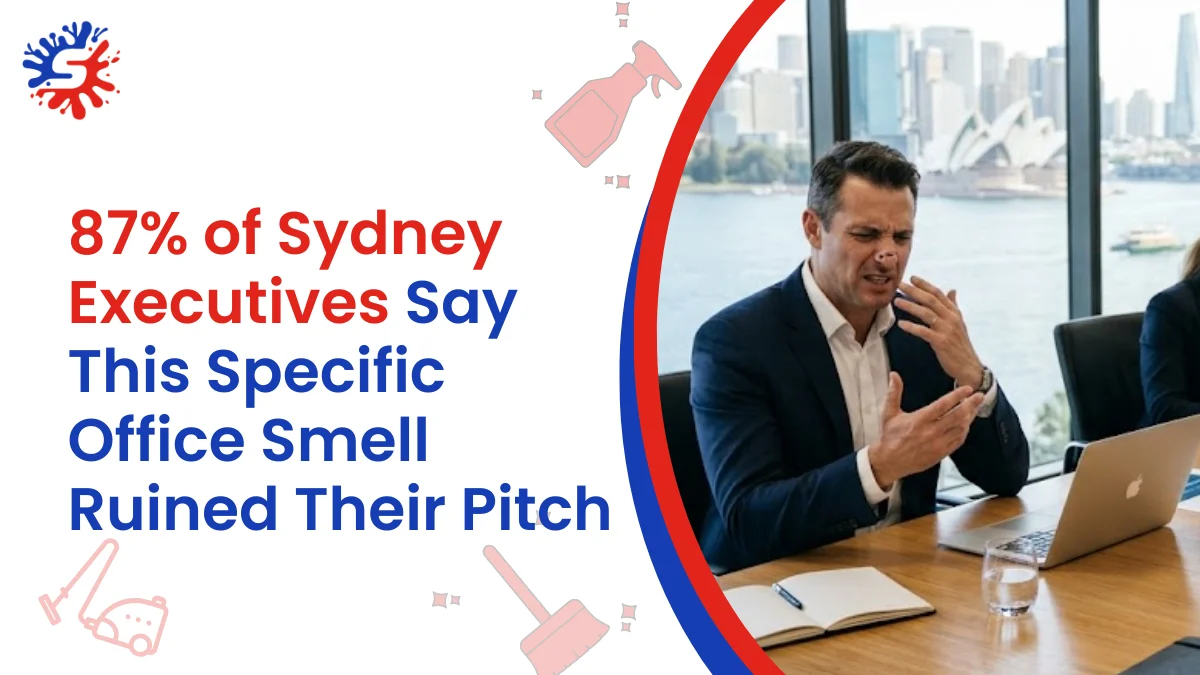
Everything was prepared, slides were read, a tight proposal, and fresh coffee. And then the client walked in, sniffed the air once, and their face changed in a way that was very small and very telling. The pitch went ahead and was fine. The follow-up email never came.
This scenario plays out in Sydney offices every single week, and most of the executives it happens to never connect it to the one thing that went wrong before they open their mouths.
Neuroscience is unambiguous on this: smell is the only sense that bypasses the brain's rational processing centre entirely. It connects directly to the amygdala and the hippocampus, the regions responsible for emotion and memory, before a single conscious thought is formed.
Key Takeaways
- 75% of all daily emotions are triggered by smell, and humans are 100 times more likely to remember something they smelled than something they saw
- Stale, musty office air is the most common and least noticed commercial odour in Sydney offices, caused by HVAC contamination, carpet bacteria, drain buildup, and kitchen residue
- Poor indoor air quality produces a measurable 9% drop in cognitive performance among office workers
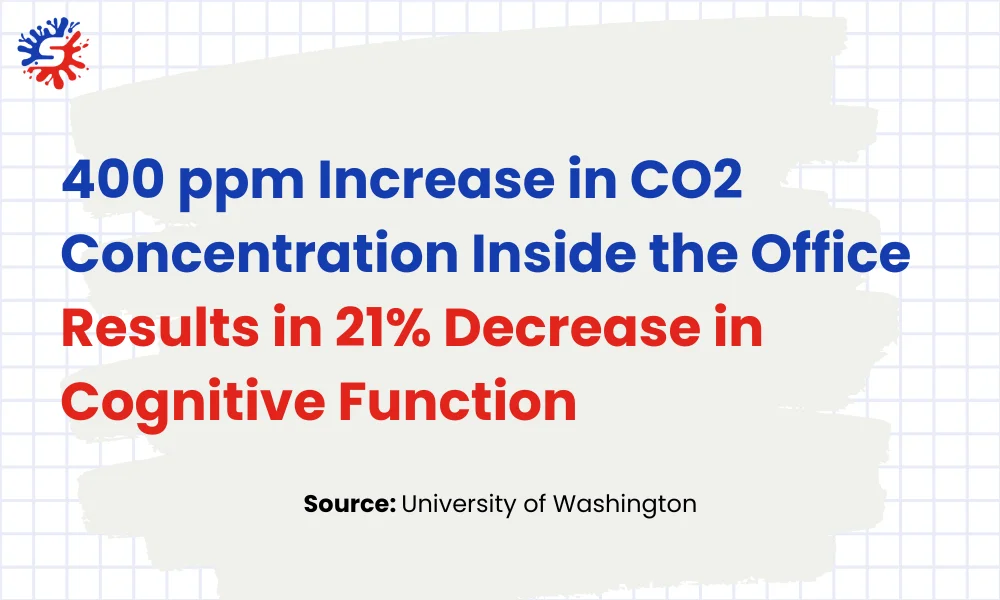
- A 400 ppm increase in CO2, typical of a poorly ventilated meeting room, causes a 21% decrease in cognitive function scores for everyone in that room
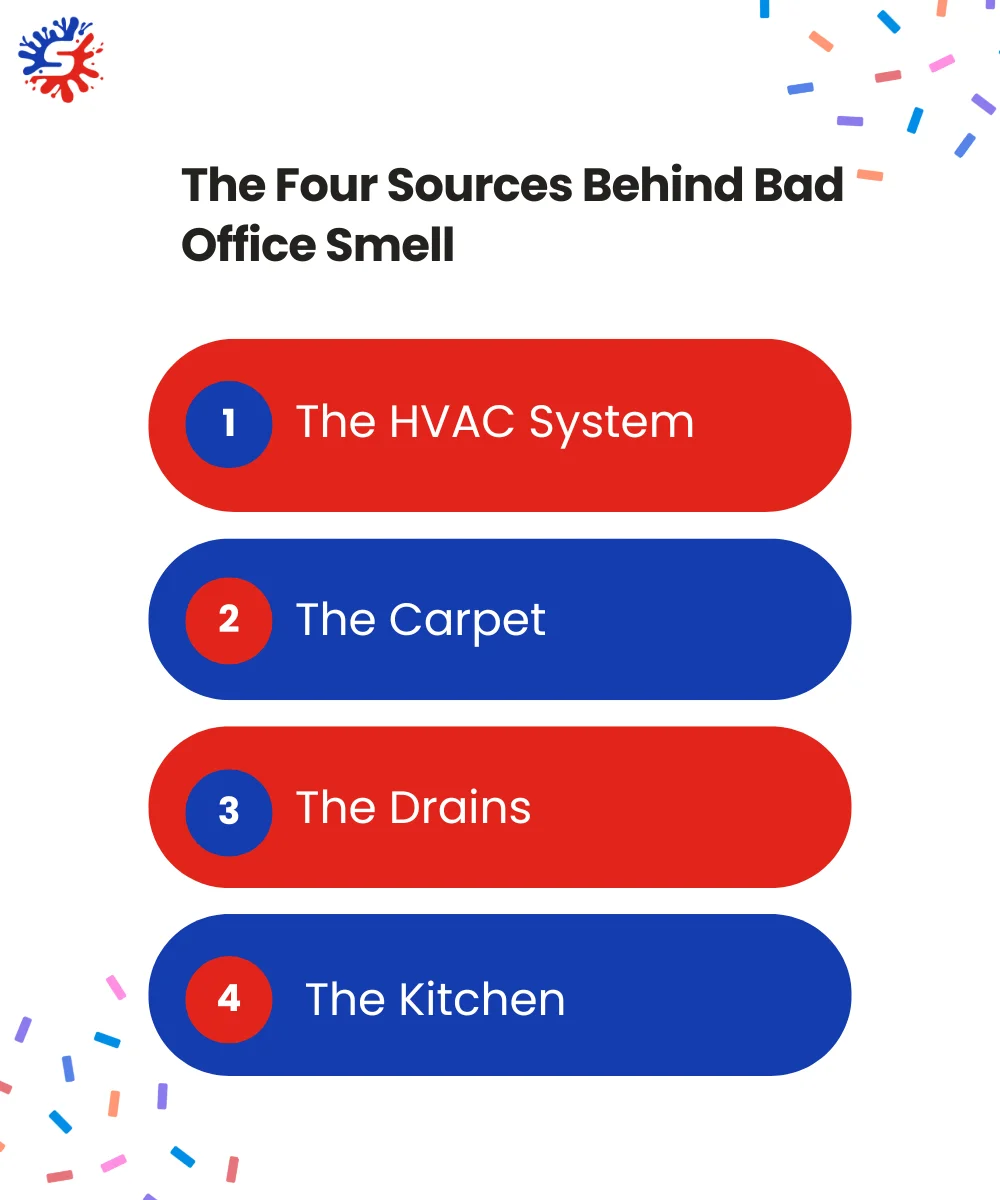
- The source of the smell is almost always the same four areas: the HVAC system, the carpet, the drains, and the kitchen, and all four are addressable with professional cleaning
Why a Smell Decides Your Pitch Before You Do
Most business owners understand that visual first impressions matter. Clean office, professional reception, well-dressed staff. What almost nobody accounts for is that olfactory first impressions happen faster, land harder, and are more resistant to being reversed by anything that follows.
Your Client's Brain Processes the Smell Before it Processes You
Every sense except smell travels through the brain's thalamus, the relay station that distributes sensory information for conscious processing before an emotional response forms. Smell is different. Scent signals bypass the thalamus entirely and connect directly to the olfactory bulb, which feeds straight into the amygdala and the hippocampus.
In practice, your client forms an emotional impression of your office from the smell before they consciously register what they see. That impression is not verbal. It is not rational. It is a gut feeling about whether this is a place they trust.
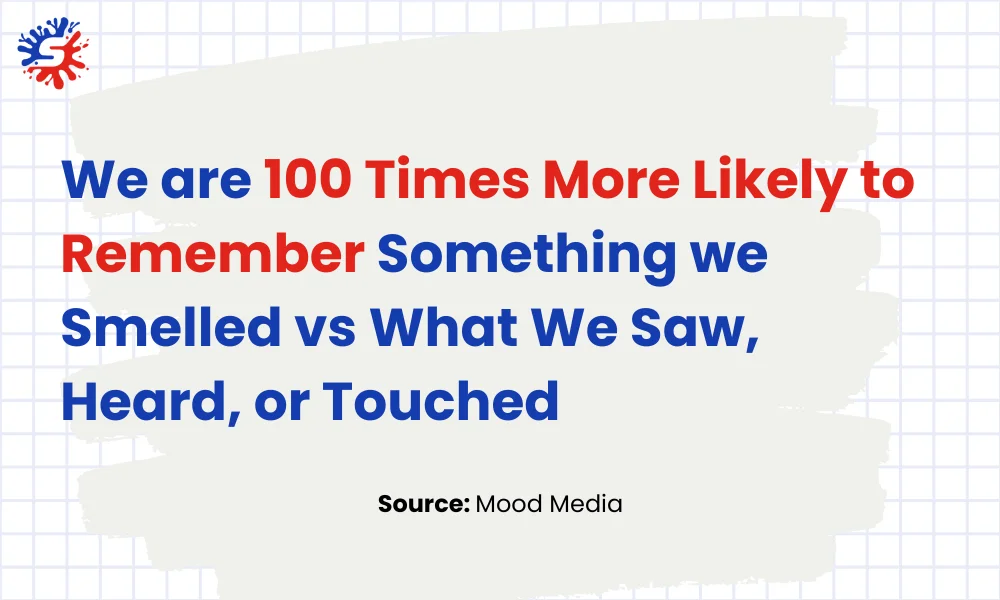
Research found that 75% of the emotions we experience throughout the day are triggered by smell. We are also 100 times more likely to remember something we smelled than something we saw, heard, or touched.
The Smell That is Actually Ruining Pitches in Sydney Offices
Most pitches are not lost to bins overflowing in the reception area or visible mould on the bathroom ceiling. They are lost to something subtler: the ambient odour that develops in any Sydney office that has not been properly maintained at depth.
It smells like stale air, like carpet that has absorbed years of foot traffic and occasional moisture. Like a drain that needs cleaning or a kitchen that has been wiped down but not truly cleaned. Like a meeting room that has been used by twelve people today and ventilated by none.
People who work in the space stop noticing the smell within days; they adapt. Their clients do not.
The Four Sources Behind That Smell
The smell that undermines a Sydney pitch almost never has a single obvious source. It is a combination of four accumulation points that are either hidden from view, rarely cleaned at depth, or both.
1. The HVAC System
-
HVAC systems in Sydney office buildings are set to low overnight and on weekends to save energy.
-
When airflow drops, the temperature and humidity inside ducts rise, creating a breeding ground for mould to grow within 24 to 48 hours.
-
The resulting musty smell in a meeting room acts as a health marker that a client's brain automatically registers as a warning.
2. The Carpet
-
Office carpet is one of the densest surfaces for bacterial accumulation because it collects dust, skin cells, and food particles from heavy foot traffic.
-
Bacteria multiply deep within the fibres and produce byproduct compounds that create a persistent, low-level odour.
-
Any introduction of moisture from Sydney's humidity or wet umbrellas can cause mould to develop within the carpet pile within 24 hours.
-
Standard vacuuming cannot reach these deep bacterial colonies, which require hot-water extraction and sanitization to remove.
3. The Drains
-
Faint sewage or sulphur notes drifting from bathroom or kitchen drains are caused by bacteria growing in organic pipe buildup rather than plumbing failures.
-
Drains in a perfectly functional office will still produce odours if they are not professionally cleaned on a strict schedule.
-
Catching a trace of drain odour triggers a subconscious biological rejection signal in clients that associates the business with neglect.
4. The Kitchen
-
Kitchen smells are caused by the accumulation of old food residue in the refrigerator, microwave interiors, sink drains, and grease on range surfaces.
-
Research documents that a massive amount of organic matter builds up on these surfaces over time, making foul odours an inevitable consequence.
-
An offensive kitchen smell drifting into the corridor can damage a client's perception of the business before the handshake even happens.
The Smell is Also Affecting Everyone in the Room
The impact of stale office air on pitch outcomes is not only about first impressions. Once the meeting starts, the room's air quality continues to affect everyone's cognitive performance, including the presenter.
What Happens to a Brain in a Poorly Ventilated Meeting Room
Increased indoor CO2 levels are directly associated with slower response times and reduced accuracy in cognitive tasks. The effects observed at high CO2 concentrations are common in normal office environments, not at extreme levels.
Research published has found that a 400 ppm increase in CO2 concentration was associated with a 21% decrease in cognitive function scores across nine cognitive domains, including decision-making, focused attention, and problem-solving. A meeting room that has hosted back-to-back sessions will routinely reach those CO2 levels.
The 9% Drop That Does Not Show Up in Preparation
Poor indoor air quality results in an up to 9% drop in cognitive performance among office workers. A 9% reduction in cognitive performance is the difference between being sharp and being slightly slow. Between having the right answer ready and reaching for it a moment too late. In a pitch environment where confidence and fluency are being directly evaluated by the other side of the table, that gap is significant.
The Reason Your Team Has Stopped Noticing
The single most dangerous aspect of this problem is adaptation. When a person is exposed to a smell consistently over several days, the brain deprioritises the sensory signal. It is a cognitive efficiency mechanism: the brain stops sending attention to information that is not changing.
For Sydney CBD offices, this means the team that works there five days a week is the least qualified to tell you whether it smells fine. They have adapted to it completely. Their honest assessment that the office smells perfectly normal is accurate, from their perspective, and completely useless as a guide to what a first-time visitor experiences.
This is closely connected to why understanding what germs actually accumulate in a Sydney office after business hours is a useful exercise for any office manager who has stopped noticing the background conditions of the space they manage every day.
What Fixing the Smell Actually Involves
The smell cannot be masked. That is the first thing to understand. An air freshener placed in a meeting room that has carpet bacteria, drain buildup, and HVAC contamination does not fix the problem.
Eliminating the smell requires addressing each of its sources at their origin.
HVAC and Ventilation
HVAC filters need to be cleaned or replaced on a scheduled basis to prevent the accumulation of mould, dust, and microbial matter in the duct system. A contaminated HVAC system distributes smells, bacteria, and mould spores through every room it serves. This is not a cleaning task; it requires inspection and specialist treatment. The commercial cleaning standards that prevent this accumulation are detailed in our best practices guide.
Carpet Extraction
Vacuuming removes surface debris. It does not address bacterial colonies in the carpet pile or mould developing in the carpet underlay. Hot water extraction with sanitising solution reaches these layers and is the only cleaning method that meaningfully reduces carpet odour at source. For Sydney CBD offices, this should be scheduled at least quarterly in high-traffic areas.
Drain Treatment
Regular professional drain cleaning removes the organic buildup that produces the bacterial odour compounds that drift from bathroom and kitchen drains into connected air spaces. This is a targeted treatment that takes minutes but has a disproportionate impact on ambient office smell. The full breakdown of what a commercial cleaning audit identifies in a typical Sydney office almost always includes drain treatment as a high-priority recommendation.
Kitchen Deep Cleaning
The refrigerator interior, the drain under the sink, the coffee machine filter, the microwave interior, and the extraction filter above any cooking surface all require deep cleaning on a scheduled basis, not just a surface wipe. These are the primary kitchen odour sources, and they are almost never addressed by standard end-of-day cleaning.
Meeting Room Air Management
Beyond the cleaning itself, meeting rooms used for client-facing pitches benefit from ventilation protocols: windows opened, or fans run before a meeting, door left open between sessions, and carpets treated on a regular cycle. These are process adjustments that cost nothing and reduce CO2 accumulation, which directly affects cognitive performance.
Why a Spray Can Does Not Solve This
The instinct to buy a plug-in air freshener or a can of spray and leave it in the meeting room is understandable. However, it is not the complete picture.
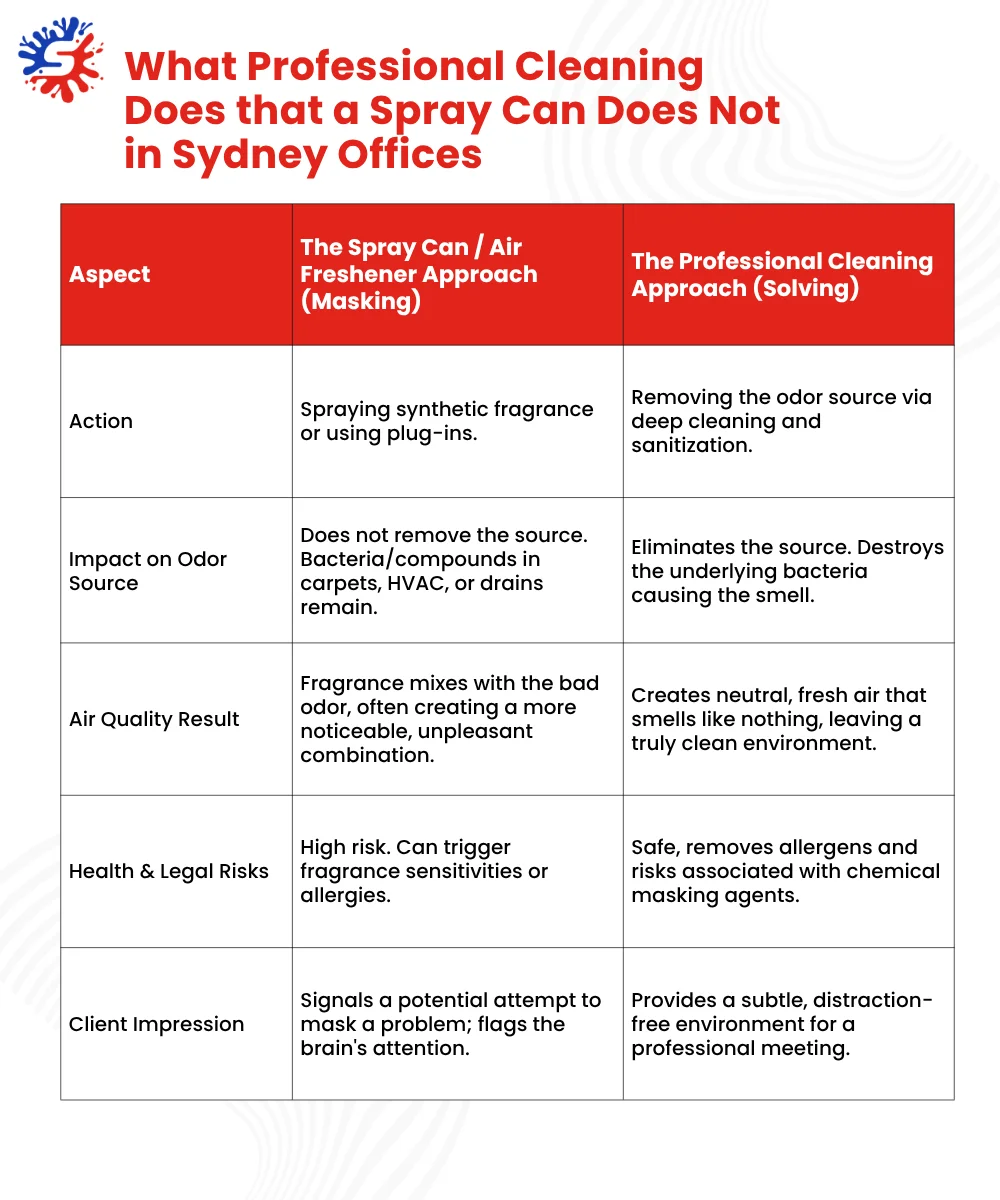
The goal is a room that smells like nothing: clean, fresh, neutral air that the client's brain does not flag as requiring attention. The difference between what looks and smells clean versus what is actually sanitised is the difference between masking the problem and solving it.
What a Single Won Pitch Covers
The cost of professional cleaning that eliminates office odours is small relative to the commercial value of the pitches held in the space being cleaned.
A quarterly carpet extraction, scheduled HVAC filter maintenance, monthly drain treatment, and regular deep kitchen cleaning will cost a fraction of a single month's office rent. Against that cost, consider what is at risk:
-
A client who walked into a stale meeting room and carried that impression through the pitch
-
A candidate who came in for a senior role interview and chose an offer from a company whose office felt better
-
A partner who toured the space before committing to a deal and left with an inexplicable sense that something was not quite right
-
A board member who noticed the smell and mentioned it to a colleague after the meeting, whose opinion now includes that detail
Conclusion
The specific smell that ruins more Sydney office pitches than any other is not extreme. It is the subtle stale ambient air of an office where the HVAC has not been serviced, the carpet has not been extracted, and the drains have not been cleaned on a schedule.
Professional cleaning that addresses the odour sources at origin eliminates the problem completely. The room smells like nothing, and nothing is exactly right.
Book a no-pressure appointment with Spark Clean Australia to discuss a cleaning program for your Sydney CBD office. We will assess the actual odour sources in your space, not just the visible surfaces, and build a schedule that addresses them before your next client walks through the door.
Frequently Asked Questions
Find quick answers to booking, payments, pet-friendly policies, deep cleaning, and more. Our team is dedicated to making the process effortless and transparent. If you have additional questions, we're here to help ensure a seamless experience.
Get In Touch